Hello, Community Members!
Everyone who joins Synbo hopes for substantial returns on their investments. However, you might not know that within the Synbo ecosystem, there is a mechanism designed specifically to filter projects and guarantee risks, effectively eliminating a vast number of low-quality projects. This is called the Check (Guarantee) Period.
Imagine Synbo as an “On-Chain Financing Assembly Line.” The Check Period is the stress test before the line starts moving. It means a project team can’t just fill in parameters, click “Create,” and start selling. They must first answer a crucial question:
“Is anyone willing to put real ‘skin in the game’ to guarantee this project?”
In Synbo, the person who dares to make this bet is usually the Captain, and the tool they use is the PT (Position Token) Guarantee. Simply put: Responsibility comes before fundraising.
You can understand it like this:
- Create Financing: Just writing terms into the contract (Collateral, Price, Duration, Vesting, etc.).
- Check Met: This is the trigger condition that finally “allows capital to enter.”

How Does It Filter “Junk” Projects?
The Check Period primarily filters out projects where no one is willing to take responsibility or teams looking for a quick “rug pull.” It relies on three logical pillars:
1. Moving Endorsement from “Mouth” to “Chain”
In the traditional world, endorsement is cheap — a simple “I like this project” can drive funding. The Check Period makes endorsement expensive. Captains must pledge PT as a guarantee, turning endorsement into an on-chain action with real cost. This is what junk projects fear most: No one is willing to use real assets to stand behind them.
2. Using Guarantee Thresholds as a “Start Switch”
For example:
- Target Raise: 1,000,000 USDS
- Guarantee Threshold: 20% (Requires 200,000 PT in guarantees)
Only when enough risk-takers step forward is the financing allowed to open to a wider range of investors. This turns “consensus” into an actionable trigger.
3. Incentives and Constraints for Captains
A Captain’s guarantee isn’t charity. The system typically pairs it with Guarantee Yields/Incentives (e.g., APR, Premium Sharing) to make them willing to bear early-stage risk. However, Captains are also constrained: their guarantee behavior is traceable on-chain. If a project fails, it directly backfires on their trust and long-term earnings.
Therefore, the Captain acts more like a “Risk Control Node” rather than an “Emotional Amplifier.”
How to Redeem After Investing?
As an investor putting in real money, besides understanding our Check mechanism, you must also understand the Redemption Mechanism. This is the Second Insurance we set up for investors. It means your investment is not only guaranteed by someone but can also be redeemed.
There are three main redemption methods:
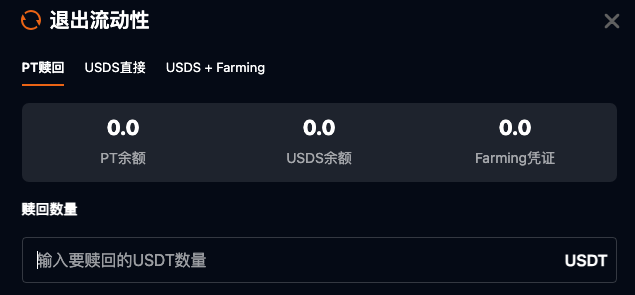
Redemption Path 1: PT Redemption
- Scenario: You hold or use PT within the system to participate in relevant processes.
- Action: The system allows you to use the PT redemption channel to redeem corresponding rights or assets.
- Purpose: To create a closed loop for “Guarantee/Participation Assets,” facilitating settlement or exit within the ecosystem using a unified “Collateral Asset.”
Redemption Path 2: USDS Redemption
- Scenario: You participate in financing using USDS.
- Action: When rule conditions are met, the system allows you to redeem via USDS.
- Advantage: Clear settlement, stable value, and low understanding cost for users.
Redemption Path 3: USDS + Mining Certificate Combination
- Scenario: You settle part of the transaction with USDS.
- Action: You simultaneously use “Mining Certificates/Reward Vouchers” as another element to complete a combined redemption.
- Core Logic: Binding “Participation Behavior” with “Ecosystem Incentives.”
Summary
In Synbo’s financing process, the real “first door” is not when the project team clicks “Create,” but the Check (PT Guarantee) Period.
Only when qualified Captains complete the guarantee using PT and reach the threshold will the financing enter the Open Distribution Phase, allowing investors to participate with USDS.
This transforms “endorsement” from a verbal promise into verifiable on-chain risk-taking, filtering out irresponsible junk projects at the source. More importantly, there is a clear Exit Closed Loop after participation. Through PT Redemption, USDS Redemption, and Combination Redemption, participation relies not on luck, but on Rule-Based Settlement.