In April, the crypto industry is waiting for large-scale conferences, updates of key blockchains and new steps by regulators. Below are just a few of them.
April 8
Syscoin (SYS) — The Nexus Update.
The Syscoin blockchain is preparing to launch the version 5 update, codenamed Nexus. Activation is expected on April 8 at block No. 2,010,345 (00:30 UTC). According to the voting results, 95% of the network members supported the update.
A number of technical improvements will be introduced within the framework of Nexus: a decentralized sequence, Sentry nodes with AI elements, and a dynamic community-driven financing model. These functions are aimed at increasing the scalability and stability of the network.
Key innovations include integration with scalable Bitcoin+ and Edgechains solutions (including zkSYS), as well as the launch of a secure two—way bridge with the Bitcoin network. This will allow BTC to be used in Syscoin smart contracts, turning it into a programmable asset.
April 8-10
Paris Blockchain Week 2025 Conference.
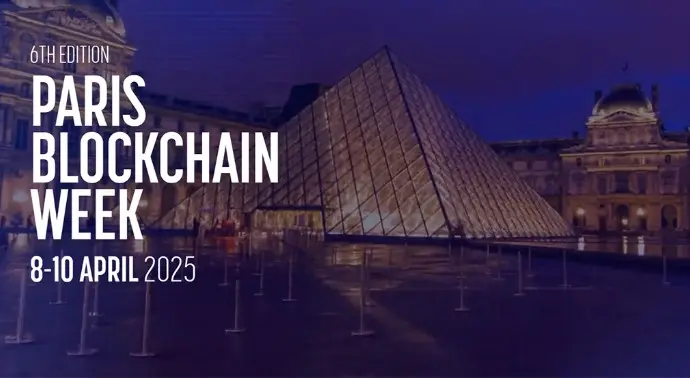
From April 8-10, the sixth annual Paris Blockchain Week conference, one of the largest European events in the field of blockchain and Web3, will be held at the Carrousel du Louvre in Paris. More than 10,000 participants from more than 85 countries are expected.
The program includes performances by more than 400 speakers, including Input Output founder Charles Hoskinson, Blockstream CEO Adam Beck, Ripple President Monica Long, Kraken Co-CEO David Ripley, President Crypto.com Eric Anziani and other representatives of leading crypto companies and financial organizations. Among the officials are the French Minister of Digital Technologies, Clara Chappaz, and the head of digital assets at BNY Mellon, Caroline Butler.
The conference topics cover key industry areas: open finance, Web 3 in corporations, regulation (including MiCA), central bank digital currencies, asset storage, payment solutions, and artificial intelligence integration.
A special emphasis is placed on the Start in Black startup competition with a prize fund of 10 million euros and a hackathon in a hybrid format. A private dinner for VIP guests under the glass pyramid of the Louvre is also planned as part of the forum.
April 9th
IOST (IOST) — a new airdrop model.
IOST is launching a long-term airdrop program aimed at stimulating sustainable participation in the ecosystem. Unlike traditional giveaways, which often cause short-term speculation, the new model provides for an even distribution of tokens over 48 months using vesting and bonuses for long-term asset retention. The rewards depend on the current holdings and increase depending on the shelf life of the tokens.
The total amount of airdrop will be 1.7056 billion IOST. It will be distributed among users of two categories. Token holders on the L1 network will receive half of the volume - 852.8 million IOST — depending on the number of tokens in their addresses at the time of the snapshot and taking into account the retention time multiplier. The rest is intended for users of centralized exchanges and will be distributed through partner platforms, taking into account the activity and history of staking.
April 11th and 25th
Round table on the regulation of the crypto market in the USA.
On April 11, the U.S. Securities and Exchange Commission (SEC) will hold a round table on the regulation of cryptocurrency trading. Participation will be possible both in person (by pre—registration), and an online broadcast will appear on the SEC's official website without registration.
The event will be the first in a series of open sessions organized by the SEC's Cryptocurrency working group. The next meetings are scheduled for April 25 (on digital asset storage), May 12 (tokenization), and June 6 (decentralized finance, DeFi).
SEC Commissioner Hester Pierce said that a series of round tables should become a platform for an open dialogue between regulators, industry participants and experts. Among the key topics are the protection of investors' rights, technological standards and ensuring transparency in the field of digital assets. Thematic discussions with representatives of crypto companies and research centers are also planned.
April 23-24
Blockchain Life Forum 2025 Conference in Moscow.
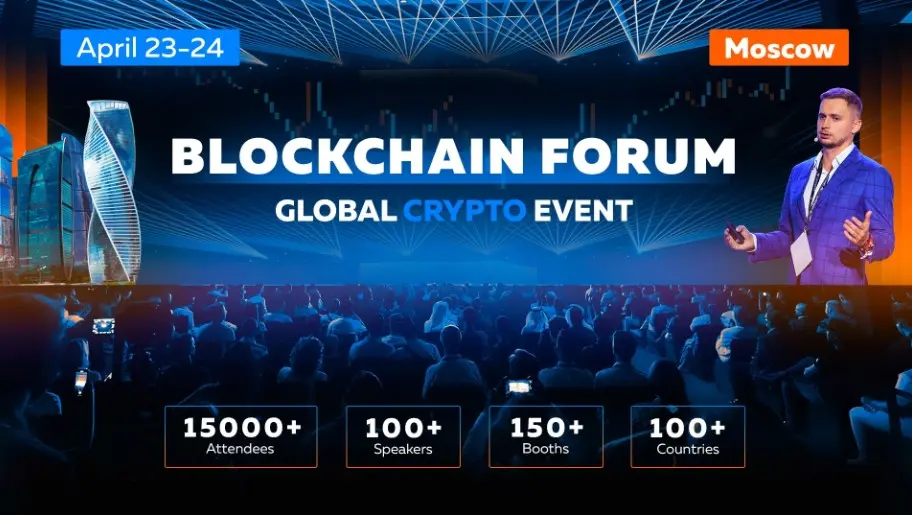
Moscow will host the 14th International Blockchain Forum 2025, one of the largest events in the Web3, cryptocurrency, and mining industries. The forum will be held in the MTS Live Hall and will bring together more than 15,000 participants and 100 speakers from more than 100 countries.
The program includes presentations by leading experts, an exhibition with 150+ booths, Startup Pitch sessions, a startup competition, networking zones, awarding the winners of the Blockchain Life Awards 2025 and an evening AfterParty. The forum will become a platform for dialogue between investors, traders, developers, miners, entrepreneurs and government representatives.
Discussions of investment strategies in the current market conditions, new approaches to mining and other relevant topics are expected. Among the confirmed speakers are Justin Sun, founder of TRON, Xingxi Wang, co—founder of the Litecoin Foundation, Gracie Chen, head of Bitget, Sandy Peng, co-founder of Scroll, Stefan Lutz, CEO of BitMEX, Ivan Chebeskov, Deputy Minister of Finance of Russia, and Sergey Altukhov, Deputy chairman of the State Duma Committee on Economic Policy.
April 29th
BNB Chain Update.
BNB Chain is preparing for the Lorenz update, which will be activated on April 29 and is aimed at improving network efficiency. The main change is to reduce the block generation time to 1.5 seconds, which should speed up transaction processing and improve performance.
Lorenz continues a series of technological updates after the Pascal hard fork in March, which introduced support for Ethereum EIP-7702, an improvement that allows regular wallets to temporarily act as smart contracts for more flexible interaction with the network.
The next stage is the Maxwell upgrade, expected in June 2025. It will reduce the block generation time to 0.75 seconds and make BNB Chain one of the fastest first-level blockchain networks. The update chain aims to scale, improve the user experience, and support a growing number of decentralized applications.
April 30th
TOKEN2049 Dubai Conference.
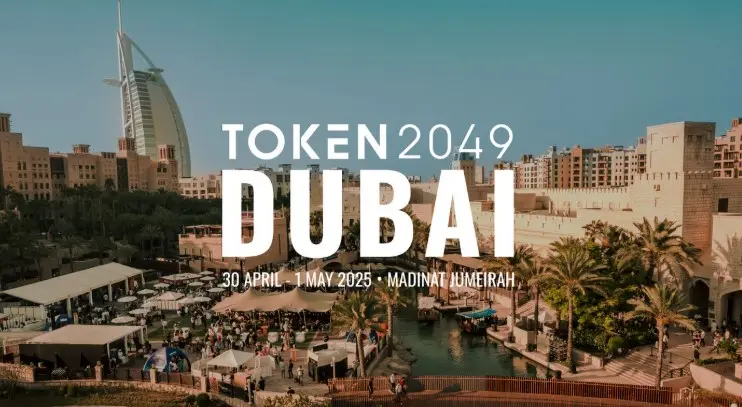
On April 30, TOKEN2049, one of the largest global events in the crypto industry and Web3, will start at the Madinat Jumeirah complex. The forum will last two days, but from April 28 to May 4, Dubai will host a whole week of TOKEN2049 Week events: meetups, dinners, private sessions, parties and workshops bringing together tens of thousands of participants.
The organizers expect more than 15,000 guests from 150+ countries and over 4,000 companies, including the largest crypto exchanges, venture funds, infrastructure projects and the media. More than 200 speakers will speak at the venue, including TRON founder Justin Sun, Binance CEO Richard Teng, Tether CEO Paolo Ardoino, Circle CEO Jeremy Allaire, investor and author of "The Network State" Balaji Srinivasan, as well as NEAR co-founder Ilya Polosukhin, Arthur Hayes (Maelstrom) and Dan Morehead (Pantera Capital).
The program covers the full range of key topics: from decentralized finance and tokenization of real assets to And, the institutional implementation of cryptocurrencies, NFT and Web3 infrastructures. TOKEN2049 is positioned as a global platform for discussing the future of the digital economy, establishing business contacts and presenting promising projects.
April 30th
Ethereum — the Pectra update on the main network.
The launch of the Spectra update on the main Ethereum network is scheduled for April 30. The upgrade combines the offerings of Prague and Electra and aims to improve the scalability, security, and usability of the network.
Among the key changes is the introduction of account abstraction (EIP—7702), which allows wallets to work as smart contracts and pay commissions in any tokens, not just in ETH. The update also includes an increase in the stacking limit for validators (EIP-7251): the maximum deposit is increased from 32 to 2048 ETH, which will simplify management for large operators.
The Spectra was successfully tested on the Hoodie testnet on March 26, despite previous problems with implementation on Holesky and Sepolia. The April 30th date is still considered the target date — the final confirmation should be announced at the next developer meetings. Users and developers are advised to follow updates through the official channels of Ethereum.






