The volume of bitcoins on centralized crypto exchanges has reached its lowest level in the last five years: this was reported by analysts of the Swan platform in a recent report.
At the same time, the value of the main cryptocurrency has been balancing in the $95,000 zone for the last few days and has not shown any sharp movements until today. It turns out that there really is a correlation between these two indicators. In this regard, experts explained when to expect a new, larger-scale wave of BTC growth.
What will happen to the Bitcoin exchange rate?
Yesterday afternoon, Bitcoin exceeded the level of 96 thousand dollars.
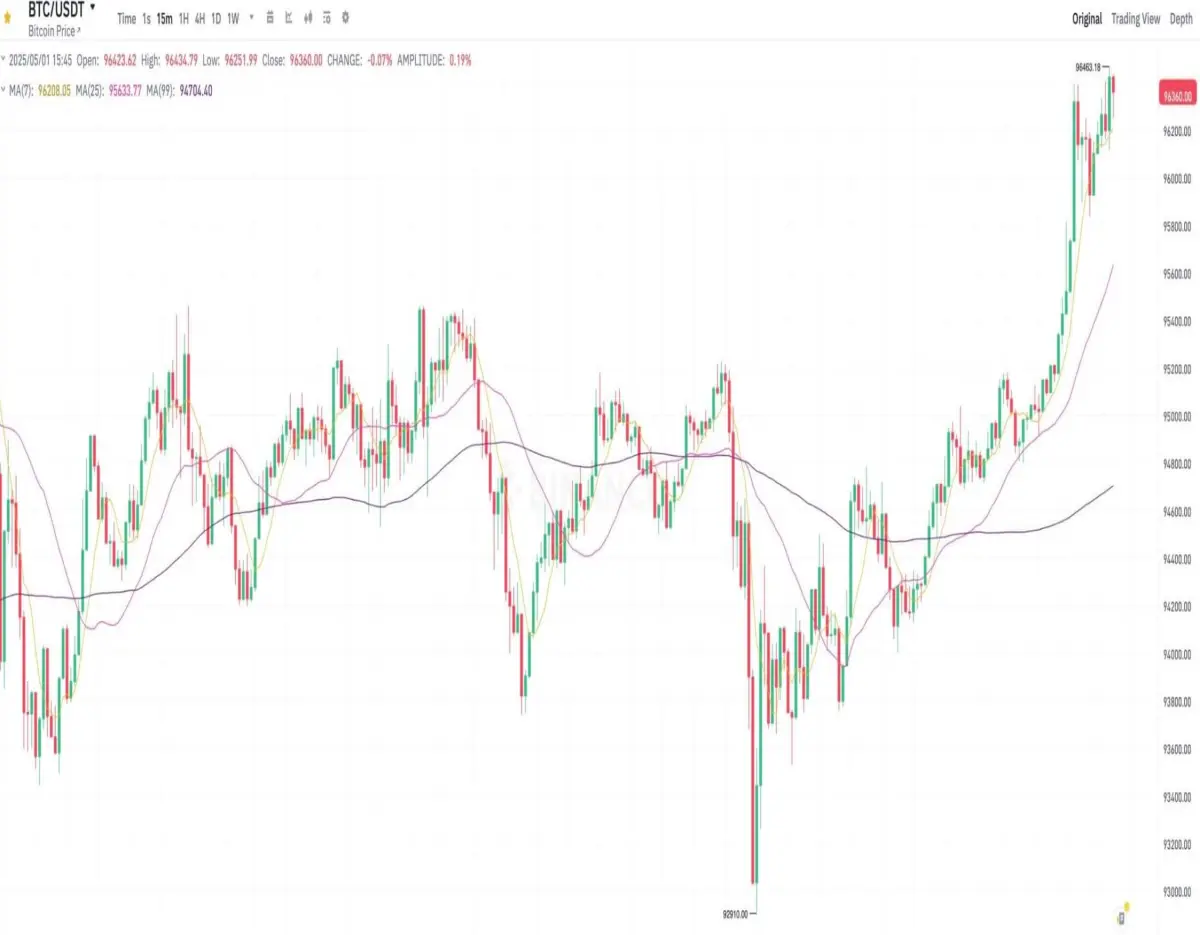
(15-minute chart of the Bitcoin BTC exchange rate)
All this is happening against the background of the withdrawal of coins from trading platforms. Some BTC is leaving exchanges for cold wallets, which is traditionally a bullish signal due to investors' long-term confidence in Bitcoin's growth.
However, a significant proportion of coins go into institutional storage. We are talking about ETF-type structures that attract funds from major industry players.
Coins don't disappear anywhere. They just move to a new location for active use.
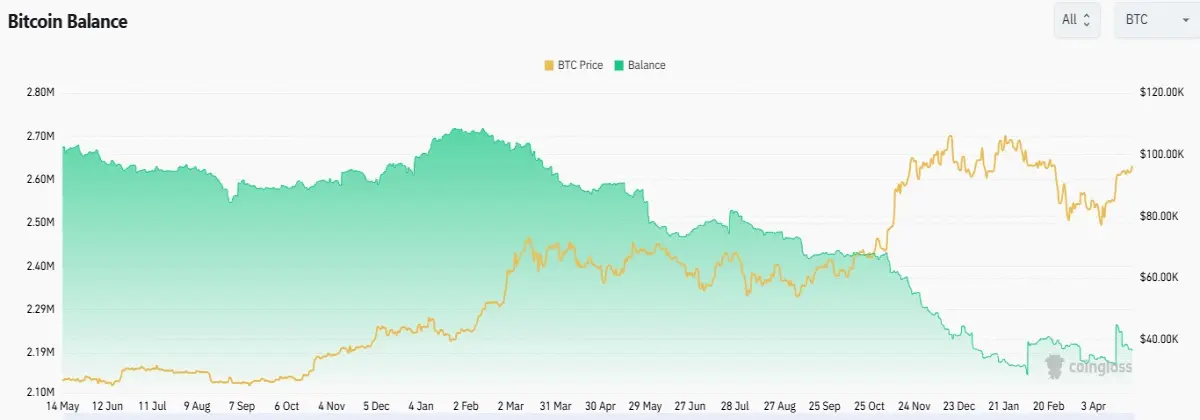
(Balance of available BTC Bitcoins on exchanges)
Also, not all of these BTC remain motionless. Some are held passively, while others participate in structured products, yield platforms, or are used as collateral.
That is why the price of the first cryptocurrency does not grow instantly, analysts say. This is also relevant for the entire crypto market, as altcoins largely depend on what is happening with BTC.
Bitcoin is still a market, and sellers don't disappear from the market. Some market players are traders who aim for short—term profits. Others are long-term holders who lock in profits. There are also those who have never understood exactly what they bought.
Experts commented on the continued accumulation of bitcoins by Strategy from Michael Saylor.
According to them, cryptocurrency miners produce about 13,500 BTC per month, however, Strategy, resorting to various capital borrowing tools, has He has been buying more than 13,500 bitcoins for several months in a row.
Thus, the company, which has become the largest institutional holder of BTC, has produced a kind of "synthetic halving", that is, a reduction in the amount of available cryptocurrency.
They are not just accumulating, but compressing the Bitcoin supply curve from the outside. Therefore, the supply is reduced. But the price moves when demand is out of balance. And with an infinite amount of currency and a really scarce asset, the next Bitcoin surge will not be linear. It will be harsh. And, most likely, irreversible.
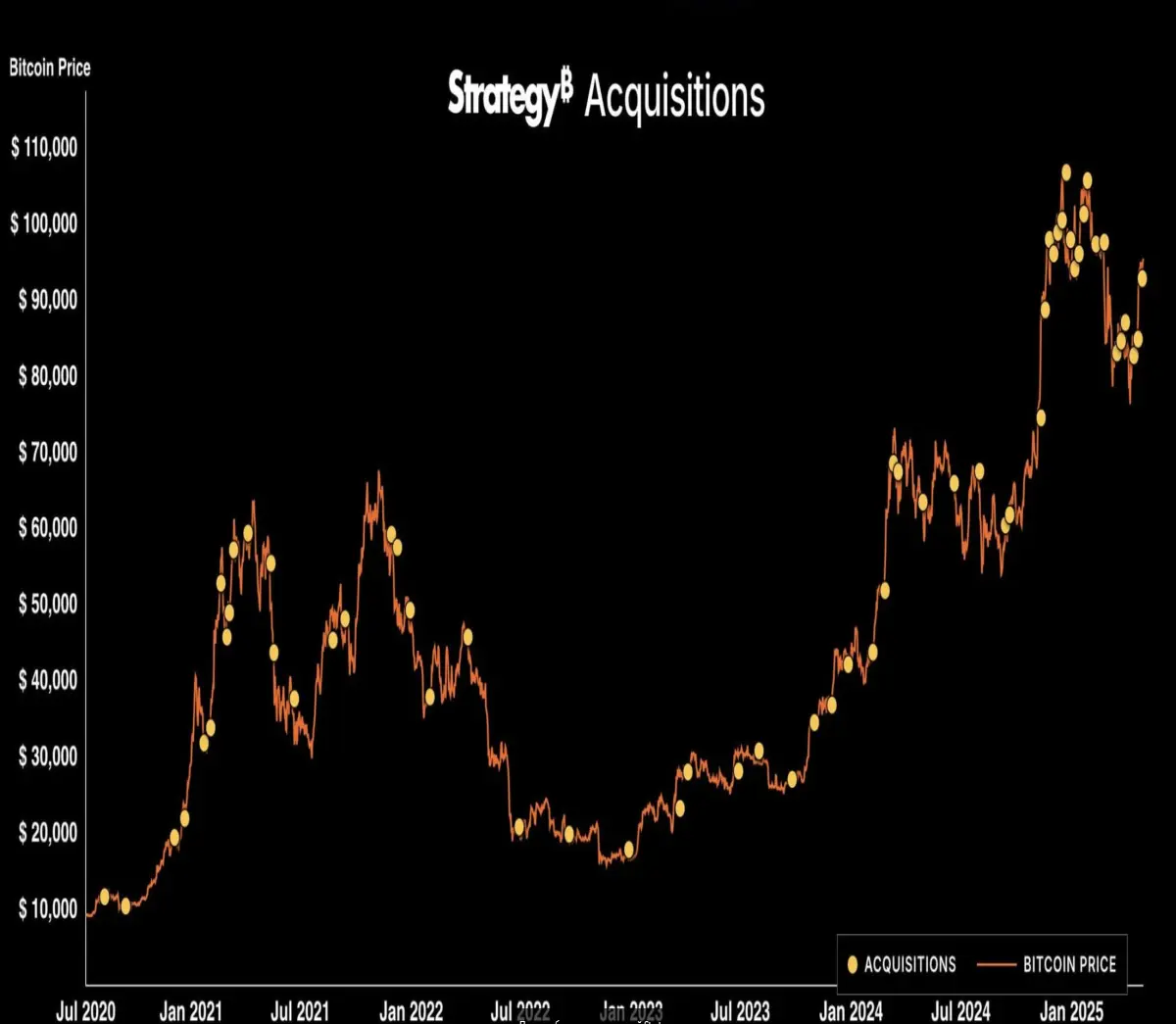
(Bitcoin purchases by Strategy)
By the end of April, Bitcoin increased by 14 percent, while Ethereum fell by 1.5 percent. Solana showed the best result and rose in price by 18.7 percent.






