Some US politicians do not share the cryptocurrency policy of the new presidential administration.
U.S. Senator Elizabeth Warren (Democrat from Massachusetts) criticized the bill on stablecoins, which is under consideration by Congress, writes Decrypt.
She also accused US President Donald Trump of using the legislation for his own financial interests.
We are talking about the bill FIT 21, aimed at creating a regulatory framework for digital assets, including for stablecoins. Elizabeth Warren has been criticizing the crypto business and legislative initiatives aimed at easing regulatory policies for many years.
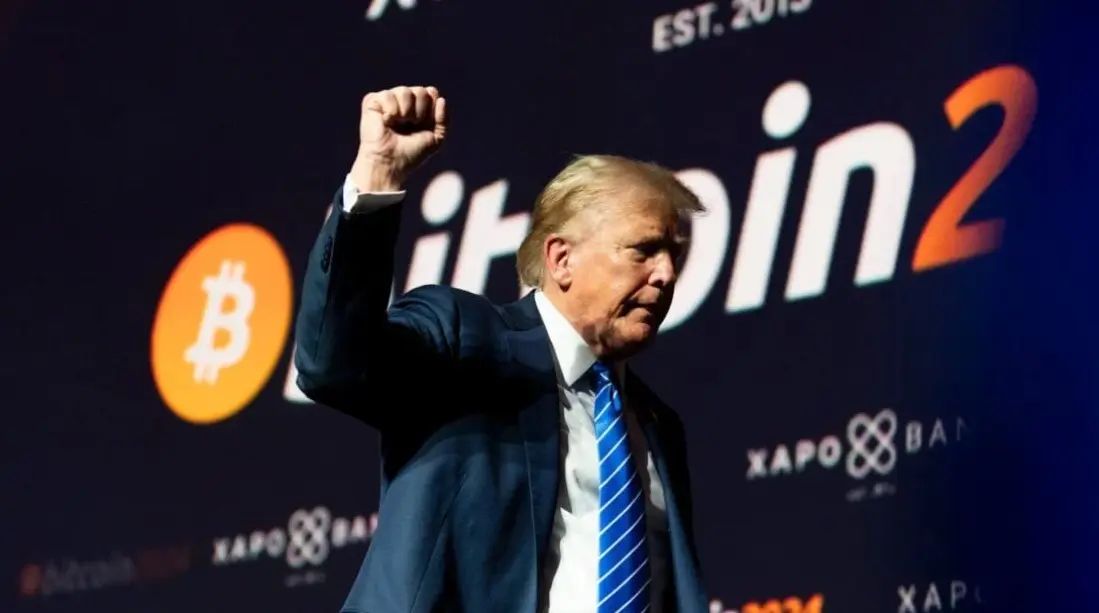
"This is Donald Trump's latest scam for his own enrichment. Congress should make an effort to amend the current bill on stablecoins, which is under consideration by the Senate. Otherwise, it will make it easier for Trump and Elon Musk to gain control of your money," Elizabeth Warren wrote on Twitter, referring to a message from the World Liberty Financial crypto project about launching its own USD1 stablecoin.
World Liberty Financial is a crypto platform where users can borrow and lend crypto assets, create liquidity pools, and make transactions with stablecoins.
It uses WLFI as a management token. In the documents on the project's website, Donald Trump is listed as the "main defender of cryptocurrencies." His sons Eric and Donald Trump Jr. are "web3 ambassadors," and Barron holds the title of "DeFi visionary."
The documents also state that none of the members of the Trump family, other affiliated persons and organizations is an official, director, founder, employee or operator of World Liberty Financial.
USD1 is a token pegged at the rate of 1:1 to the dollar exchange rate and secured by short—term US Treasury obligations, deposits in US dollars and other monetary equivalents. This is stated in the announcement on the project's blog.
Initially, USD 1 tokens will be issued on the Ethereum (ETH) and Binance SmartChain (BSC) blockchains, with plans to expand to other protocols in the future.
BitGo is listed as the cryptocurrency custodian. It is not specified who will provide the service for storing dollar funds.
The development of the dollar-based stablecoin market has been promoted by US President Donald Trump since the end of January, when his first decree after his inauguration, "Strengthening US Leadership in Digital Finance," was signed, with stablecoins highlighted as a key point.
Trump's media company, Trump Media (DJT), also entered the crypto market, concluding a partnership with one of the largest American crypto exchanges this week. Crypto.com to launch exchange-traded products under the brand Truth.Fi.
Last week, it was reported that Trump Media executives had registered a specialized organization (SPAC) in the Cayman Islands called Renatus in order to acquire cryptocurrency or blockchain companies.
All centralized stablecoins like the announced USD 1, as well as the existing USDT and USDC, have a similar business model.
The issuing companies receive their main income in the form of interest on US Treasury bonds, which are used as reserves to ensure the issue.
For example, at the end of January, Tether, the issuer of USDT, reported a record profit exceeding $13 billion, and the volume of assets providing issued tokens reached $157.6 billion!
Reserves in U.S. Treasury bonds rose to $113 billion, making Tether one of the largest holders of U.S. government debt in the world!
Elizabeth Warren statement comes amid the launch of stablecoins by various companies, not just the World Liberty Financial project.
For example, one of the largest money management companies, Fidelity Investments, plans to launch its own stablecoin, the Financial Times reports.
The investment company, which manages $5 trillion in assets, is "at an advanced stage of testing" its token.
"If they make it legal, we will engage in this business," Brian Moynihan, CEO of Bank of America, comments on the plans of the US administration for the development of the stablecoin market.
Some of the world's largest banks and fintech companies intend to compete with the business of the largest issuers of stablecoins Tether and Circle, the Financial Times wrote in early March.
Bank of America, Standard Chartered, PayPal, Revolut, Stripe and others intend to launch their own stable tokens to cover the cross-border payments market.
"A new era for stablecoins is beginning — hundreds of companies and governments are launching (or will launch soon) their stable tokens." - said the head of Tether Paolo Ardoino in X.
"According to conservative estimates, Tether USDT has more than 400 million users worldwide. There will be one billion soon," Ardoino added.
Time will tell what the disorderly release of stablecoins can lead to. Now these guys are shaking up the entire cryptosystem and very much.
One thing I can say is that this is not very good for the crypto market.
In the future, such a system involving ETFs may be unstable. Already, this is changing the usual cryptocurrency cycles. Is there a landslide ahead? Everything is possible.
Be careful and please take care of yourself!





