
Good day everyone,
I hope you are all well and having excellent day, welcome to CryptoGod-1’s blog on all things crypto. In this post I will be looking at an interesting company known as Crypto AG, and how they were part of one of the most extensive and elusive known deceptions in international spying history.
Crypto AG
The company known as Crypto AG, based out of Switzerland and founded by Russian-born Swede Boris Hagelin in 1952. Originally it was known as AB Cryptoteknik and founded by and founded by Arvid Gerhard Damn in Stockholm in 1920. After Damn's death and just before World War II Cryptoteknik came under the control of Hagelin, who had been an early investor. Hagelin fled to New York, along with his wife, in the 1940's after the Nazis had occupied Norway. However, it is not the crypto related company one may think. Instead, Crypto AG is a company trusted by governments all over the world to keep the communications of their spies, soldiers and diplomats secret.

Boris Hagelin
Crypto AG got their first venture with a a contract to build code-making machines for U.S. troops during World War II. It quickly became the dominant maker of encryption devices for decades due to becoming engulfed with cash, and during these years they developed their way from mechanical gears to electronic circuits and, finally, silicon chips and software as the development of technology advanced. The firm made millions of dollars selling equipment to more than 120 countries well into the 21st century, and some of its clients include Iran, military juntas in Latin America, nuclear rivals India and Pakistan, and even the Vatican.
However, the company has a shrouded and dark past which was unknown to many at the time. The company was secretly purchased for US $5.75 million and jointly owned by the American Central Intelligence Agency (CIA) and West German Federal Intelligence Service (BND) from 1970 until about 1993. From 1993 until 2018 the company was solely owned by the CIA. None of its customers knew at the time that the agency had rigged the company’s devices so they could easily break the codes used by countries to send encrypted messages.
The operation, known as "Operation Rubikon" was one of the most guarded secrets of the Cold War era and was exposed as part of a classified, comprehensive CIA history of the operation obtained by The Washington Post and ZDF, a German public broadcaster, in a joint reporting project. It was published on the 11th of February 2020. The backdoored equipment sold by the company allowed America, British, and German national signals intelligence agencies to decipher the codes used by other nations as part of their intelligence surveillance. It is worth noting that neither the Soviet Union or the People's Republic of China were customers of Crypto AG, but many of their allied nations were.
The declassification of the operation takes into account the CIA officers who ran the program and the company executives entrusted to execute it. The origins are noted along with the internal strife and conflicts which almost derailed the entire operation. It also highlights how the United States and its allies exploited other nations’ gullibility for years, taking their money and stealing their secrets.
Originally the operation was known by the code name “Thesaurus” and later “Rubicon" and it ranks among one of the most audacious and daring operations in CIA history. Within the CIA report it notes:
“It was the intelligence coup of the century. Foreign governments were paying good money to the U.S. and West Germany for the privilege of having their most secret communications read by at least two (and possibly as many as five or six) foreign countries.”
The control of the company by the CIA and their code-breaking sibling, the National Security Agency (NSA), began in the 1970's and along with their German counterparts they presided over hiring decisions, designing its technology, sabotaging its algorithms and directing its sales targets. From there the U.S. and German spies would merely sit back and listen to any and all encrypted messages.
As part of the operations Crypto AG was able to monitor Iran’s mullahs during the 1979 hostage crisis, along with giving intelligence about Argentina’s military to Britain during the Falklands War. They were also able to track the assassination campaigns of South American dictators and captured Libyan officials following the 1986 bombing of a Berlin disco.
While there were many success stories, the operation did have its limits. Some of the United States biggest adversaries, mainly the Soviet Union and the People's Republic of China, never purchased any equipment from Crypto AG. Their suspicions of the company’s ties to the West ensured they were never ensnared within the web. However, CIA history suggests that United States spies garnered plenty of information thanks to monitoring other countries’ interactions with Moscow and Beijing.

Cold War Propaganda
Along the way there were security breaches which led to suspicions of Crypto AG. Documents which were publicly released in the 1970s highlighted extensive and extensive correspondence between an NSA pioneer and Crypto AG's founder. Many foreign targets were tipped off by the careless statements of public officials including President Ronald Reagan, while a 1992 arrest of a Crypto AG salesman in Iran began a devastating “storm of publicity” after he was unknowingly caught selling rigged equipment. However, until 2020, the extent of the CIA and its German counterpart in Crypto AG was never fully revealed.
BND, the German spying agency, believed the risk of exposure was too great and withdrew from the operation in the early 1990s. The CIA on the other hand bought out the Germans stake in the company and continued with their operations, making the most of all of Crypto AG's availability in espionage until 2018 when the agency sold their assets in the company. This is according to current and former officials, however one must always question the reliability in what they disclose to the public and the CIA could very much still be active in ways with Crypto AG.
By 2018 the company's important in the global security market had fallen and this was in part by the spread of online encryption technology. While encryption used to be solely for governments and major corporations, these days strong encryption is now widely available on things such as mobile phone apps.
Modern Espionage
Crypto AG still remains relevant in modern espionage even if its standing has diminished. Thanks to the reach and time that Crypto AG sat at the fore of espionage, the United States managed to create a suite of global surveillance which ended up being exposed by Edward Snowden back in 2013. There have also been alleged links with foreign governments, including the Russian anti-virus firm Kaspersky, a text app linked to the United Arab Emirates, and the Chines phone company Huawei.
The information provided has come from the CIA history along with a parallel BND account. These were obtained by the Washington Post and ZDF when they did their exposé, along with interviews with current and former Western intelligence officials along with Crypto AG employees. Many did so under the condition of anonymity due to the sensitive nature of the subject. Much of the information provided was not allowed to be published and remains classified, but both U.S. and German officials did not dispute the authenticity of the documents shown to the Washington Post.
Both sides of the operation described the operation as successful beyond anything they had imagined possible, however there was tension between Germany and U.S. throughout. This mainly came down to money, control and ethical limits, especially given how much enthusiasm the United States showed towards spying on allies. During the 1980's roughly 40 percent of the diplomatic cables and other transmissions by foreign governments that cryptanalysts at the NSA decoded were part of "Operation Rubikon."
Crypto AG generated millions of dollars in profit, and much of that was split by the CIA and BND before being reinvested into other operations. The long-time headquarters of Crypto AG, based in Zug, Switzerland, still stands tall with the company logo atop the building. However, in 2018 Crypto AG was liquidated by shareholders whose identities have been permanently shielded. This is thanks to the byzantine laws of Liechtenstein, a tiny nation within Europe which boasts a Cayman Islands-like reputation for financial secrecy
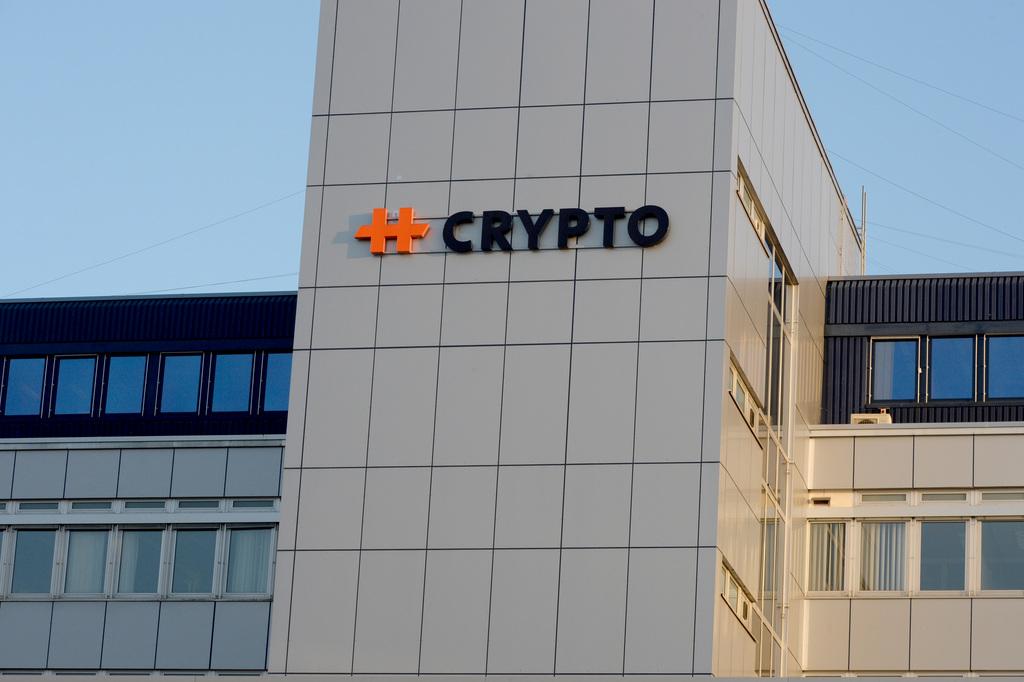
Crypto AG Building, Zug, Switzerland
Two companies purchased the majority of Crypto AG's assets. The first, CyOne Security, was formed as part of a management buyout. They now sell security systems exclusively to the Swiss government. The second, Crypto International, took over the former company’s brand and international business. Both have denied any ongoing connection to any intelligence service and one claimed to have been unaware of CIA ownership in the past.
CyOne Security is more connected to Crypto AG than Crypto International as the new company’s chief executive held the same position at Crypto for nearly two decades of CIA ownership. They denied any association with foreign intelligence services.
Andreas Linde, the chairman of the company which holds the rights to Crypto’s International products and business stated:
“We at Crypto International have never had any relationship with the CIA or BND — and please quote me. If what you are saying is true, then absolutely I feel betrayed, and my family feels betrayed, and I feel there will be a lot of employees who will feel betrayed as well as customers.”
Back when the revelations were announced in February 2020 the Swiss government made an announcement at the same time that it would be launching an investigation into Crypto AG’s ties to the CIA and BND. They also revoked the export license of Crypto AG. However the timing of the move by the Swiss government was a curious one as the CIA and BND documents indicate that Swiss officials were aware of these ties for decades but only decided to intervene once news outlets had exposed the arrangement. By December 2020 Peter Marti, the government’s special public prosecutor, made the announcement that the case had been concluded. They noted that Crypto AG did not violate any laws when applying for export licences for what turned out to be compromised encryption devices, and the Swiss Attorney General dropped all criminal charges.
Ethical Questions
The documents revealed plenty of information regarding Operation Rubicon, however they do not take into consideration when or if the CIA ended its involvement with Crypto AG. These documents were written with the bias of those involved in the operation and therefore paint the project in a triumphant light, one which aided the United States during the Cold War while also keep a close eye on dozens of authoritarian regimes in their bid to protect the interests of the United States and its allies.
One question which the papers did not provide any answers is quite an unsettling one. Did the United States know, and what did or did it not do, about nation which used Crypto AG machines while engaged in assassination plots, ethnic cleansing campaigns and human rights abuses? Perhaps the United States were in a position to intervene in, or at least expose, international atrocities throughout the previous century, and perhaps they opted against doing so at times to preserve their secret streams of intelligence.
During World War II it has been well documented how Alan Turing managed to crack the German 'Enigma Machine' code used by the Nazis. His team's work at Bletchley Park in Buckinghamshire was part of a top secret operation and Turing, along with fellow code-breaker Gordon Welchman, invented a code breaking machine known as the Bombe. The intelligence gained helped to significantly reduce the work of the code-breakers and during the 1940's was a major help in the war effort. They faced their own ethical questions at times, especially when they knew of incoming German attacks but at times could not intervene as it would alert the Germans to the fact their Enigma code had been cracked. While not at the same capacity of a World War, the United States faced similar ethical questions when making use of their Crypto AG intelligence.

Alan Turing
The files also fail to deal with other obvious ethical issues as part of its operation: the deception and exploitation of adversaries, allies, along with hundreds of unwitting Crypto employees. Many of these employees travelled globally to sell Crypto AG machines which they had no idea were rigged. In doing so, they were unknowingly putting their own safety at risk.
Many Crypto AG employees gave interviews where they noted that while some had suspicions of the company operating with Western intelligence, the actual revelations in the documents had deepened a sense of betrayal of both themselves and customers.
Juerg Spoerndli, an electrical engineer who spent 16 years at Crypto AG, noted:
“You think you do good work and you make something secure. And then you realize that you cheated these clients.”
Bobby Ray Inman, director of the NSA and deputy director of the CIA in the late 1970s and early 1980s and was involved in running the program, remained unapologetic when he stated:
“Do I have any qualms? Zero. It was a very valuable source of communications on significantly large parts of the world important to U.S. policymakers.”
The Hagelin 'Problem'
Boris Hagelin, as previously noted, was the founder of Crypto AG along with being an esteemed entrepreneur and inventor. He was born in Russia but who fled to Sweden when the Bolsheviks took power. He then fled once more, this time to the United States, when the Nazis occupied Norway in 1940. On his voyage Hagelin brought an encryption machine that looked like a fortified music box. It had a sturdy crank on the side and an assembly of metal gears and pinwheels under a hard metal case.
The device was nowhere near as sophisticated or secure as the Enigma machines being used by the Nazis, but Hagelin’s M-209 was portable, hand-powered and perfect for troops on the move. Photos from World War II show soldiers with the eight-pound boxes strapped to their knees as a means of communication without the enemy being able to intercept. Some of Hagelin’s devices have been preserved at a private Museum in Eindhoven, the Netherlands. The museum was founded by Marc Simons and Paul Reuvers and is known as the Crypto Museum.

The devices were tedious to use, with users needing to rotate a dial, letter by letter, and thrust down the crank. The hidden gears within the machine would then create an enciphered message on a strip of paper. From there a signals officer would transmit the scrambled message via Morse code to a recipient who would then go through the process of reversing the sequence. The security for these machines was very weak at the time and it was believed that any adversary could break the code with enough time, although it would take hours to do so. These machines were mostly used for tactical messages about troop movements so by the time any Nazi could have deciphered a code its value had probably perished.
During World War II around 140,000 M-209s were built at the Smith Corona typewriter factory in Syracuse, New York. This was part of a United States Army contract worth $8.6 million to Crypto AG. Once the war was over Hagelin returned to Sweden to reopen his factory while also brining a personal fortune and a lifelong sense of loyalty to the United States.
While Hagelin felt a sense of loyalty to the United States, American spies remained vigilant and kept an eye on his post-war operations. During the 1950's Hagelin created a more advanced version of his machine with a new, irregular, mechanical sequence that briefly stumped American code-breakers. The new machine, known as the CX-52, alarmed U.S. officials and they began to discuss what they called the “Hagelin problem.”
According to CIA history these were considered “the Dark Ages of American cryptology.” The Soviets, Chinese and North Koreans were using code-making systems that were all but impenetrable and U.S. began to worry that if Hagelin began to sell devices to other nation then the rest of the world would go dark for the U.S. and their spies.
The United States had a number of advantages in their position with Hagelin, including:
- his ideological affinity for the country
- his desire for the United States to remain a major customer
- the threat that the United States could flood the market with surplus M-209s from the war
Most importantly, the United States held a key card which was in the form of William Friedman. His is often considered the father of American cryptology and Friedman had known Hagelin since the 1930s. The pair had created a lifelong friendship over their shared backgrounds and interests of encryption, along with both being of Russian heritage.
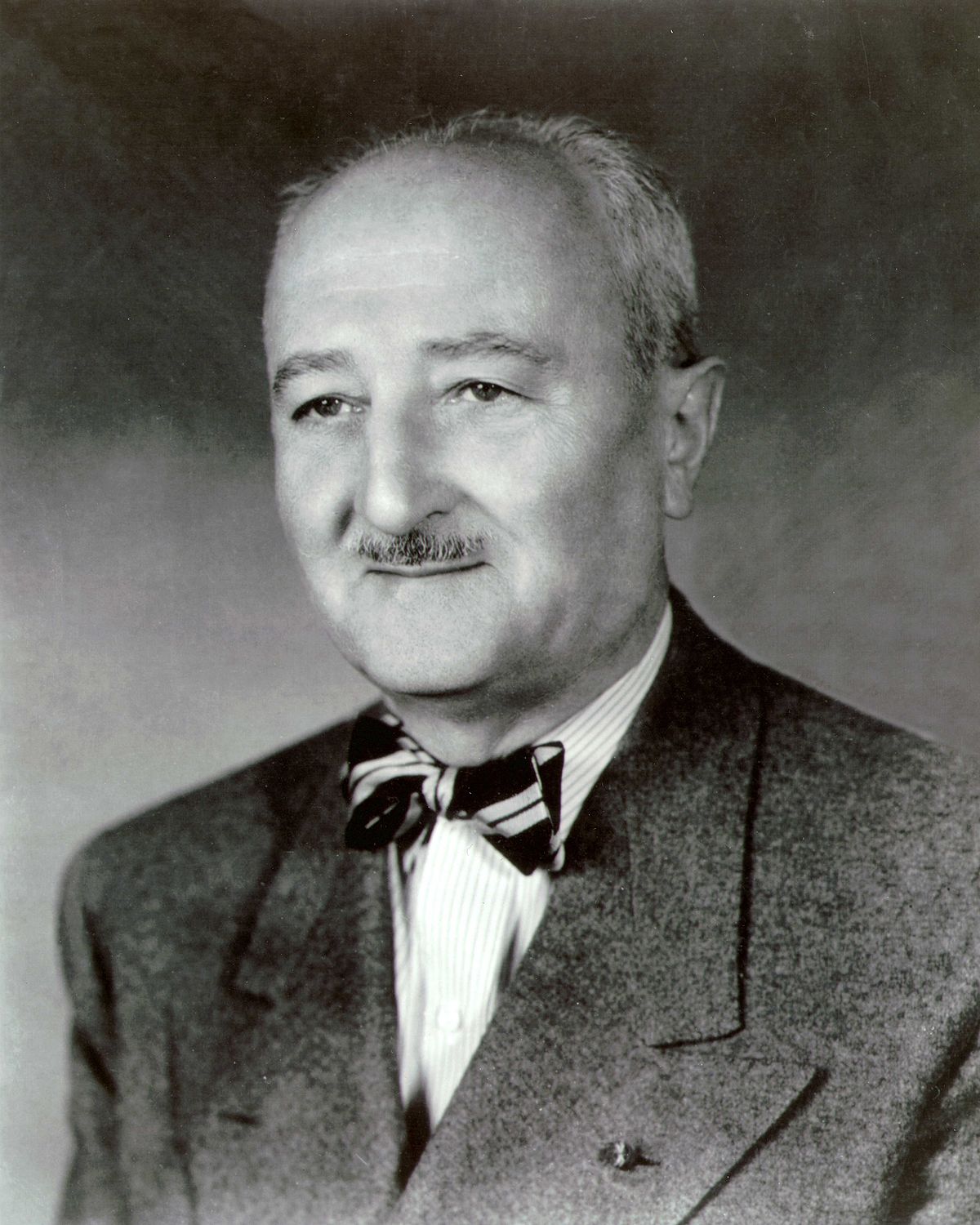
William Friedman
It is widely believed that Operation Rubicon may have never taken place if Hagelin and Friedman had not made an agreement at the very first secret intelligence meeting between Hagelin and the United States, which took place over dinner at the Cosmos Club in Washington in 1951. By that time Hagelin had already moved his company to Switzerland and the deal required him to restrict sales of his most sophisticated models to countries approved by the United States. Nations who were not deemed secure enough to be on that list could only be sold older, weaker systems. To ensure Hagelin was not at a loss he would be compensated for his lost sales, as much as $700,000 up front.
Hagelin abided by the agreement from the outset but the United States spent years with top officials from the CIA and NSA bickering over the terms of the deal along with the wisdom of the operation. Over the next two decades Hagelin's secret relationship with U.S. intelligence agencies deepened. In the 1960's the CIA and Hagelin entered into a “licensing agreement” that paid him $855,000 to renew his commitment to the handshake deal. He was also paid $70,000 a year in retainer from the CIA and they began to give his company cash infusions of $10,000 for “marketing” expenses. This was to ensure that Crypto AG would remain at the fore of encryption and be able to secure contracts with most of the world’s governments ahead of other start-ups in the encryption field.
It was a scheme created to ensure adversaries could not acquire weapons or technology which could give them an advantage over the United States. While this was a huge coup for the U.S. in terms of remaining ahead of the rest in the encryption race, it was only the beginning as within a decade the entire operation was under the control of the CIA and BND.
Advancement in Technology
From the off United States officials had considered requesting Hagelin to allow them copy his machines, but Friedman overruled them as he believed that Hagelin would see that as a step too far and thus sour the relationship. During the mid1960's the CIA and NSA saw their opportunity when advancements in technology meant Hagelin to accept outside help. This was to adapt his machines to the new technology otherwise he would be left in the dust with his mechanical machines.
Integrated circuits were at the fore and seemed likely to create a new era of unbreakable encryption. NSA cryptologists were concerned about their potential but a senior senior analyst, Peter Jenks, noted a potential vulnerability. Jenks noted that if the machine was carefully designed by a clever crypto-mathematician then it could be made to appear that it was producing endless streams of randomly generated characters thanks to the circuit based system. However, in reality they could be made to repeat themselves in short enough intervals that analysts at the NSA along with their powerful computers could crack the pattern.
In 1967 Crypto AG unveiled the new, all-electronic model, H-460. This machine had inner workings which were entirely designed by the NSA and the CIA history shows they all but gloats about crossing this threshold. They CIA history notes:
“Imagine the idea of the American government convincing a foreign manufacturer to jimmy equipment in its favour. Talk about a brave new world.”
The NSA avoided installing crude “back doors” or secretly making the device reveal its encryption keys. However, the agency still had to intercept other governments’ communications while also plucking their signals out of the air. In later years, the did this by tapping into fibre optic cables.

H-460
The way the CIA managed to manipulate Crypto AG's algorithms helped them to streamline the code-breaking process. This meant a task that could have previous taken months now took mere seconds. Crypto AG always created two versions of its products, one which was secure and sold to friendly governments, and another which was rigged and sold to the rest of the world.
This change in tact meant the U.S.-Hagelin partnership was no longer just denying other governments the opportunity to secure advanced encryption machines, instead they were actively ensuring those governments were purchasing tampered machines. Crypto AG had gone from restricting sales of its best equipment to actively selling devices that were engineered to betray their buyers.
The change to selling electronic products saw business soar for Crypto AG and this led to a dependence on the NSA. While other governments were desperate to update their technology from the outdated mechanical devices, they were in fact purchasing 'superior machines' which were easier for U.S. spies to read.
Crypto AG after Hagelin
Towards the latter parts of the 1960's Hagelin was approaching 80 years of age and he was anxious to secure the future for his company. At the time there was more than 180 employees and the CIA were feeling similarly anxious about the fate of Crypto AG, and Operation Rubicon, if Hagelin were to suddenly sell or die.
Hagelin had a son, named Bo, who he had hoped would continue his legacy in the business but U.S. intelligence officials regarded him as a “wild card.” They worked to conceal the partnership from Bo, and in 1970 Bo Hagelin was killed in a car crash on Washington’s Beltway. While it may seem convenient that Bo was suddenly out of the picture, there were no official indications of foul play.
For a number of years U.S. intelligence officials discussed the idea of buying Crypto AG but internal friction between the CIA and NSA ensured this never came into fruition. This was until two other spy agencies entered the picture. The French, West German and other European intelligence services either figured out the partnership or had been told about it, but they were clearly jealous of the arrangement between the United States and Crypto AG. Many wish to secure a similar deal for themselves.
Hagelin received an offer from the French intelligence service to purchase his company, along with the German intelligence service, in 1967. Immediately Hagelin refused the offer, and reported it to his CIA handlers. However, in 1969 the Germans returned with another offer, and this time it was with the blessing of the United States. A meeting was held in 1969 at the West German Embassy in Washington where Wilhelm Goeing, head of the nations cipher service, made his proposal and indicated interest in the Americans becoming partners.
A couple of months later the Director of Central Intelligence, Richard Helms, approved the deal and dispatched a subordinate to Bonn, the West German capital. His job was to negotiate the terms but ensure one major caveat to the deal - the French were not to be involved and CIA officials told Goeing they would have to be “shut out.”
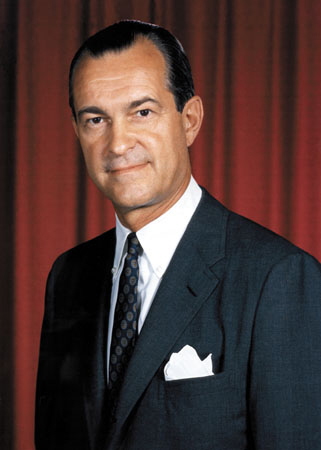
Richard Helms, Director of Central Intelligence from 1966 to 1973
The West Germans accepted these conditions, and a deal between the two spy agencies was recorded in a June 1970 memo. This memo was signed by a CIA case officer in Munich, whose shaky signature denotes his early stages of Parkinson’s disease, along with an indistinguishable signature of his BND counterpart. The two agencies agreed to split the cost equally to buy out Hagelin for approximately $5.75 million, although the CIA left it in the hands of the BND to conceal any trace of the transaction for the public eye.
The Liechtenstein law firm, Marxer and Goop, were enlisted to help hide the identities of the new owners of Crypto AG. This was done via a series of shells and “bearer” shares that required no names in registration documents. The firm were paid an annual salary “less for the extensive work but more for their silence and acceptance" according to BND history.
Crypto AG had a new board of directors put in place to oversee the company. Only one member of the board was aware of the CIA and BND involvement. This was Sture Nyberg, who Hagelin had turned over day-to-day management prior to selling the company. CIA history notes that this allowed the CIA and BND to control the activities of Crypto AG in secret. Nyberg left the company in 1976.
Both the CIA and BND held regular meeting to discuss the operations of Crypto AG. The CIA used a secret base in Munich, initially on a military installation used by American troops and later in the attic of a building adjacent to the U.S. Consulate. This was their headquarters for the operation. A series of codenames were used for the program. Crypto was called “Minerva,” which is also the title of the CIA history. The operation was at first code-named “Thesaurus,” but during the 1980's it was changed to “Rubicon.” The profits from Crypto AG were split on an annual basis between the CIA and BND, although according to German history the BND handled the accounting and delivered the cash owed to the CIA in an underground parking garage.
The agreement between the CIA and the BND suffered from petty disagreements and tensions from the off. The CIA operatives felt the BND were preoccupied with turning a profit while the Americans “constantly reminded the Germans that this was an intelligence operation, not a money-making enterprise.” Quite often the Germans felt taken aback by how willing the Americans were to spy on all but their closest allies, with targets including NATO members Spain, Greece, Turkey and Italy.
Given the limitations of their ability to successfully run a high-tech company, the two agencies enlisted corporate outsiders for assistance. The BND hired Siemens, a Munich-based conglomerate and tech giant, to advise on business and technical issues. They were given 5% of Crypto AG's sales. The CIA decided to bring in Motorola to assist with balky products. This was done with the clear direction to the company's CEO that it was for U.S. intelligence.
During the operation the Germans were never given admittance to the long standing “Five Eyes,” an intelligence pact between the United States, Britain, Australia, New Zealand and Canada. However, their alignment with the CIA as part of Crypto AG meant the Germans moved closer into the American espionage fold than any would have imagined following World War II. With the backing of two of the world’s premier intelligence agencies along with the support of two of the world’s largest corporations, Crypto AG's business flourished. Sales went from 15 million Swiss francs in 1970 to more than 51 million in 1975. The company expanded with more than 250 people employed.
Suspicions Abroad
Given the level of espionage at hand, the NSA built an empire for eavesdropping around three main geographic targets. Each was given its own alphabetic code: A for the Soviets, B for Asia and G for virtually everywhere else. During the 1980's more than half of the intelligence gathered by G group was flowing through Crypto AG machines and this was something that the U.S. relied upon during a multitude of crises.
In 1978 leaders from Egypt, Israel and the United States met at Camp David for negotiations on a peace deal and the NSA secretly monitored the communications of Egyptian President Anwar Sadat with Cairo.
In 1979 a group of Iranian militants stormed the U.S. Embassy in Iran and took 52 American citizens hostage. President Carter sought their release through back-channel communications via Algeria. At the time Inman was the director at the NSA and he noted that President Jimmy Carter would routinely contact them to ask how the Ayatollah Khomeini regime was reacting to the latest message. Inman stated:
“We were able to respond to his questions about 85 percent of the time.”
The Iranians and Algerians were making use of Crypto AG devices to communicate, but Inman also noted that during the operation he encountered one of the most difficult binds of his government service career. It emerged through Libyan communications that the president's brother, Billy Carter, was assisting Libyan interests in Washington and he was on the payroll of leader Moammar Gaddafi. At the time Inman referred the incident to the Justice Department, and the FBI launched and investigation into Carter. He denied taking any payments, and in the end he was not prosecuted but agreed to register as a foreign agent.
During 1981 Saudi Arabia was Crypto AG's largest customer, closely followed by Iran, Italy, Indonesia, Iraq, Libya, Jordan and South Korea. To ensure Crypto AG remained at the fore of the encryption business they engaged, along with their secret owners, in a smear campaign of rival companies. They also, according to the documents, plied government officials with bribes. Crypto AG sent their executives to Riyadh, Saudi Arabia, with 10 Rolex, and according to BND history they also invited the Saudis to Switzerland for a 'training campaign' in which the participants enjoyed a pastime of visiting brothels. This was all financed by Crypto AG.
Some of these incentives led to sales of Crypto AG equipment to nations which were ill-equipped to make use of the complicated systems. Nigeria purchased a large shipment of Crypto AG machines and after two years with no corresponding payoff in intelligence Crypto AG sent a company representative to investigate. The representative discovered the equipment was sitting in a warehouse in its original packaging.
In 1982 the Reagan administration was able to pass on intelligence information to the British during the brief war over the Falkland Islands due to Argentina making use of Crypto AG machines. CIA history does not provide any detail on what sort of information was passed on to the British, but it is believed the information was in relation to troops and movement which assisted the British in winning the war.
The 1986 bombing at La Belle disco in West Berlin, which saw two U.S. soldiers and a Turkish woman killed along with 229 others injured, almost led to President Reagan jeopardising the Crypto AG operation when he cited evidence that Libya was complicit in the attack. Reagan said the United States had evidence of Libya’s complicity that “is direct, it is precise, it is irrefutable.” The disco had been popular with American soldiers stationed in West Germany and a mere ten days after it took place Regan ordered retaliatory strikes against Libya. During these strikes one of Gaddafi's daughters was killed.

Bombing at La Belle disco, West Berlin
Reagan noted that the evidence had shown the involvement of Libya’s embassy in East Berlin, where they had received orders to carry out the attack a week before it happened. He also stated that a day after the bombing the embassy “reported back to Tripoli on the great success of their mission.” Reagan's clues in his statements had made it clear that Tripoli’s communications with its station in East Berlin had been intercepted and decrypted, and this alerted more than just the Libyan government. Iran immediately became concerned about the security of their equipment as they knew Libya also made use of Crypto AG machines. Tehran didn’t act on those suspicions until six years later.
While suspicions were growing in some nations surrounding the legitimacy of their encrypted devices, records show that at the very minimum Israel, Sweden, Switzerland and the United Kingdom were aware of the operation or were provided intelligence from it by the United States or West Germany. From the 1950s and well into the 2000s records show that more than 120 nations made use of Crypto AG's devices, along with principality states and world organisations. While a comprehensive list was not retained, records do note at least 62 customers of Crypto AG during that period. They include:
Algeria
Angola
Argentina
Austria
Bangladesh
Brazil
Burma
Chile
Colombia
Czechoslovakia
Egypt
Gabon
Ghana
Greece
Guinea
Honduras
Hungary
India
Indonesia
Iran
Iraq
Italy
Ivory Coast
Japan
Jordan
Kuwait
Lebanon
Libya
Malaysia
Mauritius
Mexico
Morocco
Nicaragua
Nigeria
Oman
Pakistan
Peru
Philippines
Portugal
Qatar
Republic of the Congo
Republic of Ireland
Republic of South Africa
Romania
Saudi Arabia
South Korea
Spain
Sudan
Syria
Tanzania
Thailand
The United Nations
Tunisia
Turkey
U.A.E.
Uruguay
Vatican City
Venezuela
Vietnam
Yugoslavia
Zaire
Zimbabwe
Internal Struggles
Following the company's take over by the CIA and the BND, one of the most difficult tasks at hand was keeping Crypto AG's workforce compliant and unsuspecting. The agencies went to extreme lengths at times to remain hidden at all costs, including making sure employees were well paid and had substantial perks which included access to a small sailboat on Lake Zug near the company's headquarters.
Many who were involved working closely with the encryption designs posed the question, even if just to themselves, as to why there were algorithms being imposed upon the devices by a mysterious external entity. Crypto AG executives often led employees to believe that the designs were being provided as part of the consulting arrangement with Siemens. If so, many would ponder why the encryption flaws were so simple to detect and why Crypto AG engineers were constantly blocked from fixing them?
Back in 1977 the chief executive at Crypto AG, Heinz Wagner, was aware of the roles of the CIA and BND in the company. He suddenly and abruptly fired an engineer soon after the NSA complained that diplomatic traffic coming out of Syria had suddenly became unreadable. It was discovered that the engineer, by the name of Peter Frutiger, had held internal suspicions that Crypto AG was collaborating with German intelligence. During one of Frutiger's multiple trips to Damascus to address complaints regarding their Crypto AG devices he fixed the vulnerabilities without any authority from headquarters.
Frutiger, according to CIA history, “had figured out the Minerva secret and it was not safe with him.” The CIA were livid, but not with Frutiger. Instead they were livid with chief executive Heinz Wagner for firing Frutiger rather than keeping him quiet on the company payroll. Things got even worse in 1978 when Wagner hired a gifted electrical engineer by the name of Mengia Caflisch.

Mengia Caflisch
Caflisch had spent a number of years working in the United States as a radio-astronomy researcher for the University of Maryland prior to returning to her native Switzerland. Once back home she applied for a job at Crypto AG and Wagner jumped at the chance to hire her. U.S. officials were not impressed as they immediately raised concerns that she was “too bright to remain unwitting.”
Once in her job Caflisch began to probe the vulnerabilities of the company’s products. Along with a colleague in the research department known as Spoerndli, they ran a series of tests and “plaintext attacks” on devices including a teletype model, the HC-570. This had been built using Motorola technology, Spoerndli said in an interview. He went on to state:
“We looked at the internal operations, and the dependencies with each step. The algorithms always looked fishy.”
The pair were convinced they could crack the code by comparing only 100 characters of enciphered text to an underlying, unencrypted message. This was a substandard and low level of security, and in the ensuing years Caflisch continued to pose problems for the operation. During he employment she designed an algorithm so strong that NSA officials worried it would be unreadable. The design was placed into 50 HC-740 machines rolling off the factory floor prior to executives discovering the development and stopping it.
The 50 HC-740 machines were sold to banks to ensure they remained out of the hands of governments, while the original rigged algorithm was restored to the rest of the production line. At one point, due to the difficulty in explaining the situation, Wagner told a select group of members of the research and development unit that Crypto AG “was not entirely free to do what it wanted.” The employees were subdued by this revelation and took it as confirmation that the company’s technology faced constraints imposed by the German government.
Caflisch noted in an interview regarding her suspicions:
“I just had an idea that something might be strange. Not all questions appeared to be welcome.”
The CIA and BND were convinced that their routine disembodied interference was unsustainable and therefore decided they required someone who could keep the employees at the research department department in check while also developing a more advanced and undetectable weakness for the algorithms. The agencies looked to other spy services for potential candidates and settled on an individual put forward by Sweden’s intelligence service. As previously mentioned Sweden had been kept in the loop due to Hagelin’s ties to the country.
The candidate was Kjell-Ove Widman, a mathematics professor in Stockholm, who had made a name for himself in European academic circles due to his research on cryptology. Widman had previously been a military reservist who had worked closely with Swedish intelligence officials. The CIA considered Widman to have an even more important attribute - an affinity for the United States that he had formed while spending a year in Washington state as an exchange student. During that exchange his host family had trouble pronouncing his Swedish name so they nicknamed him 'Henry,' a moniker he later used with his CIA handlers.
The recruitment of Widman was effortless according to officials involved, as he was brought to Munich in 1979 for a round of interviews with executives from Crypto AG and Siemens. Widman faced questions from a half-dozen men seated around a table in a hotel conference room, but as the group broke for lunch two men asked Widman to stay behind for a private conversation. A BND case officer named Jelto Burmeister asked Widman “Do you know what ZfCh is?” This was an acronym for the German cipher service and when Widman replied that he did, Burmeister said, “Now, do you understand who really owns Crypto AG?”
Widman was then introduced to Richard Schroeder, a CIA officer stationed in Munich to manage the agency’s involvement in Crypto AG. Widman shook hand in agreement to enlist in the operation and Crypto AG installed him as a “scientific advisor” reporting directly to Wagner. He was the CIA and BND's spy hidden amongst the employees of Crypto AG. Widman would leave Zug once every six weeks to meet with representatives of the NSA and ZfCh.
At these meetings they would agree on modifications and work up new encryption schemes. Widman would then deliver these blueprints to Crypto AG engineers, and the CIA noted that Widman was the “most important recruitment in the history of the Minerva program.” The stature associated with Widman ensured nobody in Crypto AG could challenge his authority. With Widman settled into the company, the secret partners devised principles for rigged algorithms which had to be “undetectable by usual statistical tests” and, if discovered, be “easily masked as implementation or human errors.”
Back in 1982 when Argentina lost the Falklands war, they were convinced that their Crypto AG equipment had betrayed secret messages and helped British forces. Widman was sent to Buenos Aires and he informed the Argentinians that potentially the NSA had cracked an outdated speech-scrambling device that Argentina was using. He did reassure them that their main products from Crypto AG, the CAG 500, were secure and remained “unbreakable.”
Widman is retired these days and living in Stockholm, and during his time at Crypto AG he felt he was “engaged in a critical struggle for the benefit of Western intelligence. It was, he said, the moment in which he felt at home. This was his mission in life.”
In 1982 Hagelin, who was 90 years of age at the time, became ill on a trip to Sweden, He ended up in hospital but recovered enough to return to Switzerland. CIA officials were worried that Hagelin’s extensive collection of business records and personal papers at his office in Zug may contain incriminating records. Therefore Schroeder, with Hagelin’s permission, arrived in Zug to spend several days going through the files and sending any incriminating ones back to CIA headquarters, where they reside to this day. Hagelin remained an invalid and he died in 1983.
Germany's Departure
During the 1980's Crypto AG suffered financially, with several years of losses. However the intelligence flowed in, with U.S. spy agencies intercepting more than 19,000 Iranian communications sent via Crypto AG machines during their decade long war with Iraq. The intelligence was mined for reports on subjects such as Tehran’s terrorist links and attempts to target dissidents. According to CIA reports Iran's communications were 80 to 90 percent readable to U.S. spies, and had the Iranians not been making use of Crypto AG's compromised devices the likelihood is that figure would have been less than 10 percent.
During the United States manhunt for Panamanian leader Manuel Antonio Noriega in 1989, the dictator sought refuge in the Apostolic Nunciature, which is the equivalent of a papal embassy. Thanks to the Vatican's use of Crypto AG devices, his whereabouts were exposed by the mission’s messages back to Vatican City.
The first major crisis of the Crypto AG era was faced in 1992 when Iran, who had long been suspicious of Crypto AG devices, took a company salesman by the name of Hans Buehler captive. Buehler was 51 years old at the time and was considered one of the company’s best salesmen. He had travelled to Tehran multiple times over a number of years due to Iran being one of Crypto AG's largest contracts. He had been questioned extensively back in 1986 by Iranian officials after the disco bombing in Berlin and U.S. missile strikes on Libya, but this time he was detained.
Buehler had boarded a Swissair flight to Tehran but failed to return on schedule. Crypto AG immediately informed the Swiss authorities and then discovered Buehler had been arrested by the Iranians. Swiss consular officials were allowed to visit Buehler and reported that he was in poor mental shape. Buehler was held captive for nine months before finally being released after Crypto AG agreed to pay the Iranians $1 million. This money was secretly provided by the BND, but the CIA did not contribute as they cited United States policy of not paying ransom demands for hostages.

Hans Buehler
The relationship between the CIA, BND, and Crypto AG was something Buehler knew nothing about, nor was he aware of the vulnerabilities in their devices. When he returned Buehler was traumatised and suspicious that Iran knew more about the company he worked for than he did. Buehler began talking with Swiss news organisations about his ordeal and mounting suspicions. This publicity drew more attention to Crypto AG, and in 1994 Buehler appeared on Swiss television in a report that also featured the fired former Crypto AG engineer Frutiger. Having been fired for fixing Syria’s encryption systems years earlier, Frutiger was just as suspicious as Buehler of the goings on behind the scenes at Crypto AG.
At that time Wagner had been succeeded as chief executive by Michael Grupe and Grupe agreed to appear on Swiss television. He disputed what he knew to be factual charges on air and according to CIA history “Grupe’s performance was credible, and may have saved the program.” The controversy took several years to die down, and in 1995 the Baltimore Sun ran a series of investigative stories about the NSA. One of them, titled “Rigging the Game” exposed aspects of the American's relationship with Crypto AG. The article reported NSA officials had travelled to Zug in the mid-1970s for secret meetings with Crypto AG executives. These officials posed as consultants for a front company called “Intercom Associates” but when they introduced themselves they used their real names. These names were recorded on notes of the meeting by a company employee.
The public onslaught led to some employees looking for work elsewhere. At the same time at least a half-dozen countries, including Argentina, Italy, Saudi Arabia, Egypt and Indonesia, either cancelled or fully suspended their contracts with Crypto AG. Interestingly, Iran was not among them and continued to purchase Crypto AG equipment almost immediately, according to CIA documents. The Buehler case was given the codename “Hydra” and the biggest fallout from it was the CIA-BND partnership.
Tensions between the BND officials and the CIA officials had long been growing, especially given the American's refusal to distinguish adversaries from allies. The two spy agencies often disputed which nations deserved to receive the secure versions of Crypto AG’s products, with the United States often insisting that the rigged equipment be sent to almost anyone, even allies, as long as they could be convinced to purchase it.
Wolbert Smidt, the former director of the BND, complained about the United States and how they “wanted to deal with the allies just like they dealt with the countries of the Third World.” Another BND official also noted how to the Americans “in the world of intelligence there were no friends.” With the Cold War over and the Berlin Wall down, the reunified Germany had a different sense of priorities. They realised they were far more directly exposed to the risks of the Crypto AG operation and after the events of "Hydra" the Germans feared the disclosure of their involvement would trigger European outrage and lead to enormous political and economic fallout.
According to CIA history, on the 9th of September 1993, the CIA station chief in Germany, Milton Bearden, reached an agreement with BND officials for the CIA to purchase Germany’s shares for $17 million. This was after Konrad Porzner, the chief of the BND, made it clear to CIA Director James Woolsey that the upper ranks of the German government were losing support for the operation. German intelligence officials were livid at their departure from an operation they had largely conceived, and what was considered one of the most successful espionage programs the BND had ever been a part of.
The Germans were soon cut off from the intelligence that the United States continued to gather and soon they began to question whether or not they remained part of the small number of nations who were not being read by the Americans. As revealed in the Snowden documents, U.S. intelligence agencies not only regarded Germany as a target but monitored German Chancellor Angela Merkel’s mobile phone.
Final Days of "Operation Rubikon"
CIA history abruptly ended with the Germans departure from the operation. It was officially finished in 2004 but contains clear indications that the operations continued beyond that. The history notes that the Buehler case was “the most serious security breach in the history of the program” but wasn’t fatal. “It did not cause its demise, and at the turn of the century Minerva was still alive and well.”
The reality of the program was that the operation began to stagnate during the mid 1990's and had the U.S. government not provided cash injections then Crypto AG would have gone out of business. The CIA spent years propping up the operation due to it being more viable as an intelligence platform than a business enterprise. The customer base shrank and revenue dried up, but intelligence kept coming in. This was because many governments never got around to switching their Crypto AG products for newer encryption systems. This was most true of less developed nations.
Many of the employees who are listed in the CIA and BND histories are now well into their 70s and 80s, and some have even died. Several former Crypto AG employees mentioned in the documents described feelings of unease about their involvement in the company, according to interviews in Switzerland. Most were never informed of the company's true relationship with intelligence services but many had well-founded suspicions. Most struggle with the ethical implications of their decisions to remain at a firm they believed to be engaged in deception.
Caflisch, who left the company in 1995, noted when she was 75 years old and living on the outskirts of Zug:
“Either you had to leave or you had to accept it in a certain way. There were reasons I left, but it makes me wonder whether I should have left earlier.”
Spoerndli also noted how he regrets his own rationalisations:
“I told myself sometimes it may be better if the good guys in the United States know what is going on between these Third World dictators. But it’s a cheap self-excuse. In the end, this is not the way.”
Many of the executives directly involved in the operation were motivated by ideological purpose. They declined any payments beyond their own Crypto AG salaries, but Wildman was one of several exceptions. When he was close to retirement his covert compensation was substantially increased, according to CIA history. He was also awarded a medal bearing the CIA seal.
Once the BND departed the operation the CIA decided to expand their collection of companies in the encryption sector. This is according to former Western intelligence officials. They made use of money made from the Crypto AG operation to secretly purchase a second firm, while also propping up a third. Crypto AG struggled along but it had survived the change from metal boxes to electronic circuits, going from teletype machines to enciphered voice systems. Its footing in the encryption market had declined and U.S. intelligence agencies appear to have been content to let the Crypto operation play out.
In 2017 Crypto AG's long time headquarters in a building near Zug were sold to a commercial real estate company, while in 2018 the core pieces of the encryption business started nearly a century earlier and remaining assets were split and sold off. This was used as a cover for a clean CIA exit from the company.
The purchase of the Swiss portion of the business by CyOne was structured as a management buyout, which allowed top Crypto AG employees to move into the new company and continue with a reliable source of revenue. The Swiss government, which was always sold secure versions of Crypto’s systems, is now CyOne’s only customer. Giuliano Otth had served as CEO of Crypto AG from 2001 until it was shut down, and he took on the same role at CyOne. It is likely he was fully aware of the CIA and former BND involvement in the company, just as all of his predecessors in the job had been, but refused to give any comment on the subject.
The international accounts of Crypto AG, along with the business assets, were sold off to a Swedish entrepreneur, who comes from a wealthy family with commercial real estate holdings, known as Linde. He noted that he was drawn to the company in part by its heritage and Hagelin connection. After taking control of operation, Linde even moved some of Hagelin’s historic equipment from storage into a display at the factory entrance.
Linde was visibly shaken when he was confronted with evidence that Crypto AG had been owned by the CIA and BND. He noted that during negotiations he never learned the identities of the company’s shareholders. Linde noted the company is investigating all the products it sells to determine whether they have any hidden vulnerabilities, stating:
“We have to make a cut as soon as possible with everything that has been linked to Crypto AG.”
Linde stated that he regarded the involvement of the CIA and BND to be "just rumours" when he was asked why he failed to confront Otth and others involved in the transaction about whether there was any truth to the long-standing Crypto AG allegations. He continued with the fact he took assurances from the substantial contracts that Crypto AG continued to have with foreign governments. He stated that he assumed these nations had tested the company’s products vigorously and would have abandoned them if they were compromised.
So much was his confidence in the company’s viability, Linde even acquired the brand name, ‘Crypto.’ However, once the allegations and new information came to light, Linde noted this “was probably one of the most stupid decisions I’ve ever made in my career.”
The company’s liquidation was handled by the same Liechtenstein law firm that provided cover for Hagelin’s sale to the CIA and BND 48 years earlier. While the terms of the have not been disclosed, but current and former officials estimated their aggregate value at around $50 million to $70 million.
Below I have inserted a three part YouTube series from @MaliciousLife where they go into the story of Crypto AG with some fascinating detail.
Part 1 - "Crypto AG - The Greatest Espionage Operation Ever"
Part 2 - "Crypto AG - The Death of Bo Jr.
Part 3 - "Crypto AG - The Truth is Revealed"
I hope you enjoyed my piece on the story of Crypto AG.
Have a great day.
Peace. CryptoGod-1.
Referral Links and Follow Me:






