
Good day everyone,
I hope you are all having a good week so far, welcome to CryptoGod-1's blog on all things gaming and literature. Today I will be doing an analysis and review of the first book from The Witcher series by Andrzej Sapkowski, entitled The Last Wish. I have previously written a dedicated piece to the world of The Witcher in general, which you can find here: The Witcher
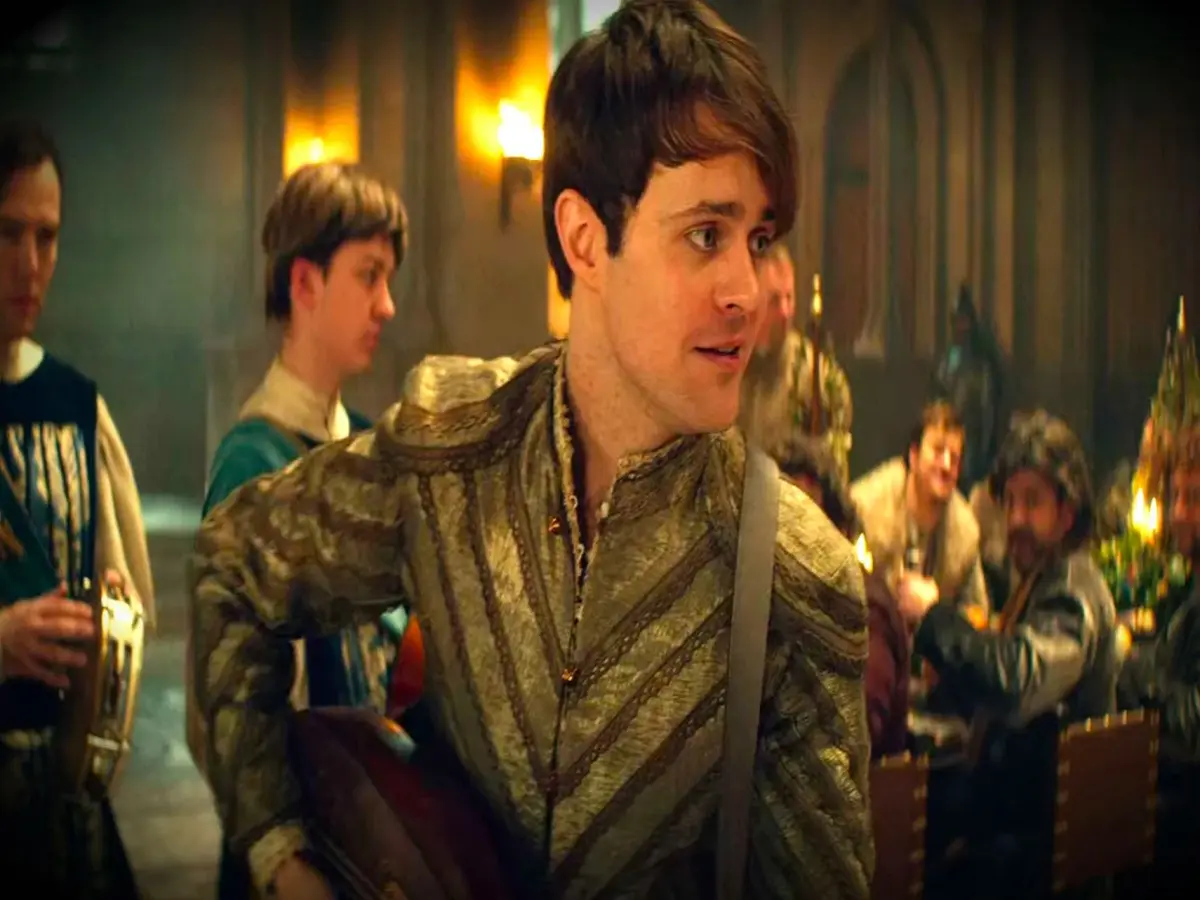
For ease of reference, I have included some images from the Netflix series, and other things, which I hope helps to show where particular stories in that series originated in this book, or even just select parts which were referenced to.
The Last Wish
The book (1993, re-edited version of The Witcher, 1990) is made of six different short stories all combined into one book, with a total of 280 pages in the English version of the book (translated by Danusia Stok, 2007). We are introduced to many characters from the tales, mainly the protagonist, Geralt of Rivia. He is a Witcher, who travels the Northern Realms in search of contracts and monsters to kill for gold coins. It can be deceiving at first as the book is broken into chapters, jumping from one story to the other. To give it context, the chapters are as follows:
- The Voice of Reason 1
- The Voice of Reason 2
- A Grain of Truth
- The Voice of Reason 3
- The Lesser Evil
- The Voice of Reason 4
- A Question of Price
- The Voice of Reason 5
- The Edge of the World
- The Voice of Reason 6
- The Last Wish
- The Voice of Reason 7
Within each chapter, there are subsections, titled I, II, III, IV etc. These stories were not written in the above order but published as such to be laid out in chronological order. Not all of Sapkowski's written work made it into the books, instead only the most important writings. The next book in the series is also based on short stories and many that were written before some in this book.
The Voice of Reason 1 - 7
As you can see from above this is the most frequent story within the book. It starts as most things involving Geralt do, having sex. Through this story, we encounter many of the main individuals who help or hinder Geralt on his quests. From the introduction, Geralt proceeds to the matter of saving the daughter of King Foltest of Temeria, a man whose bastard daughter has been cursed and transformed into a monstrous Striga. Through a delicate tone of language and description, the encounter opens us to the true wonder of The Witcher and his world.
We are constantly brought back to the voice of reason throughout the book, where we are often introduced to new and recurring characters. Vesemir and Kahr Moran are mentioned, giving insight and background to the horrendous trials that took place in Geralt's youth. These trials are part of what mutated Geralt and made him into the fearsome Witcher, known as the White Wolf.
Most of these tales focus upon Geralt in recovery with Nenneke. We learn much of Geralt and his views on the world. We also encounter Dandilion, who Nenneke is not fond of. The romantic poet is a construct to the powerful Witcher, showing how opposites can attract even within friendships.
The history of the world is commonly explored, with references to a time when monsters ruled and through the aid and sacrifice of Witcher’s were they banished. Monsters are seen are mythical beauty in the modern world, romanticised and the final remainders of a time gone by. This is similar to how we see leprechauns, dragons, witches, vampires, and all sorts of fairy tale creatures in life.
As we return to Nenneke and the magical fortress where Geralt goes for recovery, we delve into the past such as his relationship with the sorceress Yennifer. We later encounter Yennifer in the tale "The Last Wish", but while under the care of Nenneke we learn how Geralt ran from her. Nenneke advises Geralt to leave Yennifer be and let her go, and the topic moves towards Yennifer's infertility. Yennifer is determined to find a cure as she had to sacrifice her ability to bear children in return for becoming the powerful and beautiful sorceress she is. Global warming is also touched upon, as the Cave where Nenneke is healing Geralt is filled with a magical ceiling which filters the harmful rays of the sunlight against many species of plants. Much of these plants are extinct but exist only under the care of Nenneke. When Geralt questions should humans also reside under such a filter, the realisation that it is too late and unfortunately for humanity the damage is already done.
In the final chapter we learn of Geralt and Dandilion finally leaving the sanctuary and care of Nenneke. As they are riding out they are sprung upon by members of "The Order." Gearalt is challenged to a duel by a young knight seeking fame and prestige. It is demanded of Geralt in the name of honour that he take part in the duel but lay no harm upon the knight, or he will be hung for such an offence. Allowing the knight to knick him and render him unable to fight will garnish the knight, known as Tallies, with much fame and esteem. The cunning and crafty Witcher that he is, Geralt duels without laying a finger on the knight and leaves in peace afterwards with Dandilion. The second part of this final chapter is, in my opinion, what happened before they departed from Nenneke's sanctuary. Geralt and Dandilion encounter Nenneke and Iola along with some other students, where a vision takes place. No details are given to us of the vision, but prehaps it was a foresight of "The Order" waiting to ambushing our heroes on the outskirts of the sanctuary.
A Grain of Truth
We get a very descriptive setting for the nature and layout of the lands in this story, with Geralt in the wilderness and stumbling upon the dwelling of a beast-like man. Geralt's horse, which is always named Roach, is also introduced to us, along with the mention of many mythical creatures from kikimoras to many varieties of vampires.
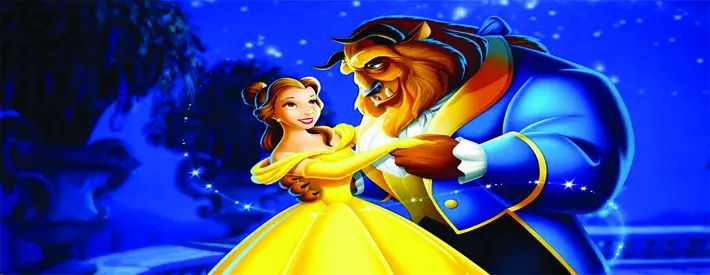
Without going into too much detail, this is very much a fairytale story based similarly to things like Beauty and the Beast. Many themes are explored, such as how a man without good looks can still win a woman's heart through materials gains such as wealth or physique, while also looking at the deceitfulness of women in aiming for riches. Sex is to the fore, as in many of the Witcher tales, and the history of European Feudalism times meant marriage often happened via the selling of an offspring at a young age. Geralt shows us his cunning nature and intellect, along with revealing his more than human nature. Finally, he also demonstrates that while he is a monster killer, he understands not all monsters should be killed.
The Lesser Evil
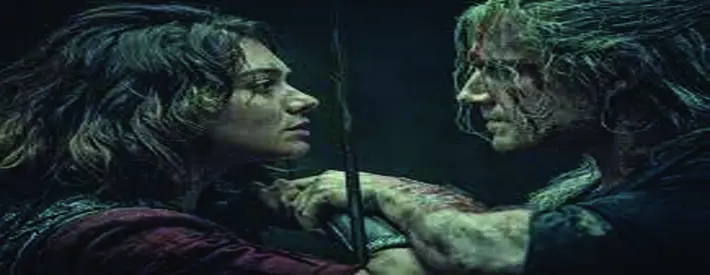
In this tale, we get to experience Geralt and his adventure in the town of Blaviken, which was highlighted in the Netflix Series. We are also introduced to the Wizard Irion, also known as Stregobor, a character of high stature and standing in his new town. This tale brings forth ideas in terms of political standings, the wrath of those scorned, and most importantly I believe is the ties to fairy tales. Between the women locked in towers being rescued by young princes to the woman roaming with seven gnome companions, references to the fairy tales of Snow White or Rapunzel are clearly evident.
The adversary, Renfri, also know as Shrike, eludes us into the fantasy of escaping the torturous evils of those above us. Evading a huntsman and dodging a poisoned apple, the magic of the dangers lurking around us are personified by this character. She tests Geralt’s mettle and character, exclaiming to Gearalt how “Only Evil and Greater Evil exist and beyond them, in the shadows, lurks True Evil.”
Between his encounters with Shrike and Stegobor, Geralt shows his faith in his learning's form the Guild of Witcher's, and is intertwined in events which would later earn him the title of the Butcher of Blaviken.
A Question of Price
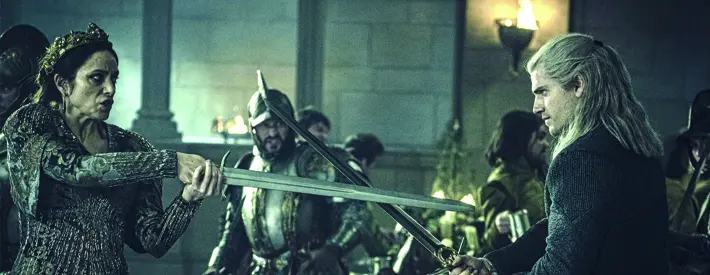
This tale is focused on Geralt attending a feast in order to assist in resolving a delicate matter for Queen Calanthe of Cintra. Unaware initially as to why he is required, especially in attire unbefitting of a Witcher, we learn of Geralt's morals and approach to humanity within this tale. He will not kill a human, not even for gold, even though "any man can be bought." References are made in a continuous fashion to the world of fairy tales, with Prince Hrobarik apparently seeking the help of Geralt to find a beauty who lost her slipper. Cinderella, as in the other stories, is portrayed along with the deceitfulness of royalty, as Geralt converses with the Queen on matters of propositions towards killing off next of kin and those in line for royalty.
Pavetta of Cintra, merely a girl when she is introduced to us, is the focus of this tale. The feast is for her to be matched with a strong lord of Skellige, which Geralt is to ensure does not get interfered with by destiny. We are introduced to Mousesack, a druid of Skellige, and Urcheon of Erlenwald, a knight who saved the Queens late husband from death 15 years prior and is demanding Pavetta as reward for the Law of Surprise.
The banquet is silenced by Queen Calante, who sets her guards upon attacking Urcheon along with the princes of Skellige. Here we are brought into the realm of magic which is inherently within Pavetta, and how Geralt and Mousesack combine forces to subdue her destruction.
The chapter concludes with Urcheon getting his rightful claim, and also offering Geralt whatever he wishes as payment for saving him. Geralt makes his own claim of the Law of Surprise, claiming that which Urcheon already has but does not know. Urcheon, transformed into a handsome Prince reminiscent of beauty and the beast, is astounded along with Queen Calante and her new man, Tuirseach of Skellige. They all turn to Pavetta and question if she is carrying a child, and it’s the chapter concluding before we get an answer. This is the first reference to Ciri in the books.
The Edge of the World
This tale features the first quest Geralt and Dandilion experienced together. It begins with the pair in conversation with the alderman, who proclaims the misfortunes of the land. Sceptical, Geralt is awoken by intrigue at the notion of a “deovil.” After conversing with Nettly, they are brought to see the “Old Ones” who are similar to all powerful and knowledgeable witches. They translated an old book of runes to describe this creature to our heroes,
When Geralt and Dandilion encounter the deovil they hatch a scheme to apprehend it, having failed on their first encounter. To their misfortune, they are captured by Elves who the deovil, known as a Svlyan, is assisting in gathering grains and knowledge of mans techniques in farming and agriculture.
Man had stolen lands from Elves, who are now forced to reside in the mountains for their own safety. They have no knowledge of living off the lands like man does as they never required it. The Elves are dying without the capability to use the land for their own survival.
The Elves initially plan to kill the pair as to leave no loose ends, but through the Sylvan's will and a Queen of the Elves, they are spared. Dandilion is gifted a magical self playing lute, while Geralt becomes in possession of the book of ancient runes. The Elves acknowledge Geralts proclamation that they are doomed in the world of men and will eventually have to meet their fate by coming down from the mountains and die fighting against men.
The Last Wish
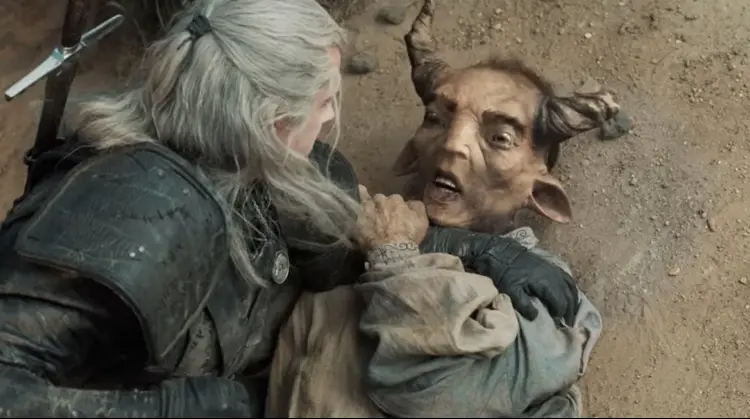
Quite simply this is the final tale in the book, and possibly one of the best. It is based around Geralt's first encounter with the sorceress Yennifer, one of the main romantic characters for Geralt during his adventures. Geralt and Dandilion are out fishing and trying to reel in a catch. Instead of the catfish they were aiming for, instead the pair stumble upon an old jar marked with a seal and wizards emblem, containing a Djinn. After a scuffle over the jar between Geralt and Dandilion, the Djinn emerges in the form of a head made from red smoke. The Djinn is similar to a genie from Islamic folklore, and sets upon Dandilioon as he proclaims his wishes. Geralt, in an attempt to save his friend, accidentally touches the brass seal from the jar, and casts an ancient "spell" to banish the Djinn.
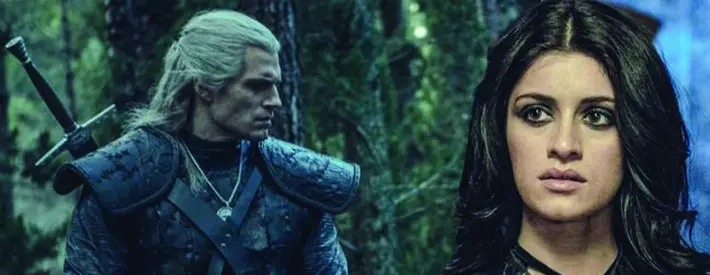
Dandilion is left vomiting and very ill, with Geralt worried for his friends vocal chords. They rush to a nearby town called Rinde for help and while awaiting entry learn a sorceress is residing in the town. She is flouting the taxes and restrictions impossed on all magic within the town walls, and goes by the name Yennifer of Vegerberg. We go on to witness the first encounter between Yennifer and Geralt, as he awakens her from slumber in desperate need of aid for his companion. She questions Geralt in a mysterious fashion and demands the time to bathe before helping his friend. We learn of Geralts distrust of telling a sorceress too much detail, while also being awe struck by the beauty and mystique of Yennifer. The pair travel by a portal conjured by Yennifer and she proceeds to helping Dandilion.
We go on to learn the fate of ugly girls who go on to become sorceresses are turned from ugly to beautiful looking purely because their profession demands it. This is most likely a reference to society in the demands of wanting everybody to look beautiful and having perfection, even though such a thing clearly does not exist. Yennifer tricks Geralt in return for aiding Dandilion, and once she gets the seal off him, she procedes to cast a spell on Geralt. Our hero ends up in the dungeon after attacking the council folk and the town guards. Yennifer willed for these people to be attacked as they had been verbally attacking her and badmouthing her name around the town due to her abilities with magic.
Geralt, along with a settled elf companion whom he encountered in the town, are brought before the mayor and town priest. Here we learn what Djinn's really are, and the four elements which the enchantresses draw their power from; Earth, Air, Fire and Water. The genies, one associated with each element, come from the Planes associated with each element. The priest tells us of how a Wizard once used an Earth genie, known as a da'o, moved a mountain with its magic. Once healed, Yennifer send Dandilion through a portal to proclaim how Geralt is innocent, thus using his final wish in Yennifers opinion. She believes this will allow her to capture and trap the Djinn to make use of its powers, and this ensures an almighty battle takes place in the town, causing all sorts of destruction. Geralt, drawn to Yennifer, decides to enlist the help of the priest to reopen the portal and travel to Yennifer to aid her in her quest, albeit knowing how futile her desires truly are.
Yennifer does her best to banish Geralt from the battle, and continue her own pursuit of capturing the Djinn. Geralt will not give up on her so easily, and the story breaks into two perspectives: that of Yennifer and Geralt, and that of Dandilion , the mayour and priest watching from afar. We learn how Geralt and not Dandilion is the master of the Djinn, and that he has one wish remaining. We will never know what Geralt wished for, but both Geralt and Yennifer have their fates bound together by it. The chapter ends with the relief of Dandilion to discover his best companion, Geralt of Rivia, has survived the battle when originally he had assumed the worst for him. Curious to how Geralt and Yennifer survived, Dandilion asks the elf what they are doing, to which he replies he "does not like using grand words."
Final thoughts
It took me about a couple of weeks overall to read the book cover to cover. A few pages or chapters a day mixed with other hobbies got me through it, and given that it's basically an adult fairy-tale that's not bad. Obviously, some chapters were longer than others but I got there in the end.
It is a very interesting read for anybody who enjoys fantasy books and stories. The language is very adult in nature but there is a certain enjoyment beyond the adult themes. The translation is to a decent standard, but I have seen that Polish commentators are somewhat unimpressed with it, and the general feeling is that David French, the translator of the later books in the series, does a far better job at it than Danusia Stok does.
Geralt faces a world where the reality is there is evil, and then there is more evil. It is his mission to seek this out and eradicate as much as he possibly can. Not all the monsters he encounters are monsters, and not all people with good intentions are good people. With every fairytale, hidden within the realms of fantasy, there is a solid basis of human truth.
Have a great day.
Peace. CryptoGod-1.
Referral links:
Publish0x - https://www.publish0x.com/?a=olejZqrzej
Splinterlands - https://splinterlands.com?ref=rnabc1
Upland - r.upland.me/NQAH
Ecency - https://ecency.com/signup?referral=rnabc
Binance - https://accounts.binance.com/en/register?ref=143611368
Hi - https://hi.com/RNabc
NFT Market Sales
Opensea - https://opensea.io/RNabc
Follow Me :)
Twitter - @RNabc123






