
You are reading an excerpt from our free but shortened abridged report! While still packed with incredible research and data, for just $40/month you can upgrade to our FULL library of 60+ reports (including this one) and complete industry-leading analysis on the top crypto assets.

Becoming a Premium member means enjoying all the perks of a Basic membership PLUS:
- Full-length CORE Reports: More technical, in-depth research, actionable insights, and potential market alpha for serious crypto users
- Early access to future CORE ratings: Being early is sometimes just as important as being right!
- Premium Member CORE+ Reports: Coverage on the top issues pertaining to crypto users like bridge security, layer two solutions, DeFi plays, and more
- CORE report Audio playback: Don’t want to read? No problem! Listen on the go.
In the intricate world of blockchain technology, two fundamental principles govern the efficiency and reliability of networks: safety and liveness. These foundational aspects are pivotal for the smooth operation of blockchains, ensuring both the integrity of transactions and the uninterrupted functioning of the network. This article delves into the nuanced roles of safety and liveness within blockchain protocols, explores their implications for network performance, and examines real-world challenges through the lens of notable incidents within the blockchain space.
Safety in the blockchain context signifies the network's ability to remain error-free and prevent incorrect transactions. This aspect is crucial for maintaining the trust and credibility of the blockchain, as it ensures that all transactions are valid and in accordance with the network's rules. On the other hand, liveness pertains to the network's capacity to continue processing and recording transactions efficiently, ensuring that operations are not indefinitely stalled due to system faults or malicious actors. The balance between these two guarantees is essential for the robustness and resilience of blockchain networks.
A striking example of the challenges in maintaining this balance is evident in the operations of the Solana blockchain. Solana, a first-layer smart contract platform, has prioritized network speed and low transaction costs, a strategy that, while offering significant benefits, has also exposed the network to vulnerabilities. The network faced notable downtime incidents, one of which occurred in September 2021 when an influx of transactions overwhelmed the system, leading to a 17-hour outage. Subsequent outages highlighted similar vulnerabilities, underscoring the complexity of achieving both high performance and security in blockchain networks.
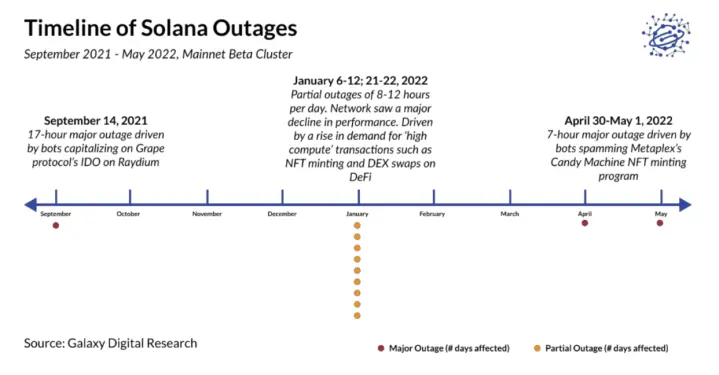
The incidents within the Solana network illustrate a broader debate within the blockchain community regarding the trade-offs between safety, liveness, and performance. These challenges are not unique to Solana; the Ethereum network experienced its own form of operational stress during "Black Thursday" in March 2020, when a sharp decline in the value of ether triggered a cascade of issues that exposed the network to significant congestion. This event had profound implications for the Ethereum ecosystem and particularly impacted the MakerDAO protocol, leading to financial losses and raising questions about the resilience of decentralized finance (DeFi) mechanisms.
These examples highlight the inherent limitations and challenges in designing blockchain networks that can perfectly balance safety and liveness. Achieving this equilibrium requires sophisticated consensus mechanisms and robust network designs that can mitigate potential vulnerabilities. Moreover, the experiences of both Solana and Ethereum emphasize the importance of network governance and the mechanisms in place to respond to unexpected challenges.
As blockchain technology continues to evolve, the lessons learned from these incidents are invaluable for developers, users, and investors alike. They underscore the need for continuous innovation in network design, consensus protocols, and governance structures to enhance the safety, liveness, and overall resilience of blockchain networks. As the blockchain ecosystem grows, the pursuit of these objectives remains a dynamic and ongoing process, crucial for the long-term success and sustainability of blockchain technologies.





