If you want more cryptocurrency analysis including full-length research reports, trading signals, and social media sentiment analysis, use the code "Publish0x" when subscribing to CryptoEQ.io to make your first month of CryptoEQ just $10!
Impermanent Loss (IL) is an opportunity cost that liquidity providers (LPs) can suffer if their staked token pair loses value compared to simply holding the tokens. Therefore, IL is not a concern for whales that exclusively trade and don’t provide liquidity to trading pairs. However, as many do, it’s important to understand.
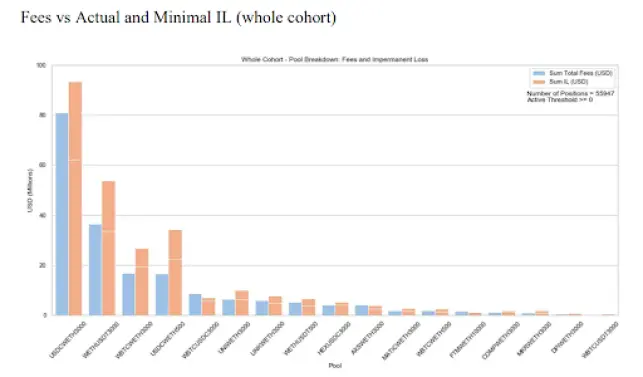
IL is a product of the design of Constant Product Market Makers (CFMMs). Because most liquidity pools force stakers to lock up equal USD amounts of the trading pair (e.g. ETH-USDC), a pool may begin with $1M in ETH and $1M in USDC. However, the ratio of ETH to USDC in the pool can shift when the market demand for one asset significantly outweighs the other. Losses can be temporary and mitigated if the token prices (relative to each other) return to the level they were at when the stake in the pool was acquired. Oftentimes, IL can outweigh the fees generated (as shown in the chart below), providing a lower ROI than if the user simply just held the base asset (ETH).
Some DEXs, like Kyber’s Dynamic Market Maker (DMM), are working to reduce IL through dynamic fees based on volume. A DMM operates like an AMM during periods of normal market conditions but will raise fees when transaction volume spikes (usually during periods of increased volatility). When trading volumes are lower than usual, the DMM reduces its fees.
With the introduction of concentrated liquidity in Uniswap V3, providing liquidity comes with much more optionality and, in theory, has become a much more active process than passive. This is because LPs set a range for their position and have to monitor price action and make adjustments should the market price fall outside of their range.
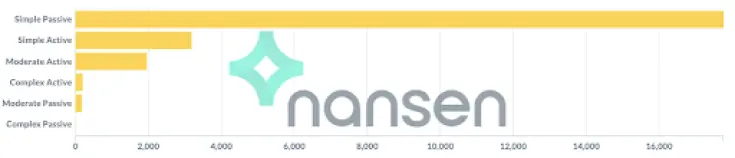
However, Nansen conducted a study on Uniswap LPs finding that there are ~23,000 unique addresses who own/had owned positions on Uniswap V3. ~75% of that total are considered passive LPs, meaning they own just one LP position and have never modified it.