

If you want more cryptocurrency analysis including full-length research reports, trading signals, and social media sentiment analysis, use the code "Publish0x" when subscribing to CryptoEQ.io to make your first month of CryptoEQ just $10! Or simply click the button above!
The Federal Reserve increasing interest rates to fight inflation has been the issue affecting all markets since Q4 2021. Eight times a year, the Federal Open Market Committee (FOMC) meets to review economic conditions and determine the appropriate monetary policy in pursuit of its goals: price stability and sustainable economic growth. After the meeting, the chairman has a press conference to discuss the FOMC’s view on the economy and announce changes to monetary policy–usually by a change in interest rates.
The Fed recently approved a 50 bps rate hike for the first time since May 2000 and signaled the June and July meetings will most likely do the same. Rising rates increase the cost of capital and are a blunt way to kill consumer demand, thereby reducing global liquidity from markets. Rising rates mean everything gets more expensive, hurting businesses’ bottom lines, leading to layoffs and a slowed economy/recession.
Rising rates are a “blunt” approach because they aim to kill all demand rather than some of the root issues. Jerome Powell admitted himself the Fed can’t solve supply chain disruptions and bottlenecks that contribute to rising prices and seem to be pervasive across all industries post-COVID. So, if the Fed wants to combat inflation and they can’t control the supply-side, they have to bring demand down to match supply-side levels.
In summary:
- The Fed appears to have waited too long to curtail inflation (see lagging Federal Funds Rate vs CPI Inflation).
- Rates are increasing (which tend to have an inverse relationship with the S&P 500).
- In turn, this affects growth stocks and risk-on assets.
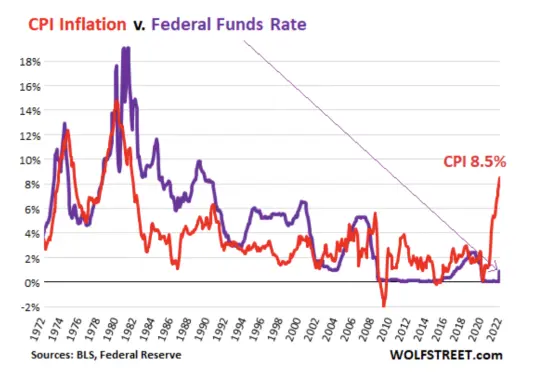
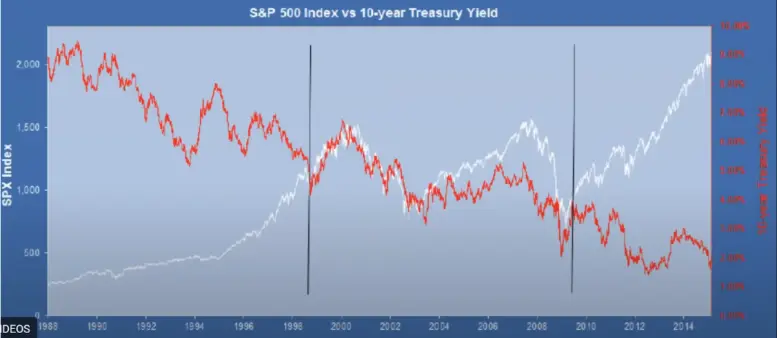
With the market responding to elevated global inflation and with real bond yields (yield minus inflation) deeply negative, interest rates across the U.S. Treasury curve have skyrocketed since November 2021. The U.S. 10-year rate recently hit 3% for the first time in over three years. It’s not just the absolute value that’s significant, but the speed at which the yields have risen that’s spooked markets. This is one of the fastest monetary tightening cycle periods in history and the abrupt rise has crushed risk-assets and has sent overall market volatility higher.
Regulation Across the Globe
In the U.S, Treasury Secretary Janet Yellen has asked the Senate Banking, Housing, and Urban Affairs Committee to expedite the reform of a bill to regulate stablecoins and have it pass by year’s end. Yellen believes the current version doesn’t provide consistent or comprehensive standards for the risks of stablecoins as a new type of payment product.
On the heels of the LUNA/UST implosion, Singapore regulators are expected to clamp down on Terraform Labs, even though the entity is headquartered in South Korea. There’s a trend of crypto companies registering in Singapore to conduct business abroad without having a physical office in the country.
In South Korea, police are moving to freeze the Luna Foundation Guard’s (LFG) money following the protocol collapse. The Seoul Metropolitan Police have asked various crypto exchanges to ban Luna’s capability of withdrawing company funds. Additionally, CEO Do Kwon is already under the financial crimes microscope and is facing a tax evasion investigation by South Korean police.
In a couple of rare instances of governments accommodating crypto, Germany released a document outlining clear income tax rules for cryptoassets, including no capital gains tax on Bitcoin or Ethereum if held for longer than 12 months. Additionally, the Norwegian parliament rejected a bill banning Bitcoin mining originally proposed in March. And In El Salvador, representatives from 40+ emerging market countries met to discuss financial inclusion, including El Salvador’s acceptance of Bitcoin as legal tender and its benefits in the country.





