
You are reading an excerpt from our free but shortened abridged report! While still packed with incredible research and data, for just $20/month you can upgrade to our FULL library of 50+ reports (including this one) and complete industry-leading analysis on the top crypto assets.

Becoming a Premium member means enjoying all the perks of a Basic membership PLUS:
- Full-length CORE Reports: More technical, in-depth research, actionable insights, and potential market alpha for serious crypto users
- Early access to future CORE ratings: Being early is sometimes just as important as being right!
- Premium Member CORE+ Reports: Coverage on the top issues pertaining to crypto users like bridge security, layer two solutions, DeFi plays, and more
- CORE report Audio playback: Don’t want to read? No problem! Listen on the go.
Intro
The intersection of blockchain and AI technologies is fostering a symbiotic relationship, offering solutions to each other's inherent challenges and paving the way for groundbreaking applications in various sectors.
Addressing Centralization Risks in AI with Blockchain
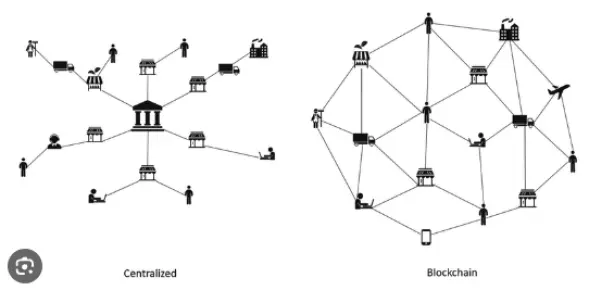
One of the primary concerns with AI development is the centralization of data and decision-making power. Blockchain, with its inherently decentralized structure, can mitigate this risk. By distributing data across a network of computers, blockchain ensures that no single entity controls the entire dataset, promoting a more equitable distribution of power and benefits. This decentralization is crucial in preventing potential misuse of AI and ensuring fair access to AI-driven solutions.
Optimizing Blockchain with AI
Conversely, AI can address some critical challenges faced by blockchain technology. For instance, AI algorithms can be used to enhance blockchain's scalability and energy efficiency. These improvements could be pivotal in resolving significant criticisms around blockchain, such as its high energy consumption and limited transaction throughput.
Companies and protocols are increasingly leveraging the synergies between AI and blockchain. These efforts include decentralizing access to machine learning models, using AI for generating creative content, and enhancing the security and efficiency of blockchain networks. This convergence signals a new era of technological synergy, where the combined strengths of AI and blockchain create innovative solutions across industries.
The blend of AI and blockchain technology represents more than just the unification of two technological domains; it signifies a transformational synergy that could redefine digital innovation and decentralization. Blockchain's transparency, security, and decentralization can significantly contribute to how AI data is stored, shared, and utilized. This integration promises to instill greater trust in AI systems by providing an immutable ledger for AI transactions and decisions, thereby mitigating concerns over data manipulation or misuse.
Projects like Bittensor, Fetch.ai, Akash Network, Render Network, and Gensyn exemplify the potential applications of AI and blockchain integration. For instance, Bittensor is a decentralized network aiming to democratize AI by creating a platform for various decentralized commodity markets united under a single token system. It employs unique incentive mechanisms and a subnetwork architecture to foster a competitive environment where AI model development and improvement are incentivized.
AI Agents: Enhancing Blockchain Functionality
One compelling manifestation of AI and blockchain synergy lies in the development of AI agents. These agents represent a practical fusion of AI and blockchain technologies, offering the potential to enhance blockchain performance and expand its use cases. Evolving from rudimentary task bots, AI agents now operate with greater autonomy and sophistication. They can facilitate transaction processing, hold and exchange valuable assets on behalf of users, and even envision a future where AI agents become a primary category of users on the blockchain.
Verification and Risk Management through Cryptography
One notable area of impact is data management and security. AI systems, which rely on large volumes of data for learning and improvement, can benefit from blockchain's ability to securely and transparently share data across platforms and stakeholders. This not only ensures data integrity but also fosters collaborative AI research and development, breaking down the data silos that often impede innovation.
Effective identification verification through cryptography is essential, particularly for distinguishing between human and AI interactions. Blockchain provides a platform for robust verification mechanisms, including:
- Cryptographic Proof via Digital Signatures: This method leverages digital signatures generated using a private key, known only to the creator, and verified using publicly available public keys. It ensures the authenticity of transactions and interactions.
- IPFS and Merkle Trees: The integration of IPFS (InterPlanetary File System) and Merkle Trees serves as a powerful tool for verifying the integrity of data sets and AI models. Any alteration to the data triggers an update in the Merkle Trees, preserving content integrity and serving as a verification mechanism.
- zkML (Zero-Knowledge Machine Learning): zkML allows for cryptographic proof of AI models without revealing sensitive model details. This technology finds applications in financial services, smart contracts, legal processes, and more, enhancing privacy and security.
Limitations to Consider: It's important to note that some cryptographic models may undergo training and optimization off-chain using AI. This raises the question of whether AI could potentially manipulate cryptographic proofs like zkML if it reaches a high level of performance in the future.
Revolutionizing Education with AI and Blockchain
The integration of AI, particularly through Language Learning Models (LLMs) like ChatGPT, has transformed access to education, much like the internet did in the 1990s. AI-powered platforms offer round-the-clock tutoring, significantly enhancing access to financial literacy and specialized skills. This revolution aligns with the open and permissionless nature of cryptocurrency, democratizing knowledge and opportunities.
Imagine an individual in a resource-limited setting. With an AI tutor, they can learn blockchain development skills, enabling them to participate in the global digital economy. This scenario exemplifies the transformative potential of AI and blockchain in democratizing education and economic opportunities.
Emerging On-Chain Capabilities from AI and Blockchain Convergence Looking ahead, the fusion of AI and blockchain is expected to evolve along two trajectories:
-
AI Agents and Cryptocurrency Infrastructure: AI agents, as autonomous entities, are likely to utilize cryptocurrencies for payments and accessing digital resources. Given their inability to undergo traditional banking processes, cryptocurrencies offer a seamless alternative for transactions, especially in a marketplace where AI agents interact and transact autonomously.
-
Integration of Verifiable Machine Learning (zkML) in Smart Contracts: This integration will expand the functionalities available on-chain. It allows for more complex and sophisticated applications to be built on blockchain platforms, enabling new forms of decentralized applications and services.
In summary, the convergence of AI and blockchain is not just reshaping our technological landscape but is also democratizing access to information, education, and economic opportunities. As these technologies continue to evolve, their combined potential could lead to a more equitable and efficient digital ecosystem, although navigating this landscape with caution is crucial to ensure the responsible and beneficial use of these powerful tools.





