

In early 2025, the rise in the rate of popular cryptocurrencies had a significant impact on financial transactions. Despite their widespread use and apparent security, these systems remain vulnerable. One of the main problems remains the recovery of lost cryptocurrency wallets and private keys, which can be done using complex mathematical algorithms.
In this article, we will explore methods for solving the discrete logarithm problem and ways to recover lost Bitcoin wallets, focusing on the Ricci Flow algorithm and the Hidden Number Problem for extracting private keys from vulnerable transactions using ECDSA. We will also discuss how modern cryptocurrencies such as Bitcoin and Ethereum rely on complex mathematical foundations that provide security and anonymity, but are susceptible to exploitation due to various vulnerabilities.
The Role of Discrete Logarithms in Recovering Lost Cryptocurrency Wallets and Extracting Private Keys .
Discrete logarithm is a mathematical problem that consists of finding an integer x satisfying the equation a=b^x in some finite group. The order of the group of points on this curve is an important parameter determining the cryptographic strength of the secp256k1 elliptic curve system over the field GF(p), where p=2^256−2^32−2^9−2^8−2^7−2^6−2^4−1. For example, if we know a and b, we need to find x, the private key to a Bitcoin wallet. This problem is especially important in cryptography, since it underlies many cryptographic algorithms, such as public key exchange. Modern discrete logarithm algorithms have very high computational power, which allows these algorithms to be used in practice.
Let’s look at the process of recovering a private key using Dockeyhunt Discrete Logarithm software and DarkSignature tool to generate fake transaction data.
First, we will enter the Bitcoin wallet address: 1PYgfSouGGDkrMfLs6AYmwDqMLiVrCLfeS for the amount of: 165.10252195 BTC and get its public key. Then, using DarkSignature , we will create fake values for transactions, which will allow us to analyze and manipulate the signature data of the ECDSA algorithm. Finally, we will apply mathematical analysis through the Perelman Work software to solve the discrete logarithm and get the private key to the Bitcoin wallet.
This article is intended not only for cryptography and mathematics experts, but also for anyone who wants to understand how mathematical methods can be used to solve real-world cryptanalysis problems using various cryptocurrencies.
First, we need to run the Dockeyhunt Discrete Logarithm software and "Input date"enter the Bitcoin Address 1PYgfSouGGDkrMfLs6AYmwDqMLiVrCLfeS in the field and get the public key of the wallet:
04e87e83f871df1439b7873b4ae449d15306cafc53e03a06fffb534b3bf25b58d8edca74b0faf5cf8c3aed6cad2bd79a7bce92ab53e07440d4590cbf31286d9335
Let’s use the DarkSignature tool to get fake R, S, Z values for the ECDSA algorithm transaction. In the field, "Input date"enter the public key of the Bitcoin Address and get the values R, S, Z
04e87e83f871df1439b7873b4ae449d15306cafc53e03a06fffb534b3bf25b58d8edca74b0faf5cf8c3aed6cad2bd79a7bce92ab53e07440d4590cbf31286d9335
Result:
1111,947d6fb75033cc3e342c8538a350e9058134b2a1ae01a7c50fc52b1f56c9169c,5b3ec0d72a2368cdd48c17ff095ab1ab0b9824e010883539cbeb18141de6384b,c7ac826c5a8397c0de993b2d8d597be42d22c77cf006683d7b72a197e1a5cdcf,0000

As a tool for mathematical analysis and solving discrete logarithm equations, we will use the Perelman Work software . We will select the option from the Complex Analysis section for a complete relationship between variables through the integration of
Discrete variation series Variance: [ D = frac{sum_{i=1}^{n} (x_i — bar{x})^2}{N})]
The formula for calculating discrete variation looks like this:
![Discrete variation series Variance formula: [ D = frac{sum_{i=1}^{n} (x_i - bar{x})^2}{N} ) ]](https://polynonce.ru/wp-content/uploads/2024/12/image-1.png)
Explanation of the formula components:
- D is the variance (variance) of your data set.
- ∑∑ is the sum symbol, which means that we will add the values.
- i is an index that runs through all values in the data set from 1 to n.
- xi is each individual value in your data set.
- ˉ x ˉ is the mean (or arithmetic average) of all the values in the data set.
- N is the total number of values in the data set.
How does this work?
- Calculating the Average: First, you find the average value of your data set.
- Difference from mean: Then for each value xi you calculate how much it differs from the mean ˉ x ˉ .
- Square the difference: You then take the square of that difference (to get rid of negative values and amplify the impact of large deviations).
- Summation: You add up all the squares of the differences.
- Dividing by the number of values: Finally, you divide the resulting sum by the total number of values N .

Using Perelman Work and Dockeyhunt Discrete Logarithm, we arbitrarily change variables to the Joux Lercier vulnerability , this is described in detail at the beginning of the article, this vulnerability in a Bitcoin transaction occurs due to the fact that it is possible to change the value of R, S , Z in the signature, while maintaining the validity of the signature, as well as in an arbitrary formula:
X=hex(((S⋅K−Z)⋅modinv(R,N))modN)
- S and R are the values from the transaction signature (RawTX).
- Z is the transaction signature hash.
- K is the secret key (nonce).
- N is the order of the elliptic curve group.
- modinv( R , N ) is the modular inverse function of R modulo N .
Explanation of the formula
- Input parameters :
- S and R : These values are obtained from the transaction signature. They are needed to recover the private key.
- Z : This is the signature hash, which is also used in the process.
- K : A secret key (nonce) that should only be known to the wallet owner.
- Calculations :
- First we multiply S by K.
- Then we subtract Z .
- The result is multiplied by the modular inverse of R modulo N . This allows us to “cancel” the influence of R to obtain a value that can be used to calculate the private key.
- Finally, the result is taken modulo N to ensure that it is within the acceptable range for private key values.
- Convert to hexadecimal format :
- After all the mathematical operations are performed, the result is converted to hexadecimal format using the function
hex(), which is the standard representation of private keys in Bitcoin.
- After all the mathematical operations are performed, the result is converted to hexadecimal format using the function
Ricci Flow Hidden Number Problem
Copy the values R, S, Zand paste them into the input field Ricci Flow HNPto build completely new transactions of the ECDSA algorithm .


Dockeyhunt Private Key Calculator
Copy the values and paste them into the Dockeyhunt Private Key CalculatorR, S, Z software field

Now, according to the vulnerability of Joux Lercier, we copy from the code of ecdsa_impl.h the value of the secret key “K” called in cryptography NONCE – this is a secret, (pseudo) random parameter, which is usually denoted by “K”. Here NONCE, due to a bug in the code , fixed 0, 0, 0, 1, 0x45512319UL, 0x50B75FC4UL, 0x402DA172UL, 0x2FC9BAEEUL several HEX bits at the beginning (or at the end) of the record.
!./darksignature -address 1PYgfSouGGDkrMfLs6AYmwDqMLiVrCLfeS
....
....
....
/** Difference between field and order, values 'p' and 'n' values defined in
* "Standards for Efficient Cryptography" (SEC2) 2.7.1.
* $ sage -c 'load("secp256k1_params.sage"); print(hex(P-N))'
* 0x14551231950b75fc4402da1722fc9baee
*/
static const secp256k1_fe secp256k1_ecdsa_const_p_minus_order = SECP256K1_FE_CONST(
0, 0, 0, 1, 0x45512319UL, 0x50B75FC4UL, 0x402DA172UL, 0x2FC9BAEEUL
);
....
....
.... https://github.com/bitcoin-core/secp256k1/blob/master/src/ecdsa_impl.h
  Time-stamped video
Copy the K value and paste it into the Dockeyhunt Private Key Calculator software field , then click on the button: Calculate Private Key and get the private key to the Bitcoin Wallet 1PYgfSouGGDkrMfLs6AYmwDqMLiVrCLfeS
0x6b29781e725708ae4d94e13730a2718ee3383ea5d911e77d4c2a2fd0c99c1232
To start the algorithm for solving the discrete logarithm, click on the button: Private Key after that, we successfully receive a private key in HEX format
6b29781e725708ae4d94e13730a2718ee3383ea5d911e77d4c2a2fd0c99c1232
Next we need to make sure that we have received the required private key value in HEX format.

Click on the button
Bitcoin Addressand get the required value of the private key in HEX format
6b29781e725708ae4d94e13730a2718ee3383ea5d911e77d4c2a2fd0c99c1232: 1PYgfSouGGDkrMfLs6AYmwDqMLiVrCLfeS
We also click on the button Balance BTC and get the result of the balance amount:
6b29781e725708ae4d94e13730a2718ee3383ea5d911e77d4c2a2fd0c99c1232: 1PYgfSouGGDkrMfLs6AYmwDqMLiVrCLfeS: 165.10252195 BTC
_____________________________________________________________________________________________________
 Time-stamped video
  Time-stamped video
Private key received!
Bitcoin wallet recovery using mathematically based methods such as the Ricci Flow Hidden Number Problem opens new horizons for understanding cryptographic vulnerabilities and opportunities. We demonstrated how Perelman Work, Dockeyhunt Discrete Logarithm , and DarkSignature software can be used to extract private keys and create fake transactions, highlighting the importance of mathematical analysis in the cryptocurrency space.
The results show that even in a complex system like Bitcoin , there are vulnerabilities that can be exploited to restore access to lost funds. This process requires deep knowledge of cryptography and mathematics, as well as skills in working with specialized software.
Exploitation mechanisms and significant influence in multi-signature systems
The vulnerability of the Joux Lercier algorithm poses a serious threat to systems with multi-signature schemes, since an attacker can generate fake signatures that the system will accept, threatening not only individual transactions, but also the integrity of the entire multi-signature process. An attacker can generate fake signatures that the system will accept, threatening not only individual transactions, but also the entire multi-signature process.
Insufficient verification of user input data can cause serious failures in the Bitcoin system, giving attackers the opportunity to inject malicious code and manipulate the system by creating fake signatures for transactions.
Practical part
According to the theory of vulnerability of the Joux Lercier algorithm , attackers are able to use the identified flaws to attack the Bitcoin network, overloading it with invalid transactions and thereby disrupting its stability. Let’s move on to the practical part of the article and consider an example using a Bitcoin wallet: 1PYgfSouGGDkrMfLs6AYmwDqMLiVrCLfeS , where there were lost coins in the amount of: 165.10252195 BTC as of December 2024, this amount is: 15802506.39 USD
 165.10252195 > 15802506,39 USD
Let’s open the console and run the command:
getaddressinfo 1PYgfSouGGDkrMfLs6AYmwDqMLiVrCLfeS

We see that the file: wallet.dat belongs to the Bitcoin Address: 1PYgfSouGGDkrMfLs6AYmwDqMLiVrCLfeS
File: wallet.dat is encrypted with a password!
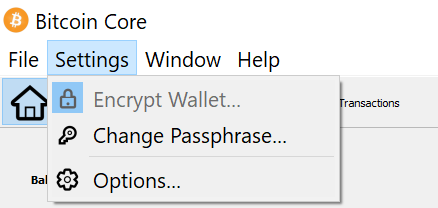
Let’s run the command to check the private key:
dumpprivkey 1PYgfSouGGDkrMfLs6AYmwDqMLiVrCLfeS

We see a warning: Error: Please enter the wallet passphrase with walletpassphrase first. (code -13)


Let’s use the Padding Oracle Attack method on Wallet.dat and decrypt the password for access into a binary password format.


First we get access to the wallet.dat file for the amount: 165.10 BTC
Clone Repository: Biggest Lost Bitcoin Wallets List
git clone https://github.com/keyhunters/Biggest-Lost-Bitcoin-Wallets-List.git

That’s right! The private key corresponds to the Bitcoin Wallet.
Let’s open bitaddress and check:
ADDR: 1PYgfSouGGDkrMfLs6AYmwDqMLiVrCLfeS
WIF:  5JdUtcYt3ZBQN8aPZWNffXzNCTPds7aQtJk7zc9iQShNQ9yWe7x
HEX:  6b29781e725708ae4d94e13730a2718ee3383ea5d911e77d4c2a2fd0c99c1232
Conclusion and mitigation measures:
In this article, we explored methods for recovering lost cryptocurrency wallets and private keys using mathematical algorithms such as discrete logarithm and Hidden Number Problem . We demonstrated how to use Dockeyhunt Discrete Logarithm, DarkSignature, and Perelman Work software to extract private keys from vulnerable transactions using the ECDSA algorithm. Our research showed that even secure systems such as Bitcoin have vulnerabilities that can be exploited to regain access to lost funds. The recovery process requires deep knowledge of cryptography and mathematics, as well as skills in working with specialized software.
To protect against threats related to the Joux Lercier vulnerability, users should take the following steps:
- Software Updates : Regularly updating your cryptocurrency wallets to patched versions is critical to maintaining security.
- Improved signature verification mechanisms : Stronger input validation and error handling will help prevent the creation of fake signatures and protect users’ private keys.
- Network activity monitoring : Constant analysis of network status and early detection of suspicious transactions allow for prompt response to attempts to exploit vulnerabilities.
- Implementing Multi-Factor Authentication : Implementing additional cryptographic security methods will significantly improve security.
To prevent possible attacks related to the Joux Lercier vulnerability, Bitcoin users are strongly advised to update their wallet software to the latest versions that fix this vulnerability. Regular software updates, the implementation of anomaly detection systems, and increased user awareness of possible threats will help maintain the integrity and security of cryptocurrency systems.
The vulnerability of the Joux Lercier algorithm poses a significant threat to the security of cryptocurrency transactions and the integrity of the blockchain. To minimize risks, users should regularly update their software, implement strict security measures, and constantly monitor the network status. These measures will help maintain the security and stability of cryptocurrency systems, protecting users from potential threats and financial losses.
The results of our study highlight the importance of mathematical analysis in the cryptocurrency space and demonstrate the potential for using complex mathematical methods to solve real-world cryptanalysis problems. However, it is important to note that such methods can be used both to restore access to lost funds and to exploit vulnerabilities, highlighting the need to improve the security of cryptocurrency systems.
References:
- The impact of the number field sieve on the discrete logarithm problem in finite fields OLIVER SCHIROKAUER
- Discrete Logarithms Aurore Guillevic, François Morain
- Discrete logarithm computation in finite fields Fp n with NFS variants and consequences in pairing-based cryptography Aurore Guillevic Inria Nancy, Caramba team
- Discrete logarithm problem (DLP) & ECDSA Many slides are from Rong-Jaye Chen@NCTU
- The Discrete-Logarithm Problem with Preprocessing Henry Corrigan-Gibbs and Dmitry Kogan Stanford University August 3, 2021
- Discrete Logarithm Factory Haetham Al Aswada , Emmanuel Thomé and Cécile Pierrot University of Lorraine, CNRS, Inria, LORIA, Nancy, France
- On the discrete logarithm problem for prime-field elliptic curves Citation for published version (APA): Amadori, A. G., Pintore, F., & Sala, M. (2018)
- An evaluation of the discrete logarithm cryptosystem Yansheng Chen Kristin School, Auckland, New Zealand
- Efficient Proofs Of Knowledge of Discrete Logarithms and Representations in Groups with Hidden Order Endre Bangerter , Jan Camenisch , and Ueli Maurer IBM Research, Zurich Research Lab, CH-8803 Rueschlikon, Switzerland Departement of Computer Science, ETH Zurich, CH-8092 Zurich, Switzerland
- Proof Systems for General Statements about Discrete Logarithms Jan Camenisch Dept. of Computer Science Haldeneggsteig 4 ETH Zurich CH-8092 Zurich, Switzerland Markus Stadler Union Bank of Switzerland Ubilab Bahnhofstrasse 45 CH-8021 Zurich, Switzerland
- Evidence that the Diffie-Hellman Problem is as Hard as Computing Discrete Logs Jonah Brown-Cohen
- Divisibility, Smoothness and Cryptographic Applications David Naccache Equipe de cryptographie ´ Ecole normale sup´erieure ´ 45 rue d’Ulm, F-75230 Paris, Cedex 05, France Igor E. Shparlinski Department of Computing Macquarie University Sydney, NSW 2109, Australia October 17, 2008
- CDLS: Proving Knowledge of Committed Discrete Logarithms with Soundness Sofia Celi , Shai Levin , and Joe Rowell Brave Software, University of Auckland, Royal Holloway, University of London
- Basic Discrete Logarithm Algorithms “Mathematics of Public Key Cryptography” by Steven Galbraith
- Computing small discrete logarithms faster Daniel J. Bernstein and Tanja Lange Department of Computer Science University of Illinois at Chicago, Chicago, IL 60607–7053, USA Department of Mathematics and Computer Science Technische Universiteit Eindhoven, P.O. Box 513, 5600 MB Eindhoven, the Netherlands
- Discrete Logarithms on Elliptic Curves Aaron Blumenfeld University of Rochester
- The Past, evolving Present and Future of Discrete Logarithm Antoine Joux, Andrew Odlyzko and Cécile Pierrot
- Discrete logarithms in finite fields and their cryptographic significance A. M. Odlyzko AT&T Bell Laboratories Murray Hill, New Jersey
- Discreet Log Contracts Thaddeus Dryja MIT Digital Currency Initiative
- Solving a 676-bit Discrete Logarithm Problem in GF(36n) Takuya Hayashi , Naoyuki Shinohara , Lihua Wang, Shin’ichiro Matsuo , Masaaki Shirase, and Tsuyoshi Takagi Future University Hakodate, Japan. National Institute of Information and Communications Technology, Japan.
- ECDSA Security in Bitcoin and Ethereum: a Research Survey Hartwig Mayer CoinFabrik Revised June 28, 2016
- Bitcoin Security with a Twisted Edwards Curve Meryem Cherkaoui Semmouni, Abderrahmane Nitaj, Mostafa Belkasmi
- The Discrete Logarithm Problem in GL(n, q) Alfred J. Menezes and Yi-Hong Wu Dept. of Discrete and Statistical Sciences 120 Math Annex Auburn University
- The Discrete Logarithm Problem on Elliptic Curves of Trace One Nigel P. Smart Network Systems Department HP Laboratories Bristol October, 1997
- Elliptic Curve Digital Signatures and Their Application in the Bitcoin Crypto-currency Transactions Benjamin K. Kikwai 16 October 2017
- Mathematics of Bitcoin: The ECDSA by Lewis Combes MA4K8 Scholarly Report Submitted to The University of Warwick Mathematics Institute April, 2018
- Discrete Logarithm in Galois Rings Samuel Bertrand Liyimbeme Mouchili African Institute for Mathematical Sciences (AIMS)-Cameroon alumnus, Cameroon
- The discrete logarithm problem and its application in Cryptography Roger Oyono University of French Polynesia, Tahiti Lectures in Cryptography for Master class Madrid, April 2009
- The Discrete Logarithm Problem Rene Schoof
- Asymmetric cryptography from discrete logarithms Benjamin Smith Summer school on real-world crypto and privacy Sibenik, Croatia // June 17 2019
- Intractability of Learning the Discrete Logarithm with Gradient-Based Methods Rustem Takhanov Maxat Tezekbayev Artur Pak Department of Mathematics, Nazarbayev University, Astana, Kazakhstan Arman Bolatov Department of Computer Science, Nazarbayev University, Astana, Kazakhstan Zhibek Kadyrsizova Department of Mathematics, Nazarbayev University, Astana, Kazakhstan Zhenisbek Assylbekov Department of Mathematical Sciences, Purdue University Fort Wayne, Fort Wayne, IN, USA
- Discrete Logarithms in Cryptography Frederik Vercauteren ESAT/COSIC — KU Leuven ECRYPT Summer School 2008
- THE DISCRETE LOG PROBLEM AND ELLIPTIC CURVE CRYPTOGRAPHY NOLAN WINKLER
This material was created for the CRYPTO DEEP TECH portal to ensure financial data security and cryptography on elliptic curves secp256k1 against weak ECDSA signatures in the BITCOIN cryptocurrency . The creators of the software are not responsible for the use of materials.
Telegram: https://t.me/cryptodeeptech
Video: https://youtu.be/i9KYih_ffr8
Video tutorial: https://dzen.ru/video/watch/6784be61b09e46422395c236
Source: https://cryptodeeptech.ru/discrete-logarithm






