
“A Man Who lost $1 Million to a Cryptocurrency “Super Scam” called “Pig Butchering”.
A new scam that cuts right to the bone.

Disclaimer:
We are not providing financial or legal advice of any kind to anyone. If you have questions or concerns about any financial or legal topics discussed in this article, you may want to hire a licensed professional for assistance. This article is solely for educational purposes, and the creator provides no guarantees or warrantees over its content. If you decide to use any of the information contained in this article, you do so at your own risk and hold harmless the creators of this content and the websites that it is hosted on.
A Man Who lost $1 Million to a Cryptocurrency “Super Scam” called “Pig Butchering”.
ThePolybiusPress
Dec 14th, 2022
— — — — — — — — — — — — — — — — -
A Bay Area man’s 270,000+ word WhatsApp conversation with his con artist uncovers the devastating workings of a particular type of investment fraud.
Cy received a message on WhatsApp out of the blue.
“Jessica” informed him that she had located his phone number in her contacts list and was contacting him because she believed they could be former coworkers. Cy, a 52-year-old Bay Area resident, didn’t recall her, but he thought she was nice, friendly, and interesting. She uploaded photos of her meals. They spoke about their shared love of sushi, and Cy found the discussion enjoyable enough to get in touch with her again the next day.
The conversations soon shifted to a more personal tone instead of the mundane conversation up to this point. Cy spoke to Jessica about his financial difficulties, his dying father, and the issues he was having with placing his father in hospice care. That was in October and by late December, Cy had been duped out of more than $1 Million Dollars of which more than a quarter of that amount was borrowed. Cy’s finances were in shambles, because he had been “Pig Butchered”. In the original article the target of this con job had requested that he be referred to by that alias of Cy.
“Pig Butchering” is a long-game financial fraud in which the target, or “Pigs” are “butchered” by con artists who persuade them to invest increasing amounts on cryptocurrency powered trading platforms. These false platforms are made to look authenticate and trick the “pig” into thinking their investments are reaping huge rewards, until the fraudster vanishes with all of the “pigs” money.

This technique is so lucrative that it is being expanded and practiced widely in nations like Cambodia, Laos, and Myanmar, where victims frequently lose large sums of money. Law enforcement in the United States are largely ineffective at recouping the stolen funds or capturing the perpetrators of this “Pig Butchering” scam.
The problem of human trafficking makes law enforcement activities more difficult. Human rights activists assert that many of the con artists are actually victims who were enticed to nations around southeast Asia by the promise of a job with a higher salary before being coerced into operating pig slaughtering schemes, often under the fear of violence. Frequently, when they arrive, their passports and smartphones are taken.
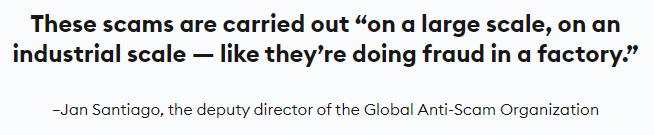
According to Jan Santiago, the deputy head of the advocacy group Global Anti-Scam Organization, these frauds are carried out “on a massive, on an industrial scale — like they’re committing fraud in a factory.” He puts the total losses throughout the world in the billions.
Cy suffered a loss of about $1 Million Dollars as a result of being “Pig Butchered”, this con game took place over painful, lengthy WhatsApp conversation that is more than 270,000+ words longs, over roughly 3 months.
The transcript of Cy’s conversation reveals how “Jessica” turned his fears and insecurities to her advantage. With Cy’s ailing father, overworked wife, and a daughter soon entering college, found Jessica’s alleged simple and quick money attractive. The specifics of Cy’s life would be turned into the obstacle that Jessica consistently pushed between Cy and his money for weeks and months. She would prod him at almost every turn to increase his spending.

Some possible tips on avoiding scams online:
- Unsolicited contacts should be highly scrutinized, even when they share a lot of “mutual friends”. In the era of social media it is relatively easy to mislead people into believing they know you from the past, or that you share many friends.
- When it comes to most things in life, especially finances there is no quick and easy method to generate large gains. As they say “if it sounds too good to be true, it probably is”.
- Don’t share personal details about difficulties you are experiencing, there are just too many people out there that will try to prey on your vulnerabilities (even just troll you for entertainment).
- If someone suggests a website for anything that involves any finances or shopping that you aren’t abundantly familiar with, then you should spend a little time vetting the site.
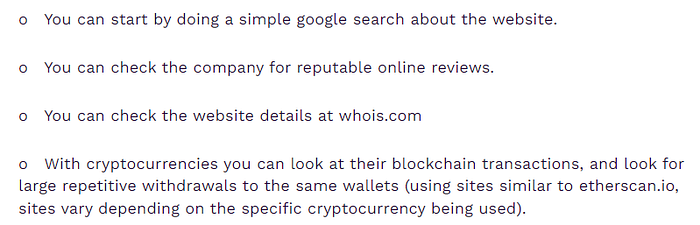
Some other tips to possibly help you avoid being scammed online:
- If someone tells you they received a “hot tip” or have “inside information” they are either scammers or they are most likely violating trading laws, and you should avoid this at all costs.
- If someone is pressuring you to move funds in large amounts, this should set off red flags.
- If someone is pressuring you to frequently move funds, this should set off red flags.
- If anyone is promising you amazing return rates on your money, this should set off red flags.
- If someone is telling you they made huge money on their investments, this should set off red flags. The vast majority of people in cryptocurrency don’t get rich (most don’t even earn an amount worth talking about).
- In 99.9% of all cases Cryptocurrency is the last place you should be putting your money if you hope to get any type of return on it. Crypto is the wild west right now, with virtually no oversight and too many scams and frauds happening every time you read the daily news.
- Don’t investment your money based on emotions or desperation.
- If you aren’t very knowledgeable with investing, you should consider hiring a licensed professional for assistance.
- If anyone guarantees you will make a profit, this should set off red flags.
- If anyone guarantees a certain percentage of profit, this should set off red flags.
- If you can’t afford to lose your money, then you probably shouldn’t be investing it. Investing in even the most optimal environments is a risky venture in which you could possibly lose your entire investment.
Disclaimer:
We are not providing financial or legal advice of any kind to anyone. If you have questions or concerns about any financial or legal topics discussed in this article, you may want to hire a licensed professional for assistance. This article is solely for educational purposes, and the creator provides no guarantees or warrantees over its content. If you decide to use any of the information contained in this article, you do so at your own risk and hold harmless the creators of this content and the websites that it is hosted on.






