If you're new to crypto and anything like I was, you might assume that when influencers talk about trades and investments, they are using the terms interchangeably. However, that's not the case. Crypto trading and crypto investing differ significantly in terms of strategy, time horizon, and risk.
Crypto Trading vs. Investing
Trading is a short-term, high-risk strategy focused on profit generation through market volatility. It necessitates active management and technical analysis. Traders often use leverage to magnify short-term gains. Investing is a long-term, relatively low-risk approach centered on asset appreciation. It emphasizes fundamental analysis and passive management.
Experience
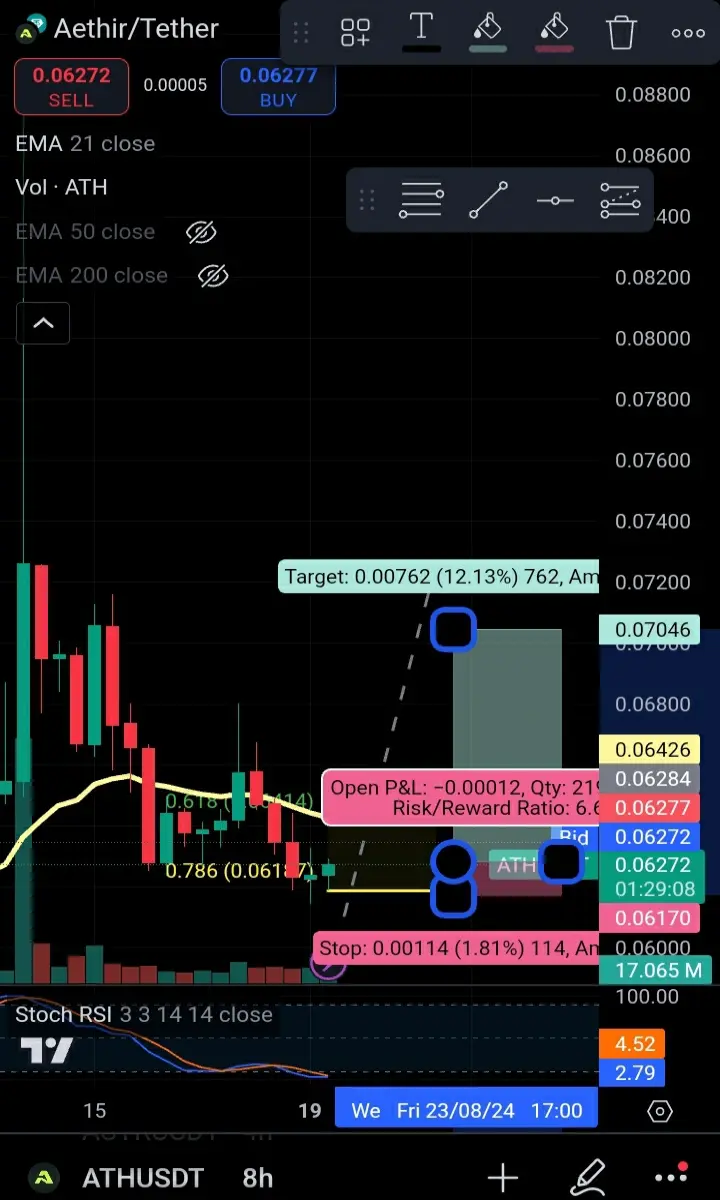
I've been investing in crypto since 2019, but I only started trading in February of this year. Although I didn’t make any actual trades in February, that marked the beginning of my learning journey. During this initial phase, I explored trading in an academic sense. I didn't make my first confident trade, applying all the lessons I had learned, until August 18, 2024 (hats off to @Sheldon_Sniper @kyledoops on Twitter). I truly believe that trading is a skill with profound implications, whether in crypto or traditional financial markets. While I could have learned and executed the necessary strategies sooner, life sometimes gets in the way. Regardless, I will use this crypto blog to document my trades, and I invite you to join me on this journey. At best, I consider myself a novice trader. I will make mistakes and lose some trades, but that's okay. Trading is a probabilities game based on the risk-to-reward ratio. Personally, I don't take any trade with a ratio lower than 3:1. As long as I win 3 out of 10 trades, I'll be successful. If you decide to start trading crypto, my best advice is not to be greedy (take profit as your trading system dictates), be patient (it takes time finding a trade worthy token), and avoid chasing green candles.
Trading Strategy
• Use the 4-hour / 8-hour trading view and expect to make a trade every 2 to 4 / 5 to 7 days.
• Ensure the Stochastic RSI lines cross and is below 10.
• Confirm that the price action has bounced at least twice off the trend line.
• Price action should be at the Fibonacci retracement level of 0.618 (start the Fibonacci metric at the most recent wave).
• Setting a Take Profit (TP) / Stop Loss (SL) is a must.
• Minimum 3:1 risk-to-reward ratio.
• 5% trailing SL.