
Are there sudden drops in the market? Would you like to seize the opportunity but don't have stablecoins available? Now, this is no longer a problem. The cryptocurrency exchange Binance offers, in addition to the traditional bank transfer, the possibility to make purchases by card - and instantly! In today's article, we will show you how to buy stablecoins on Binance using a debit/credit card in five easy steps. But first, we'll explain what stablecoins are and what types they consist of. So, let's get started!
What are stablecoins?
Traditional cryptocurrencies such as Bitcoin and Ether have undoubtedly quite a few advantages. These include high decentralisation and the lack of an intermediary when making transactions. However, they also have disadvantages, the biggest of which is their extreme volatility. It makes them difficult for ordinary humans to use. People generally expect to know how much their money will be worth tomorrow, next week or next year.
It is because of these high fluctuations that the so-called stablecoins were created. It is another type of cryptocurrency whose value is tied to a particular asset - such as a fiat currency (the dollar), a commodity (gold) or another asset.
What are the stablecoins types?
In general, stablecoins can be divided into four types. Based on how they are backed and the asset whose price they are trying to replicate.
- Commodity-backed stablecoins: commodity-backed stablecoins are coins issued on the blockchain that represent a commodity's value. Physical assets such as precious metals, oil or real estate, for example, are used to back them. These types of stablecoins allow you to invest in things that might not be available on a local level. Buying a gold bar and storing it afterwards can be difficult and expensive. However, purchasing PAX Gold, for example, becomes much more straightforward.
- Currency Stablecoins: Currency Stablecoins are tied to the value of a fiat currency, such as the dollar. The company issuing this type of token usually creates reserves where for every stablecoin there is an equivalent in cash or equivalents. The entity behind a stablecoin currency is centralised, which means it engages with regulators to maintain compliance. What's more, in extreme situations, it may even freeze funds to help law enforcement. Examples of currency stablecoins include USDT, USDC and BUSD.
- Algorithmic stablecoins: Algorithmic stablecoins are tied to an asset by complex algorithms. Smart contracts and demand balance everything. The algorithm will reduce the number of tokens in circulation when the token price falls below the fiat currency rate. Alternatively, if it exceeds it, it will issue new tokens, reducing the value of stablecoin. Unfortunately, these types of coins often lose their so-called "peg". An example of an algorithmic stablecoin is UST, which led to the complete collapse of the Terra ecosystem last month.
- Cryptocurrency stablecoins: Cryptocurrency stablecoins are coins backed by other cryptocurrencies. They usually replicate the price of the asset supporting them. So what are they created for? For using a particular cryptocurrency on another chain. Excample is Wrapped Bitcoin (WBTC) which is a stablecoin backed by Bitcoin issued on the Ethereum blockchain.
What advantages do stablecoins have?
Stablecoins have quite a few advantages when compared to volatile cryptocurrencies. These include:
- Stability: The value of stablecoins is kept stable, allowing investors to preserve their investments' value during market turbulence.
- No need to exit to fiat: Investors using stablecoins can exit the market without actually exchanging cryptocurrencies for fiat. The whole process takes just a few seconds, no tax liability arises, and what's more, when the situation becomes favourable, they can easily return to market again.
- Liquidity and volume: Stablecoins significantly impact the liquidity and volume of the cryptocurrency market. That is perfectly illustrated by USDT, which typically processes higher volumes than other digital assets. With high liquidity, investors are assured that they can always sell their digital assets.
What are the most popular stablecoins? - TOP 3
- Tether (USDT) - Tether is the oldest stablecoin, having debuted in 2014. It is currently the third-largest cryptocurrency by market capitalisation. The value of USDT is pegged 1:1 to the US dollar. The company behind this stablecoin claims that each unit is backed by cash or its equivalent. Nevertheless, the issue has long been highly controversial.
- USD Coin (USDC) - USD Coin is the second-largest stablecoin and the fourth largest cryptocurrency by market cap. The project debuted in 2018, and Circle and Coinbase oversee it through the Centre consortium. USDC is reportedly backed by cash, cash equivalents and US Treasury bonds.
- Binance USD (BUSD) - Binance USD is a stablecoin created by the world's largest cryptocurrency exchange, Binance. Unlike its competitors, BUSD is approved by the New York State Department of Financial Services (NYDFS). This stablecoin is also backed by cash and cash equivalents. Historically, its value has been the least likely to "unpeg" from the US dollar.
How do I buy stablecoins on Binance with my card?
Buying stablecoins with your card on Binance is very simple. First of all, you need an account on Binance. If you don't already have one, you can create one here. Once you have created an account and passed KYC verification, the rest comes down to following a few simple steps. Here they are:
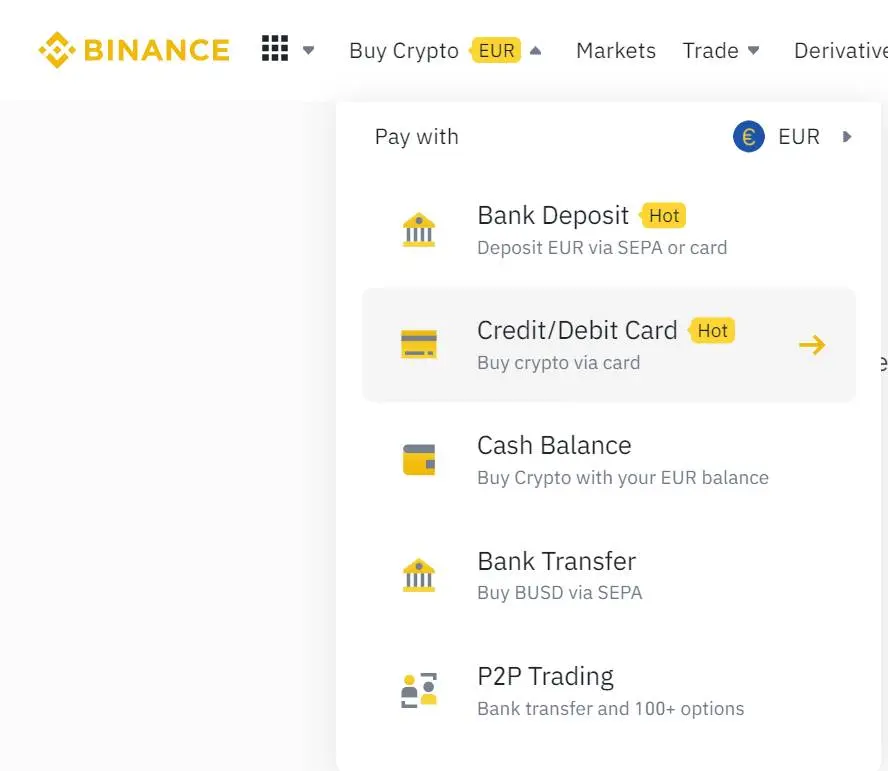
Step 1: Hover over "Buy Crypto" at the top of the page, then click "Credit/Debit Card". Or click on the link, and you will be taken straight to the right place.
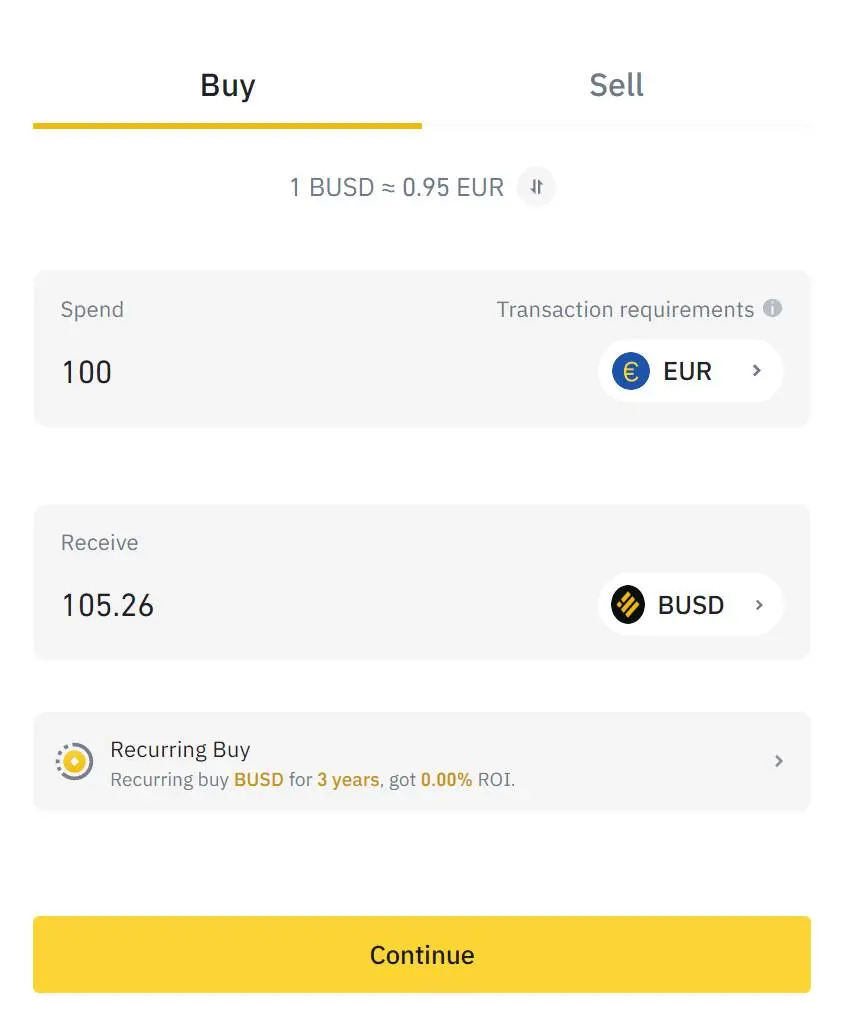
Step 2: Now select the fiat currency you want to buy with and the stablecoin you want to buy. Binance allows you to buy BUSD, USDT and USDC.
Step 3: Now, you need to add a new card. To do this, click on "Add a new card", enter the relevant data, and click "Add card" again.
Step 4: Click "Continue". At this point, the transaction details should appear. Check that everything is correct and if so, confirm the order.
Step 5: Now, you have to confirm the payment on the bank side. Once you have done this, your stablecoins will appear in your Binance spot wallet!






