
If you’ve been in the crypto space long enough, you know it’s not all moonshots and freedom tech. There's a shadowy side to this decentralized dream — scams. And not just the sketchy DMs from "official support" on Telegram. I’m talking multi-million and even billion-dollar frauds that have shaped how regulators, investors, and legit builders now treat crypto.
Let’s start at the beginning. The first big wake-up call? Mt. Gox in 2014. Back then, it was handling over 70% of Bitcoin trades. Then boom — 470,000 BTC vanished. The hack exposed just how unprepared the infrastructure was. It was like realizing your bank’s vault was actually made of cardboard.
Then came 2016’s DAO hack. It wasn’t a scam per se, but it showed how smart contracts can be just as flawed as the people coding them. Ethereum literally split into two chains (ETH and ETC) to undo the damage. That shook a lot of early idealists.
Fast forward to 2017–2018, the ICO boom. You remember BitConnect, right? That absurd lending platform with guaranteed returns? A classic Ponzi. The memes were funny, but real people lost real money — over $1 billion, actually. Then there was Titanium Blockchain, where the founder literally forged a whitepaper and fake testimonials to raise $21 million.
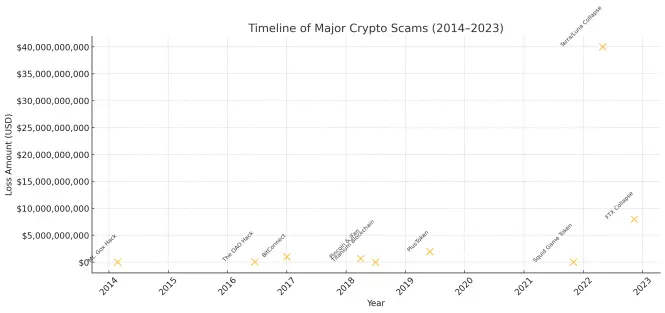
But let’s zoom in on Asia for a minute. That’s where some of the most massive crypto scams ever happened. OneCoin took Southeast Asia by storm, claiming to be the next Bitcoin. In reality, it was a pyramid scheme that stole over $4 billion. PlusToken out of China promised daily profits and walked off with $2 billion. Even after arrests, the impact on Chinese retail investors was brutal. Vietnam’s Pincoin & iFan? $660 million gone. India’s GainBitcoin? $300 million. And don’t forget WoToken — which, fun fact, was run by former PlusToken people.
What these stories show is that scams evolve just like tech does. First it was centralized exchange hacks, then sketchy ICOs, now it's rug pulls and dodgy DeFi. Scammers are always lurking where hype is hottest.
So what’s the takeaway? This space is powerful, fast, and borderless — and that’s exactly what makes it dangerous when bad actors step in. It’s easy to get caught up in the excitement. But if there’s one thing crypto history teaches us, it’s this: do your own research, stay skeptical, and if something feels off — it probably is.






