
BitFuFu is a company that mines Bitcoin and also rents out mining power to other people. In August, this company had a pretty good month. Their Bitcoin output jumped up by 55.4%. That sounds great on paper. But when you look closer, the full picture isn't so simple.
The Numbers From August
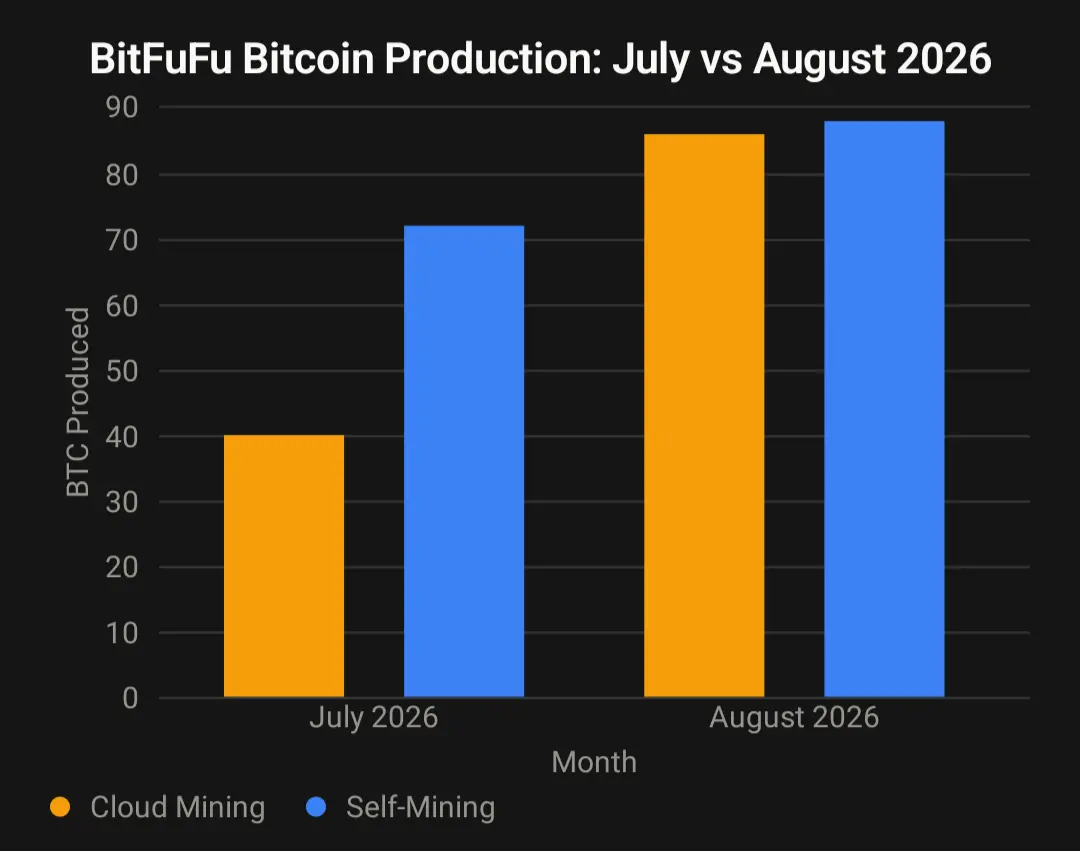
BitFuFu made 174 BTC in August. That's up from 112 BTC in July. So yes, that's a real jump.
But here's the catch. Most of that new Bitcoin didn't come from BitFuFu's own machines. It came from cloud mining customers. These are people who pay BitFuFu to use their mining power, and whatever Bitcoin those machines make goes to the customer, not to BitFuFu's own treasury.
Out of the 62 extra BTC made in August compared to July, about 46 BTC came from cloud customers. That's roughly 74% of the increase. Only 16 BTC came from BitFuFu's own self-mining, which grew from 72 to 88 BTC.
So when people see "production up 55%," it sounds like the company is getting richer. But most of that boost is customer activity, not company gains.
What Happened to the Treasury
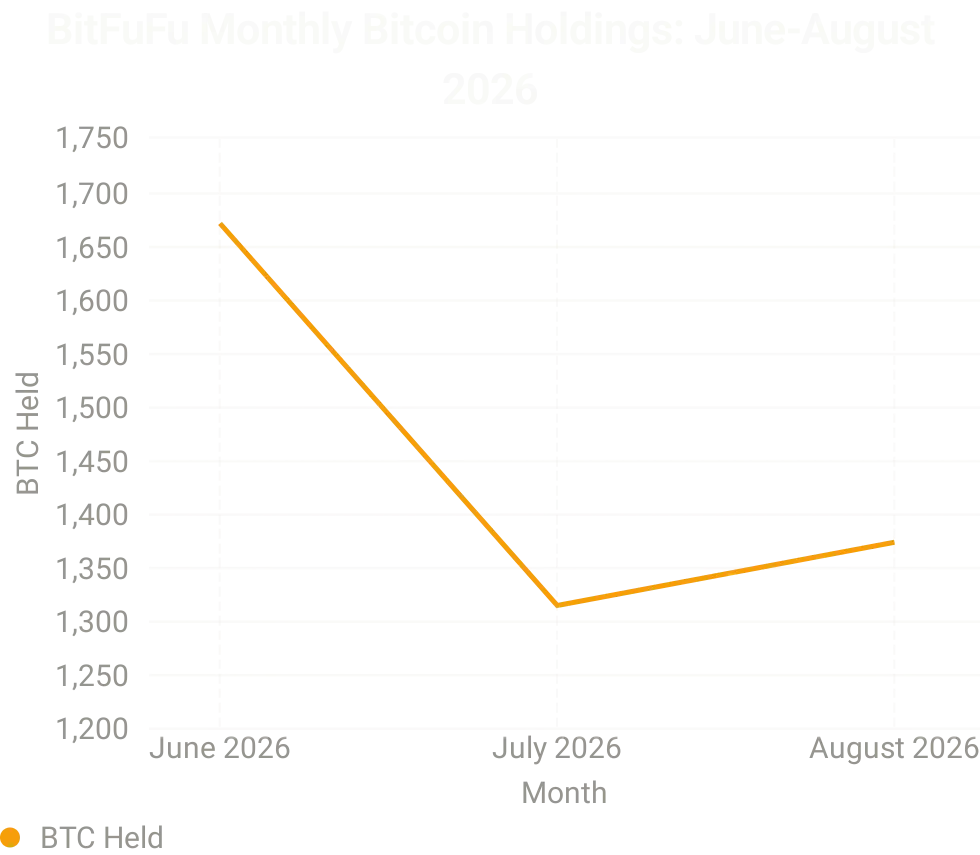
BitFuFu ended August holding 1,373 BTC. That's up 59 BTC from July's 1,314 BTC. On the surface, that looks like recovery.
But here's the thing people should notice. Back in June, BitFuFu held 1,671 BTC. So even after this recovery, they're still sitting 298 BTC below where they were just two months earlier.
Why did the treasury drop so much in July? The company said it was mostly because they made advance payments to buy more mining capacity. This new capacity was set to start running in August and continue for 330 days. So basically, they spent a big chunk of Bitcoin upfront to buy compute power for the future.
More Machines, But No Profit Numbers Yet
By the end of August, BitFuFu's managed hashrate reached 20.6 EH/s. That's a big jump from 14.2 EH/s just a month before. Hashrate is basically a way to measure how much mining power a company controls. More hashrate usually means more mining ability.
The CEO, Leo Lu, had already mentioned in mid-August that hashrate was back near 20 EH/s. So this wasn't a total surprise. The expansion was already in motion.
Here's what's missing though. The company hasn't shared any numbers showing whether this new capacity is actually profitable. They spent real Bitcoin to buy this compute power, but there's no clear payback figure yet. No numbers showing how much extra revenue or profit this expansion is bringing in.
For a company that burned through hundreds of coins to grow, that's a pretty big gap in the story.
Why This Matters for Anyone Watching Bitcoin Miners
This story isn't just about one company. It's a good example of something happening across the whole Bitcoin mining industry right now. Miners are spending big money on new equipment and computing power, hoping it pays off later. But shareholders and investors often don't get clear proof of whether that spending is actually working yet.
BitFuFu's story shows both sides of this. On one hand, production is growing and the treasury did recover partially. On the other hand, the company is still down compared to a couple months ago, and there's no solid data yet proving the new spending is worth it.
The real test will come in future updates. If BitFuFu keeps growing production and their treasury climbs back past that June level, that's a good sign. If not, people might start asking harder questions about where all that spent Bitcoin actually went.
Quick Takeaways
- August production rose 55.4%, but most of the growth came from cloud customers, not BitFuFu itself
- Treasury grew by 59 BTC in August, but is still 298 BTC below June's level
- Hashrate grew a lot, jumping from 14.2 to 20.6 EH/s
- No profit or payback numbers have been shared yet for the new capacity
This is one of those situations where the headline number looks exciting, but the real story needs a closer look. Numbers can tell two different stories depending on how you read them, and this is a perfect example of that.
Disclaimer: Above content is meant to be informational in nature and should not be interpreted as investment advice. Trading, buying or selling cryptocurrencies should be considered a high-risk investment and every reader is advised to do their own research before making any decisions.





