For those mining crypto, pools are the stable pathway to consistent return. While they are not close to the winnings one might get hitting that individual Bitcoin solution, mining pools do provide far better odds of return on a daily basis by combining the mining power of multiple users into the same pool. When that pool solves the next step in a crypto blockchain, the pool gets paid, just like the individual miner. However, because the pool has far greater hashing power together, it's odds of solving a chain step are far greater and more frequent. So, while a pool participant has to split the profit with other pool members and the pool owner, they see payment faster and more frequently. The trade off pays down the investment cost of equipment faster and produces steady income an individual may never see at all. This has been the fundamental appeal of platforms like Zergpool.
So, to now see Zergpool closing down brings up the question, are pools being regulated out of existence or is there another issue going on? Yes, Zergpool is closing.
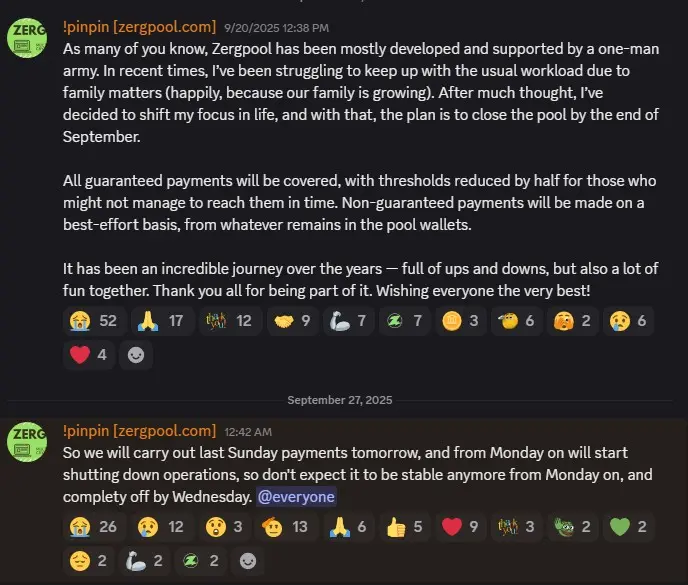
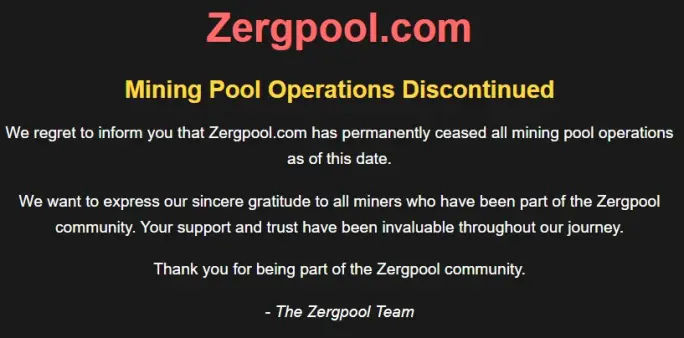
The above was written last Saturday (September 27). As of today, three days later, Zergpool is officially gone.
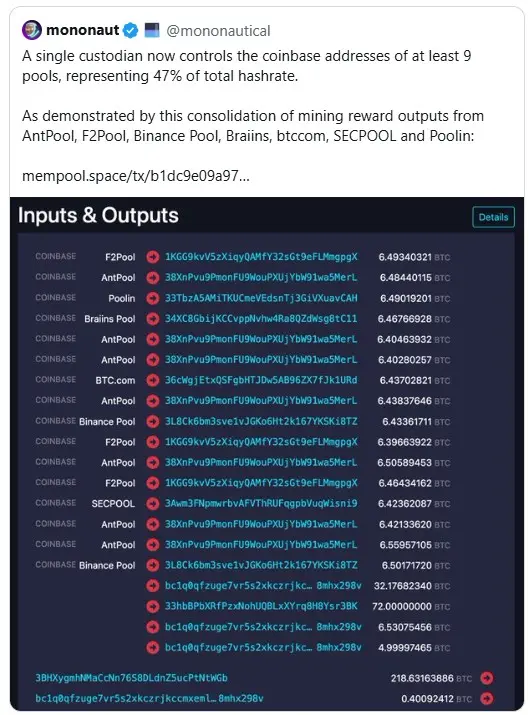
Zergpool was not the first to cease operating recently. Ekapool disappeared last year, and a handful of other mining pools have closed or are the verge of going away. This presents of couple of problems. First, it concentrates mining on the remaining pools. For those that already have massive control of the mining of a given chain, it can create new problems and new forking risks. Second, the risk can create a practical monopoly which can then raise costs, block out players or trigger centralization of chain control.
For Zergpool, the closing driver was the all-too-familiar story of one key dedicated person being overwhelmed by the work involved and eventually getting worn down. That's not opinion; the cause was literally spelled out in the Zergpool discord server as an announcement (see above). However, the reasons behind that overwhelming pressure can be multiple. The obvious reasons are usually costs of operation. However, increasing regulation has become more and more of a threat to blockchain operations in 2025, especially in the area of tax reporting, security regulation and KYC requirements. For many, the days of a small-time single project are coming to an end as only professional organizations have the resources to keep going forward with much larger scales of operation. Again, that leads to a concentration of the mining market and related problems.