Inflation is an insidious thing. It doesn't usually hit people right away. Instead, like mold, it just creeps along slowly until one day you notice it's not only present, that inflation is actually making a big impact, specifically on whatever it is you're trying to buy. WIth big items, ironically, inflation isn't noticed that much because they are occasional. The impact of inflation is noticed more when one compares the cost of something over 10 or 20 years, like a car or a home. However, when inflation hits common everyday things like groceries, utilities, and fuel, then the problem hits home even more. The frequency of everyday costs are repeat and keep having to be dealt with. Many are unavoidable. And, when you're living on a budget, it gets painful.
Let's put things in perspective. A gallon of milk today is now easily almost $5. A tri-tip steak cut, untrimmed, $35. A loaf of bread, $6 to $8. In 2019, these items were a third to half their cost. For those who enjoy a good income and spare cash flow each month, the cost increase is noticed, but it doesn't really change life much. It's a bit more like an annoyance, like a buzzing mosquito. However, for those have to stretch through the month and make food last weeks before each grocery run, these hits are brutal. The immediate reaction is to start buying discount food, generics, and lower quality versions of the same. When that doesn't work as much, then one has to opt for lower cost retailers. Ultimately, one reaches the point of having to buy less, period. That's when food limits start really becoming a painful challenge, and it's particularly visible in larger family settings.
Fuel is a similar situation. People need gas to get to work. When the cost of transportation starts to skyrocket with a cumulative impact, people start doing without in other ways to offset. But, like any budget, there's only so much that can be shifted. Eventually, something has to fall by the wayside. Even with debt, the decision is only temporary.
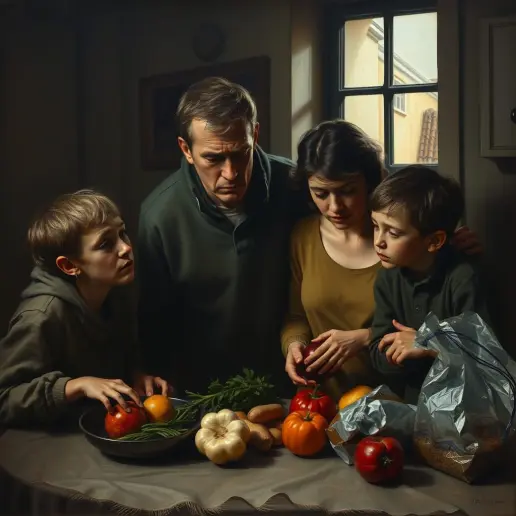
Eating, however, is a luxury for those with the money and well-to-do. Sure, everyone feels some pinch of cost increases, but the brutal grind of doing without is far less likely for those who have the financial buffers to take the hits. Instead, it is the poor or those living paycheck in mouth that feel inflation the most, especially with food. To be so on the line that one has to choose between healthy food and discounted processed food just to avoid being hungry is unfortunately an increasing problem with inflation. Worse, much of it is avoidable.
The dirty secret is that there is enough resources to keep people by the millions fed without making budget choices. The obstacle to this better reality is the unstopping greed of the rich. People can call that idea communism, liberalism, left-wing wackoism or all the other political slurs that hide the rich. It doesn't change the fact that much of the worlds resources, finance and capability to live normally is locked up in the hands of a small minority. The stats speak for themselves; this is an old argument. What is new is that the creep of inflation is now gutting the middle class versus the usual pressure on only the poor. And that's a gamechanger.
Sure the number of rich have increased, but so have the poor. And the left side is far bigger in number than those on the right.
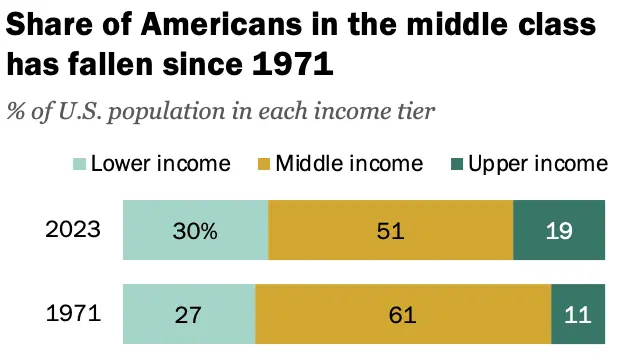
When the middle class can't afford to eat right, the system is breaking. It's the middle class that keeps the retailers and their rich owners paid and growing in income. If they can't afford to buy basics, retailers big and small start to fail. Debt will distract this for a bit, but when the credit cards run out and the bankruptcies run exponentially, then people have no choice but to stop buying or steal. Both options are bad for retailers, and it also means the end of income for the rich too. For centuries the rich understood this model, and they kept the middle class alive as a necessary evil. Their long-term viability depending on there being generations of middle class to keep buying.
However, the 21st century has created a group within the rich only interested in their own rapid greed at the expense of everyone and everything else. They are willing to drive cost, inflation and price for uncontrolled profit, even if it means breaking the system that's kept their income flowing. This is not unique; it's happened before in history, with predictable results. When the middle class as well as the poor have nothing to work for, they aren't very willing to keep being obedient. If today's rich bothered to remember their history, they would protect the system not work to destroy it for instant gratification. But, ego and arrogance can be overpowering. And then history repeats itself.