
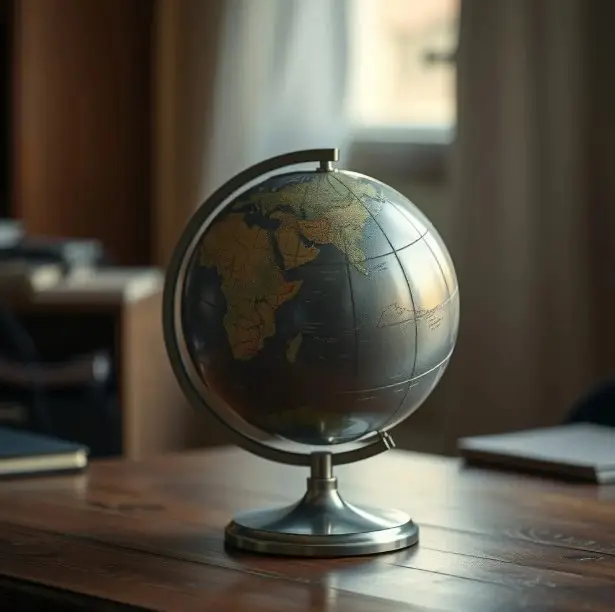
When I was a kid the most popular thing to have in terms of understanding where in the world, seriously, anything was tended to be a globe. This was a metal, then plastic, round thing about the size of a basketball and pivoted on a pedastal. The ball was painted and labeled with all the continents and countries of the world at the time, and you could spin it to see where a country or city was actually located relative to anything else. The other big source of geography info was the standard waiting room magazine, National Geographic (which is still in print btw). Between the two as a kid growing up in the 1970s one could generally figure where things where and, more importantly, what side of the world things were happening in. Then again, I was a weird kid listening to Walter Cronkite and CBS evening news at the age of 5.
More Knowledge but Less Wisdom
Today, between Google Maps and various video options like YouTube, Tik Tok and more, people and instantly see motion maps and movies of various parts of the world. However, how much do we really know the world today? Obviously, the continents are still where they were back then; Europe is still across the Atlantic from the US, Asia is on the other side of the Pacific from the same, and Africa is the big land mass south of Europe. But if you really look at the borders today, geography has drastically changed in a short 50 years since I was a 5-year-old kid.
Europe alone has added a half dozen more countries at least, combined Germany, and relabled the Warsaw Pact and NATO among other things. While Asia has been far more stable, it's exploded with population growth and more cities, as well as a lot of name changes (for example, Bombay is now Mumbai).
Did We Give Up on Schools?
How much of the above is really being taught in school these days? I secretly test my kids once in a while, now both older teens, with questions about where a given country is or city, knowing full well myself but playing dumb. Instantly, they go to their phones and search tools, but the fundamental memory knowledge is apparent and missing. If you asked me were Kinshasa was, I would know. I lived there for two years. The country name changed, but I know it's still smack in the center of Africa, Congo. The same goes for Honolulu, Stalingrad/Volgograd (present), Sydney, and Macau. It might have seemed like useless trivia at the time, but having a sense where the world was without having to look it up on a mobile was, literally, a basic level of education people had when I was a kid and teen if they had left their hometown or state at all (that said I had plenty of friends at the time who never traveled more than 50 miles from where they were born too).
Mental Crutches Everywhere
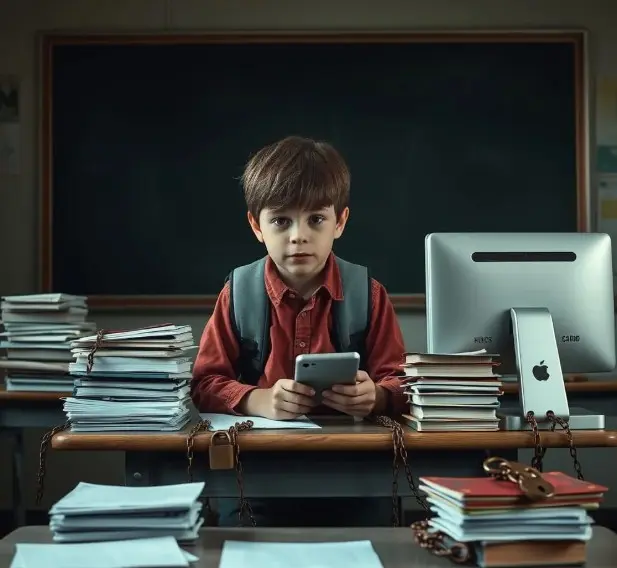
There's no question that the reliance on digital devices for referential knowledge has skyrocketed exponentially, but I wonder if we gave up something in the process with the ability to function independently as a price. Not only are people more and more vulnerable today to what they are told on a device, whether true or not, they don't seem to have as much ability to function on their own anymore. It's an irony given how much individuality has become a mantra and political slogan in the last two decades.






