
Introduction: Ethereum's Rise and Growing Challenges
Ethereum, the world's second-largest cryptocurrency, has brought a revolution to the digital world with its smart contract functionality. This functionality enables decentralized applications (dApps), NFTs, and DeFi. Yet, this fame brings a problem: the ability to scale. High fees for transactions (gas fees) and slow speeds for transactions have become big roadblocks to widespread use.
The Layer-2 Answer: A Hero for Scaling
To fight these limits creative developers have made Layer-2 scaling answers. Picture these as fast lanes built on top of the current Ethereum road (Layer-1). These answers handle transactions off-chain then group and send them to the main Ethereum chain. This cuts down on traffic and lowers fees.
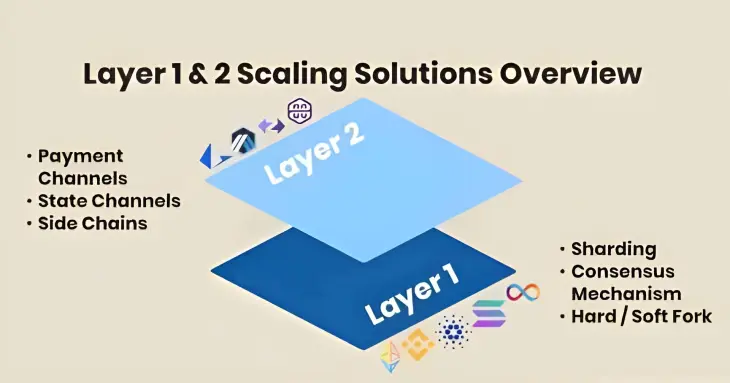
Different Types of Layer-2 Scaling Solutions
Here's a brief overview of some common Layer-2 approaches:
Rollups: These group multiple transactions into one batch and send them to the Ethereum mainnet. Two main types exist:
Optimistic Rollups: These assume transactions are correct unless someone proves otherwise. (Examples: Optimism Arbitrum)
Zero-Knowledge Rollups (zk-Rollups): These use math to show transactions are valid without showing the actual data, which gives better security and privacy. (Examples: zkSync, StarkNet)
Sidechains: These are separate blockchains that run alongside the Ethereum mainnet and connect through a bridge. (Example: Polygon)
State Channels: These let parties make transactions off-chain and put the end result on the Ethereum mainnet.
Why Layer-2 Is Important for You
Layer-2 scaling solutions have many advantages:
Lower Fees: They cut down transaction costs opening up Ethereum to more people.
Faster Transactions: They speed up transactions making things smoother for users.
Increased Scalability: They let the Ethereum network handle more transactions.
Better User Experience: They make Dapps less expensive and simpler to use.
To Sum Up: The Future Can Handle More
Layer-2 scaling solutions play a key role in Ethereum's future. They tackle the current scalability problems and clear the path for more people to use dApps, DeFi, and NFTs. If you get to know these technologies, you can make the most of Ethereum as it grows and changes.
Your Turn:
Which Layer-2 solutions do you like best? Tell us what you think and share your experiences in the comments! If you found this helpful, feel free to leave a tip!
Thank you for your time. I appreciate it.






