The US stock market seems to be invincible, as it continues to reach new highs despite weak economic data.
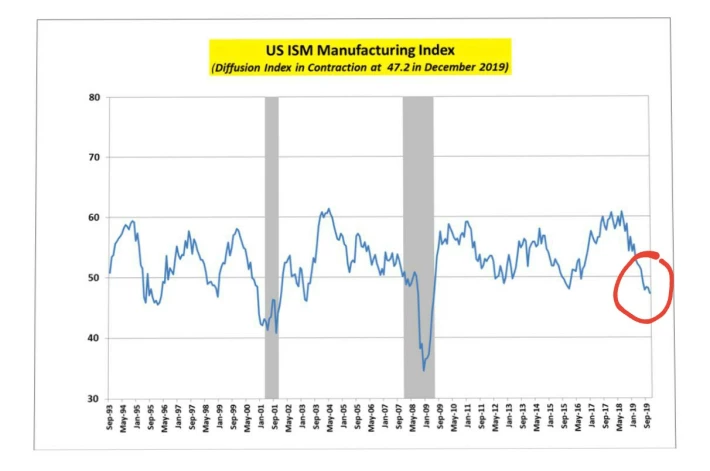
The United States ISM manufacturing index was just released today and came in at 47.2, which is the largest contraction since the 2009 recession. In fact, the ISM has been in decline since September, indicating an overall slowdown in manufacturing activity:
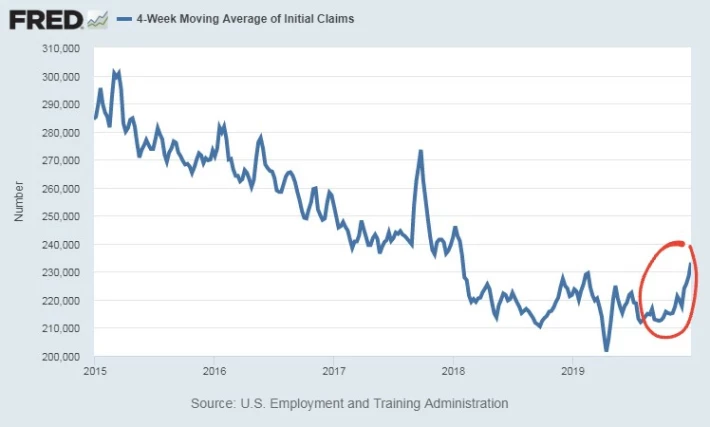
US jobless claims have also risen sharply in recent weeks:
It's quite possible that the US has already entered into recession, as portended by the inverting of the yield curve last August:
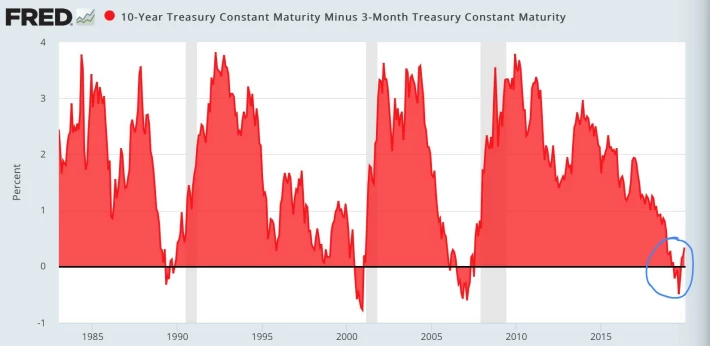
The grey areas in the chart represent past recessions, all of which occurred shortly after an inversion of the yield curve.
So despite all this negative data, why does the stock market continue to climb ever higher?
Thanks to the latest liquidity injections from the Federal Reserve via repo operations, fresh new money is being pumped into the stock market on a daily basis.
The following chart illustrates the direct correlation between stock prices and the increased liquidity provided by the fed.
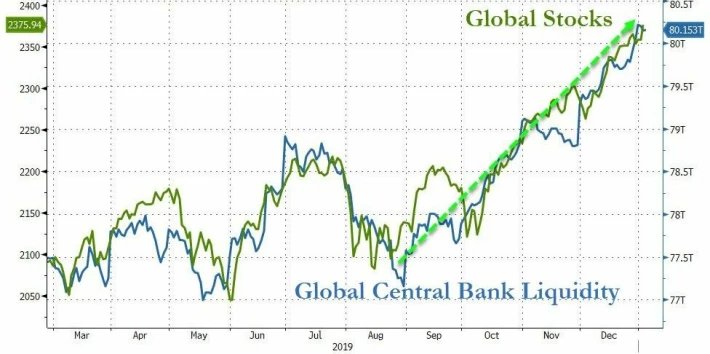
Many experienced investors are aware of this, and are riding the liquidity wave to collect as much profit as possible. However, it's a dangerous game, and only the most skilled traders can time the top.
Owning a portfolio with a large allocation of precious metals and cryptocurrencies would be the best hedge under these precarious market conditions.