When I first came across Pixels, I didn’t expect much. Web3 gaming has trained a lot of us to be cautious. You see a token, a roadmap, some polished visuals—and behind it, often a game that feels more like a system than something you’d actually want to spend time in.
But Pixels surprised me, slowly. Not with some dramatic innovation, but with something simpler: it felt like a game first.
That shift sounds small, but it’s not.
What Pixels gets right, almost quietly, is its sense of familiarity. Farming, exploring, building, interacting with others—these are not new ideas. In fact, they’re almost deliberately unoriginal. And that’s exactly why they work.
Instead of trying to prove how advanced it is, Pixels leans into what people already understand. You log in, you plant something, you gather resources, you build your space. Over time, you see progress. Not in a complicated, token-driven way—but in a way that feels natural.
There’s a kind of restraint here that’s rare in Web3.
Most blockchain games try to do too much. They want to be economies, metaverses, social hubs, and financial systems all at once. Pixels doesn’t feel like it’s chasing that. It feels like it picked a lane—and stayed in it.
The design philosophy becomes clearer the longer you look at it.
Blockchain isn’t the star of the show here. It’s just part of the foundation. You don’t feel like you’re constantly interacting with a wallet or navigating a system. Instead, you’re just playing—and the ownership layer sits quietly in the background.
That’s a subtle but important difference.
Because most players don’t care about infrastructure. They care about whether something is enjoyable, whether it makes sense, whether it’s worth coming back to. Pixels seems to understand that better than most.
It doesn’t try to educate you about Web3 every five minutes. It just lets you exist inside the world.
And the world itself is built around something very practical: repeatable, understandable loops.
You farm.
You gather.
You explore.
You build.
Then you do it again, slightly better than before.
There’s no unnecessary complexity layered on top of that. No overwhelming systems trying to prove depth. Just a loop that works—and keeps working.
That kind of simplicity is easy to underestimate. But in reality, it’s one of the hardest things to get right. Especially in crypto, where complexity often gets mistaken for innovation.
I’ve seen plenty of projects with more features, more tokens, more mechanics—and far less staying power. Because at some point, if the core experience isn’t enjoyable, none of that matters.
Pixels feels like it understands this at a fundamental level.
Maybe that’s why it feels a bit different.
It’s not trying to convince you that it’s the future of gaming. It’s just trying to be something you’d actually play. And oddly enough, that makes it more convincing than most ambitious claims in the space.
From experience, that’s usually where real traction starts—not with bold promises, but with quiet consistency.
Still, it’s impossible to ignore the bigger question hanging over any Web3 game: can this last?
We’ve seen this cycle before. Incentives bring people in. Activity spikes. Then, when rewards slow down, so does the interest. It’s a pattern that’s repeated enough times to be hard to ignore.
Pixels hasn’t escaped that reality. It’s still part of the same ecosystem, with the same pressures.
The challenge isn’t just getting players—it’s keeping them when the incentives aren’t the main reason they showed up.
That’s where things get harder.
And the industry itself hasn’t made that easy.
Blockchain games sit at the intersection of several ongoing problems: scalability, user friction, unstable economies, and the constant tension between “fun” and “financialization.” Even when the technology works, the experience often doesn’t.
Too slow, and players leave.
Too complicated, and they leave.
Too focused on extracting value, and they definitely leave.
Pixels seems aware of these pitfalls. Its connection to the Ronin ecosystem helps—it’s a network that has already leaned heavily into gaming rather than abstract theory. That practical focus shows.
The game feels responsive. Accessible. Less intimidating than most Web3 experiences.
And that matters more than people think.
What’s also interesting is the kind of traction Pixels has been building.
Not the loud, hype-driven kind—but the quieter signals. Players returning. Communities forming. Gameplay becoming part of daily routines. These are small things individually, but together they point to something more real.
You can’t fake that for long.
If people keep showing up, it usually means something is working.
But none of this guarantees success.
Pixels still has to balance a lot of competing forces. It needs to stay simple without becoming repetitive. Social without becoming chaotic. Rewarding without turning everything into a grind.
And perhaps most importantly, it needs to keep the economy from overshadowing the experience.
That balance is fragile. Many projects lose it.
So maybe the most honest way to look at Pixels is this:
It’s not a breakthrough in the way people usually expect. It’s not trying to redefine everything. It’s not solving every problem in Web3 gaming.
Instead, it’s testing something more grounded.
Can a blockchain game succeed by being… normal?
By focusing on gameplay first, keeping systems understandable, and letting the technology stay in the background?
If that works, it might matter more than any technical innovation.
Because for a long time, Web3 gaming has been chasing the wrong signals. Bigger systems. More tokens. More complexity. More noise.
Pixels quietly moves in the opposite direction.
Less noise.
More play.
And if it continues in that direction—if it keeps prioritizing the experience over the narrative—it might end up doing something the space has struggled with for years:
Proving that a Web3 game doesn’t need to feel like Web3 to succeed.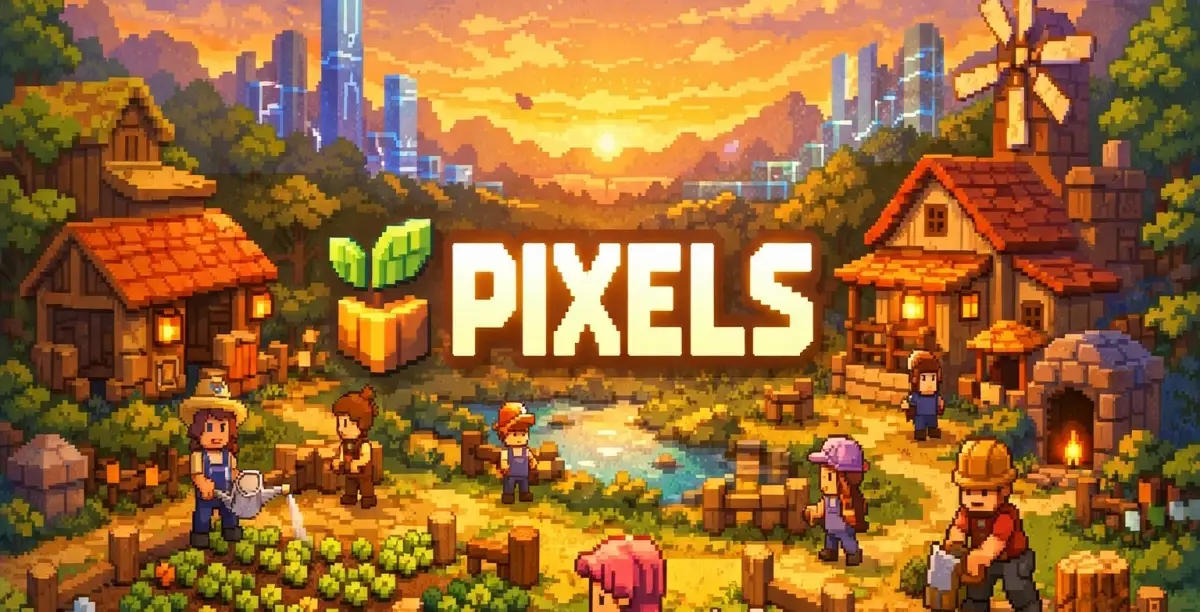
Crypto & Global Insights, geopolitics update
Pixels Signals A Different Kind Of Web3 Breakthrough: Not Bigger, Just More Playable

How do you rate this article?
4

AmadTheTrader
Posting crypto content

Crypto & Global Insights, geopolitics update
Latest updates on crypto, geopolitics, and global markets.


Reward the author with $0.01 in crypto, and earn yourself as you read!
% to author / 80% to me.Rewards are FREE. Publish0x pays them, not you.


3 hours ago
3 minute read


1 hour ago
1 minute read


23 hours ago
1 minute read
Page not displaying correctly?
