
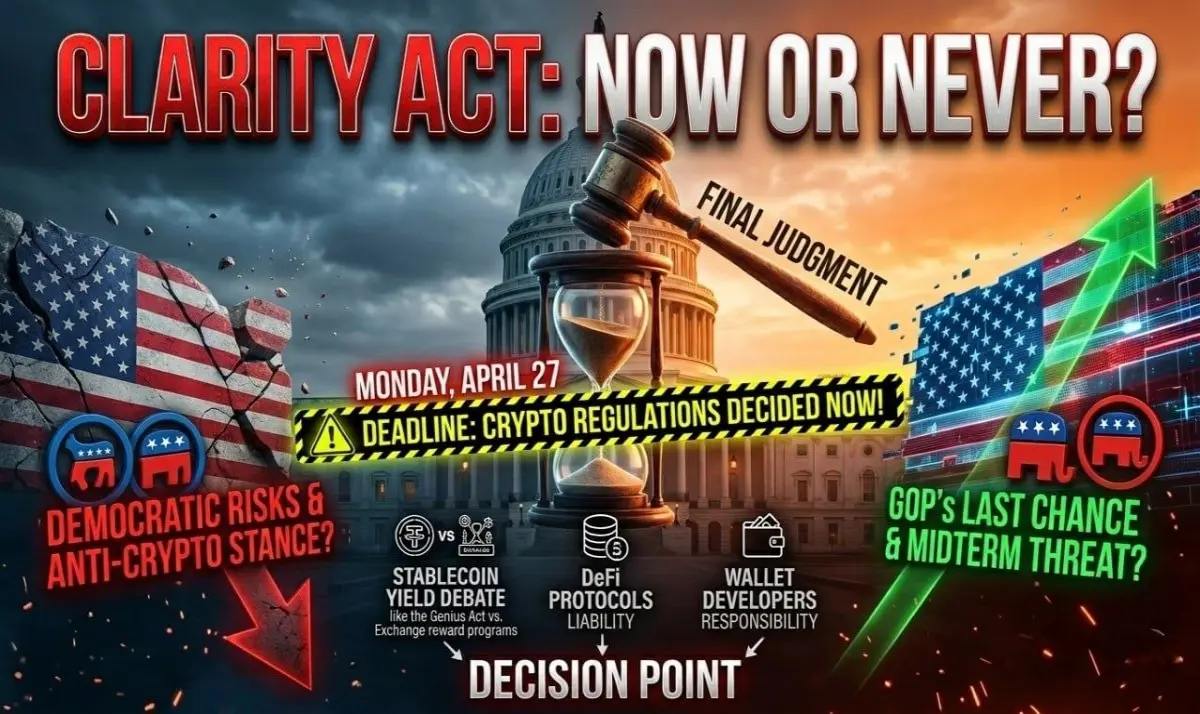
The most significant crypto-regulatory milestone of the year reaches its tipping point in just 72 hours. With no legislative scheduling occurred on Friday, Monday, April 27th, stands as the final deadline for the Clarity Act to be placed on the calendar. Missing this window would stall any progress until at least May, significantly increasing the likelihood that final approval could be delayed beyond 2026. This would mark a major setback for the Trump administration's efforts to accelerate pro-crypto policies and market openness.
The "barricades" erected by traditional banks, followed by fierce counter-responses from Coinbase, appear to have stalled the legislative engine. The friction has reached such a level that U.S. Treasury Secretary Scott Bessent was forced to intervene again this week, urging all stakeholders to find a middle ground.
Currently, the deadlock is absolute: banks refuse to budge from their defensive positions, while crypto operators insist on the necessity of allowing yield payments via stablecoins. This feature, already prohibited by the Genius Act, is one of the most contentious points, as exchanges seek to reintroduce it through third-party intermediaries.
The DeFi Dilemma
The yield issue is the most visible problem, but it is not the only one. Extensive discussions are still required regarding the liability of:
-
DeFi Protocols and their front-end interfaces.
-
Wallet managers and developers.
-
The broader, decentralized "crypto undergrowth" that lacks the centralized political lobbying power of major institutions.
From this perspective, the situation appears nearly compromised.
Deadlines: April as the Point of No Return
Political analysts emphasize that April is the absolute deadline for the Clarity Act to remain viable for the 2026 session.
-
The "Monday" Deadline: Monday, April 27th, is considered the final opportunity to place the act on the legislative calendar.
-
The Midterm Risk: Failing to start Commission discussions by the end of this month would likely push approval to 2027. This is a scenario Republicans want to avoid at all costs, fearing that the November midterms could shift power back toward a Democratic Party that hosts several anti-crypto factions.
Time is running out, and Monday represents the last rational chance for a "final surge" to bring this crucial regulatory framework to the floor.






