
Standard Chartered, a well-known global financial group, has significantly raised its price targets for Ethereum. By the end of the year, it now aims for $7,500 (up from the previous $4,000), and for 2028 it projects $25,000 (up from the previous $7,500). A sudden change — but not necessarily the most useful thing for investors.
When such important updates are made, it’s worth talking about how forecasts work (whether in crypto or stocks), how we can make the best use of them, and how to avoid being overly influenced — whether they come from Standard Chartered or any other financial group.
Standard Chartered now believes much more in Ethereum
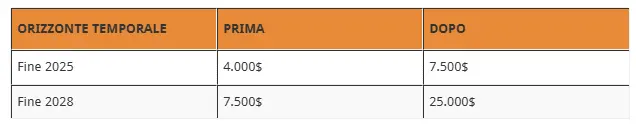
They’re not the only ones who have changed their minds. Objectively, the movements of recent days have caught almost everyone by surprise.
So much so that Standard Chartered has significantly revised its Ethereum forecasts.
These are huge changes — doubling the year-end target (with only 4 months left) and tripling the longer-term one. Have the fundamentals changed? No. Nothing has happened in recent days that would justify such sudden shifts. My suspicion is that these analyses have been swayed by price action.
Big numbers get clicks
And big numbers get people to read analyses. Nobody would click on a headline like “Ethereum at $5,000 by year-end.” If you landed on this article, chances are you also clicked because of the HUGE number in the title.
We’re not making fun of you — that’s simply how it works. And big asset managers, analysts, and funds know it.
Price forecasts can’t be precise
Numbers should be seen as indicative. It can be useful to consider the gap between the current price and the target, just to evaluate how much upside an asset might have according to a given analyst. The fact that no two analysts ever agree on the same target speaks volumes about how far from an exact science forecasting is.
Price drives the narrative
It may be unpleasant to say, but even analysts at reputable institutions like Standard Chartered end up being influenced by price. A serious analysis should account for the sudden swings that a cryptocurrency like Ethereum can produce. If price targets are being changed every few days, it’s a sign that there wasn’t much solid reasoning behind them in the first place.
Are forecasts useless?
The advice here is to take them for what they are. Sometimes they’re a way to capture attention, other times just numbers thrown out there knowing no one will follow up later.






