
The "Conflict of Interest" Trap
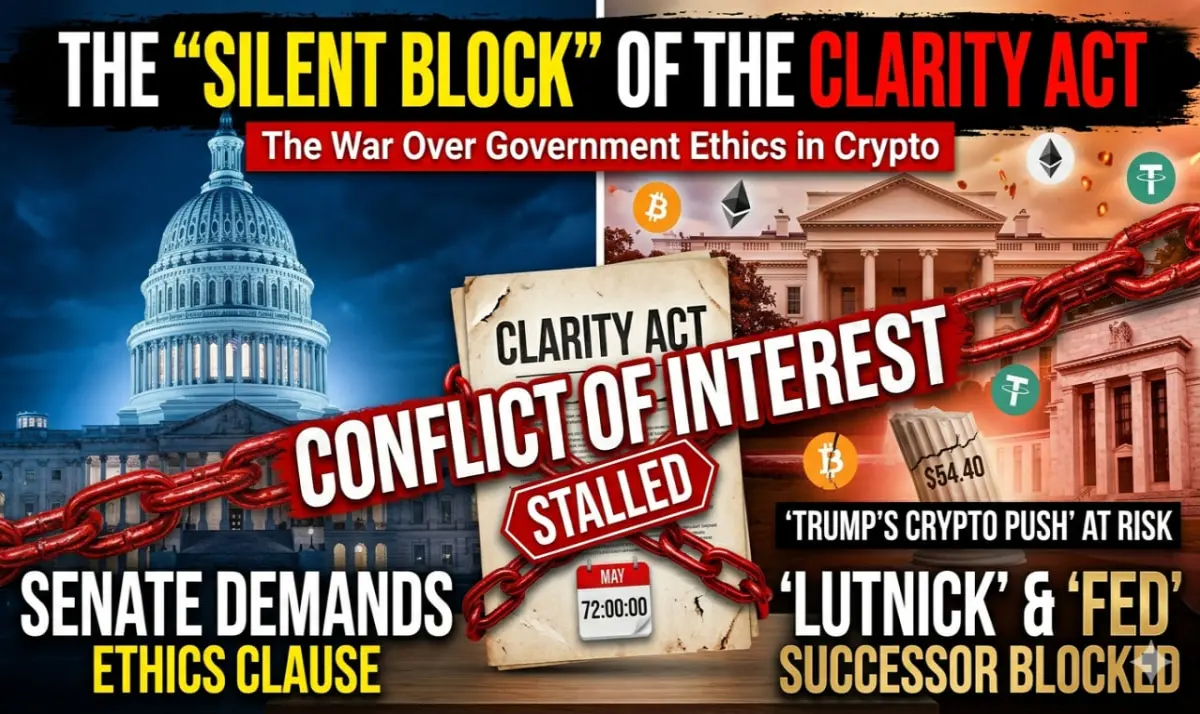
A singular obstacle remains for the passage of the Clarity Act in the U.S. Senate: Senator Thom Tillis. The North Carolina Republican, known for his strained relationship with Donald Trump, is demanding the inclusion of strict anti-conflict of interest clauses. While a previous compromise suggested delaying these rules until the next administration—effectively shielding Trump, Commerce Secretary Howard Lutnick, and other key figures from immediate divestment—Tillis is now pushing for more immediate transparency.
From the Fed to Crypto: Tillis’ Strategic Leverage
Tillis has already proven his influence. He was the primary force behind the 'truce' that led to the dismissal of investigations against Jerome Powell, a condition he set before approving Kevin Warsh as Powell’s successor. Now, he is applying the same leverage to the Clarity Act. According to TD Cowen, Tillis’ resistance is the main bottleneck, even as the discussion has been officially pushed to May. However, his demand for conflict-of-interest rules aligns with the core concerns of Senate Democrats, potentially creating a bipartisan path for a 'lightning approval' before the end of 2026.
The Lutnick Factor
The stakes are particularly high for Howard Lutnick, whose deep ties to the crypto industry and Cantor Fitzgerald have made him a lightning rod for criticism regarding government ethics. If Tillis wins this round, it could force significant structural changes in how the current administration’s 'crypto team' operates, though most analysts believe a deal will be struck to ensure the Act’s passage remains a priority for the American digital economy.
The Contrarian Timeline: May Advance, June Law
Mike Novogratz, CEO of Galaxy, has shifted from skepticism to a decidedly bullish stance on the Clarity Act. Despite the current Senate deadlock, Novogratz predicts the bill will advance in May and could be signed into federal law as early as June. Such a tight schedule would require unprecedented cooperation between exchanges, traditional banks, and regulatory bodies, potentially leaving the complex issues of the DeFi sector to be addressed in subsequent legislative rounds.
Market Mispricing: A Massive Opportunity
For investors, the significance of Novogratz’s prediction lies in the current market mispricing. Most institutional desks have already 'priced in' a total legislative stalemate for 2026, assigning near-zero probability to the Act's passage this year. If Novogratz is correct, the markets are making a massive structural error. A sudden acceleration toward federal regulation would provide the legal certainty required for a fresh wave of institutional capital, potentially acting as the ultimate catalyst for a Bitcoin breakout.






