
The recent U.S.–Iran ceasefire is a perfect reminder of how quickly sentiment can flip when geopolitical pressure eases even slightly. Oil drops, yields soften, the dollar weakens — and suddenly risk assets look attractive again. Bitcoin ($BTC) moving back above $71K and altcoins outperforming might look like the start of a new trend, but in my view, this move says more about positioning than real conviction.
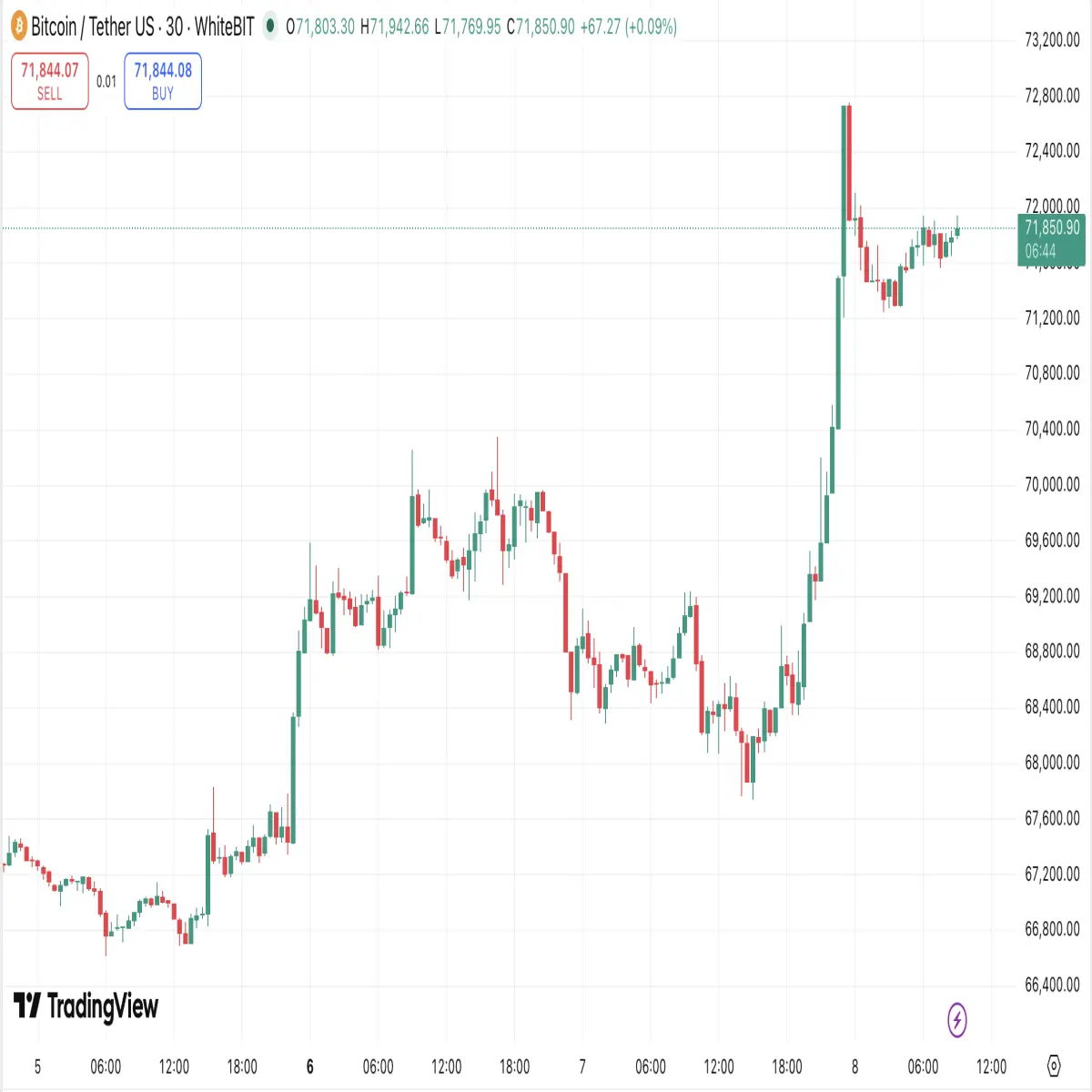
This Was A Squeeze, Not A Breakout
What we’re seeing here isn’t a clean, organic rally driven by strong demand. It’s a squeeze - and a pretty classic one. When hundreds of millions in short positions get liquidated, price doesn’t rise because buyers are confident; it rises because sellers are forced out of the market. That creates sharp, aggressive candles, but also leaves behind weak structure.
The problem with these moves is simple: they need continuation. Without fresh capital entering, price often loses direction. You get that familiar pattern - spike, hesitation, and then either slow grind or reversal. Right now, it still feels like we’re in that “post-squeeze uncertainty” phase.
Oil Still Controls The Narrative
Crypto traders love to pretend they’re trading in a separate universe, but oil keeps proving otherwise. Yes, prices dropped after the ceasefire, but zoom out - they’re still significantly elevated compared to pre-conflict levels. The reopening of the Strait of Hormuz sounds like a full reset, but in reality, normalization takes time.
Shipping flows, insurance costs, and geopolitical trust don’t recover overnight. As long as oil remains relatively high, inflation pressure doesn’t disappear. And if inflation stays sticky, central banks don’t rush to ease policy. That’s the chain reaction most people ignore. So while the market celebrates a short-term drop in oil, the macro backdrop is still far from supportive for a sustained risk-on environment.
Volatility Dropped - But So Did Conviction
Implied volatility has cooled off, which on paper looks like a positive signal. Less fear, more stability - that’s usually how it’s interpreted. But in this case, it feels more like the market exhaling rather than preparing to run.
We’re not seeing aggressive positioning. We’re seeing hesitation. Traders aren’t panicking anymore, but they’re also not chasing upside with confidence. This kind of environment typically leads to choppy price action, where both bulls and bears struggle to maintain control. t’s the kind of market that punishes impatience more than it rewards conviction.
The Only Real Driver: Institutional Flows
If there’s one factor that could actually sustain this move, it’s institutional demand. ETF inflows have already shown their impact: when they’re strong, dips get bought faster and structure improves. The market becomes more resilient, and volatility shifts from chaotic to controlled. If new institutional products attract meaningful volume, this rally could evolve into something more stable. But without that participation, we’re left with a market driven by positioning and short-term reactions. And that rarely lasts.
Technical Structure: Promising, But Not Confirmed
From a technical perspective, Bitcoin reclaiming short-term moving averages does signal improving momentum. There is a clear path toward higher levels if buyers stay active. However, the real test isn’t whether price can move higher - it’s whether it can hold those levels.
Support zones now matter more than resistance. If pullbacks are bought consistently and higher lows start forming, then the structure strengthens and the bullish case becomes more valid. But if price fails to hold support, we’re likely looking at another range-bound phase, or even a gradual move back toward lower levels. In other words, the next move will be decided not on the way up, but on the way down.
So What Is This Rally, Really?
In simple terms, the market got a reason to breathe - not a reason to run. The ceasefire removed immediate fear, but it didn’t fix the deeper macro conditions that have been shaping risk assets for months. This feels less like the beginning of a new cycle and more like a temporary reset in sentiment.And in markets like this, relief rallies can be dangerous - because they look like opportunity, but behave like traps. For now, the structure is improving, but conviction is still missing. Until we see consistent demand, especially from institutions, it’s hard to treat this as anything more than a fragile recovery in a market that hasn’t made up its mind yet.






