
You know Bitcoin’s been volatile, but did you know that miners are literally losing $19,000 on every BTC they produce right now? Yep. You read that right.
Mid-March 2026, the average cost to mine a single Bitcoin sits at $88,000. Meanwhile, the market is chilling around $68,200. That’s a 21% loss on every coin. Imagine burning cash 24/7 just to make it. So sad...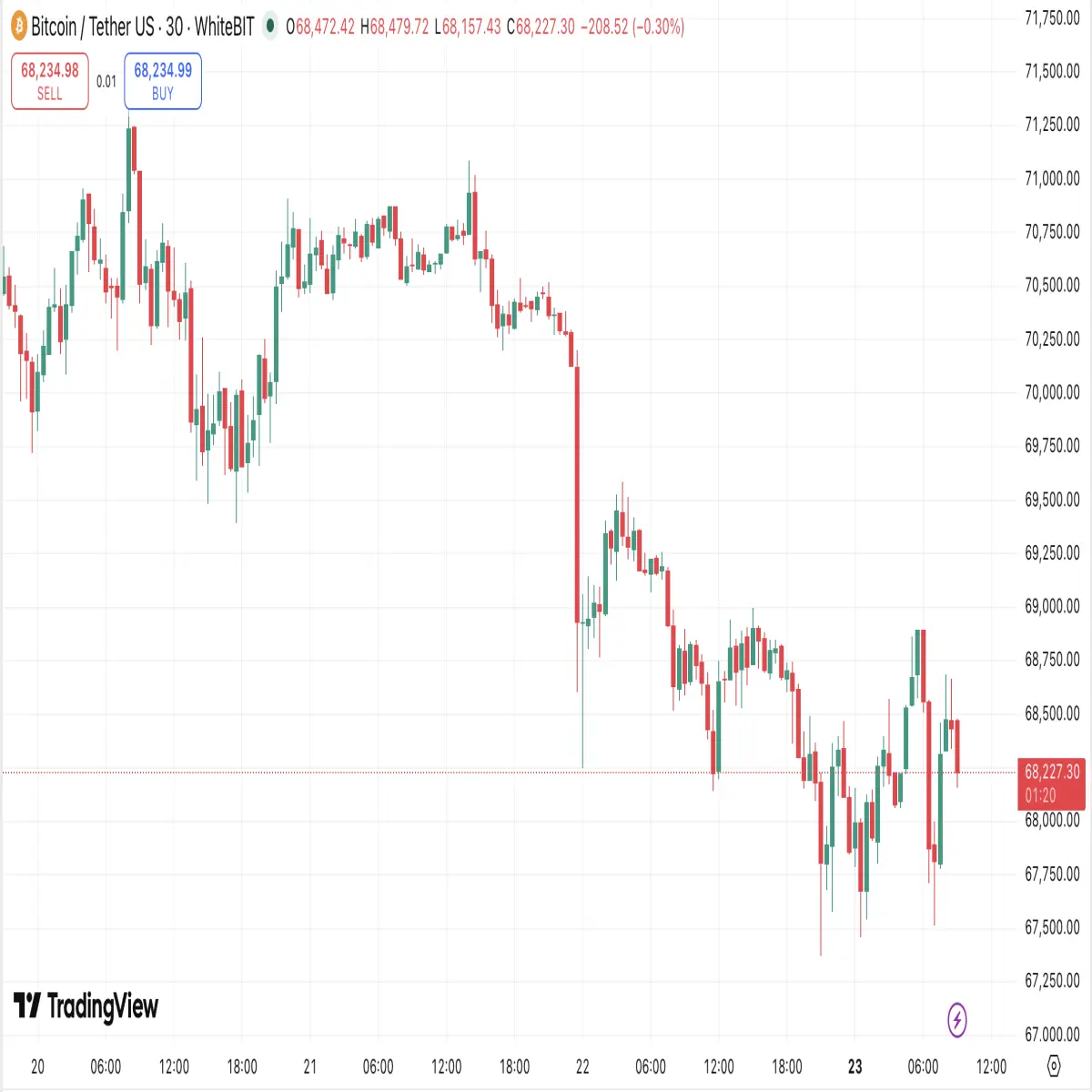
Why such a gap? There are a few big reasons:
1. Middle East tensions
Oil prices have shot past $100 per barrel, mainly due to the closure of the Strait of Hormuz. Electricity for mining farms is directly affected by oil prices, especially for miners relying on energy grids linked to fossil fuels.
2. Hashrate and difficulty drops
Bitcoin’s network difficulty fell 7.8%, the second-largest adjustment this year. Hashrate has pulled back from its 2025 peak of 1 zetahash to around 920 EH/s. This means fewer miners are online or mining as aggressively, slowing down block times (recently 12+ minutes instead of the usual 10).
3. Economic squeeze on miners
With energy costs high and prices low, the hashprice (expected daily revenue per unit of computing power) sits near breakeven at ~$33/day per PH/s. Many rigs barely cover costs. The ones that don’t? They’re selling Bitcoin just to keep operations running.
And here’s where it gets juicy for us traders. All that forced selling hits the market at the same time:
• 43% of BTC holders are underwater
• Whales are distributing during rallies
• Leveraged positions dominate trades
So, every little bounce gets sold into, and the price fights to find a floor.
Now, here’s the silver lining: the Bitcoin network is self-correcting. As miners leave, difficulty drops, making it cheaper to mine. Eventually, costs and price will align again. But until that happens, we’re in a tricky period where miners’ economics directly influence the market.
From my perspective, this is a classic reminder that Bitcoin isn’t just numbers on a chart. It’s a real network with real costs, real energy, and real people running machines around the clock. And yes, it can feel brutal during periods of geopolitical stress and high energy prices.
Personally, I wouldn’t jump into mining right now unless I had cheap electricity and a plan for the long term. Watching the network, though, is fascinating - it’s like seeing the market’s “heartbeat” in real-time. Miners are the pulse of Bitcoin, and when they struggle, the whole ecosystem feels it.
💭 So the real question for everyone: how do you play this? Hold, trade, or just watch the drama unfold from the sidelines? For me, it’s a mix of watching carefully, learning, and not panicking. Markets move fast, but fundamentals matter, and Bitcoin’s network has survived worse.






