Most crypto users understand that backups are important.
The problem?
Many believe that simply having a backup means they're protected.
Unfortunately, that's not how crypto recovery works.
A backup that is lost, destroyed, inaccessible, incomplete, or never tested can fail just as completely as having no backup at all.
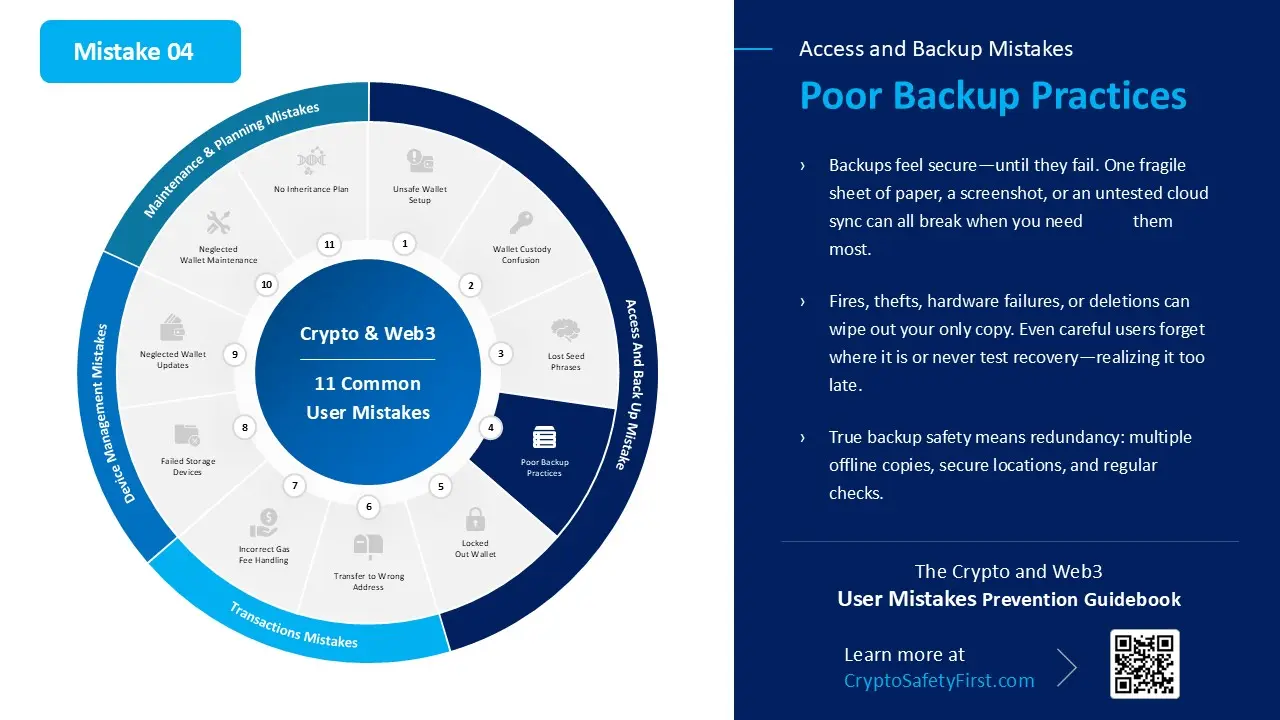
The Core Mistake: Assuming a Backup Equals Recovery
You create a backup—and assume your crypto is protected.
Many users rely on:
- A single paper copy stored at home
- A screenshot saved on their phone
- A seed phrase stored in cloud storage
- A USB drive kept in a drawer
- A backup that has never been tested
At first glance, these solutions seem responsible.
But here's the problem:
A backup only has value if it still works when you need it most.
Crypto recovery isn't about whether a backup exists.
It's about whether that backup can survive theft, fire, hardware failure, human error, and the passage of time.
Why Backups Fail More Often Than People Think
Many users focus on creating a backup.
Few focus on backup resilience.
A backup can fail in more ways than most people realize. Common causes include:
- Fire damage
- Water damage
- Theft
- Hardware failure
- Accidental deletion
- Lost storage locations
- Untested recovery procedures
Even careful users sometimes discover too late that their backup is incomplete, inaccessible, or no longer usable. True backup security requires redundancy, secure locations, and regular verification.
The Single-Copy Problem
One of the most common backup mistakes is relying on a single copy.
Many users think:
"I have it written down somewhere."
But crypto recovery depends on survivability.
If one event can destroy your only backup, then you don't really have a backup system.
You have a backup dependency.
Relying on a single paper backup creates a fragile recovery model because paper can burn, get wet, fade, or be accidentally discarded.
Digital Backups Create Different Risks
Convenience often introduces new vulnerabilities.
Many users store seed phrases in:
- Phone notes
- Screenshots
- Cloud storage
- Email drafts
- Text files
These methods feel secure because they are accessible.
But accessibility is exactly what attackers look for.
The easier a backup is for you to access, the easier it may be for someone else to access too.
The Backup Illusion
Many users assume their backup will work simply because they created one.
Unfortunately, backup failures are often discovered only during an emergency—when it's already too late to fix them.
Common problems include:
- Missing words
- Incorrect word order
- Misspellings
- Incomplete recovery information
- Forgotten storage locations
A backup that has never been tested should never be assumed to work.
The Real Solution: Build a Backup System
The fix is not:
"Make a backup."
The fix is:
"Build a recovery system."
A resilient backup plan includes:
Multiple Physical Copies
Store backups in more than one location.
A single event should never be capable of destroying all recovery options.
Secure Storage Locations
Use locations designed to protect against:
- Fire
- Water
- Theft
- Accidental disposal
Recovery Testing
Verify that recovery works before an emergency occurs.
Many failures are discovered only during testing.
Finding them early is the goal.
Periodic Reviews
Review backups regularly to confirm:
- They remain legible
- They remain secure
- They remain accessible
- You still know where they are stored
How Resilient Is Your Crypto Backup?
How resilient is your crypto backup?
A well-designed backup strategy typically includes:
- Multiple offline copies
- Separate physical locations
- Durable storage materials
- Periodic backup reviews
- Recovery testing
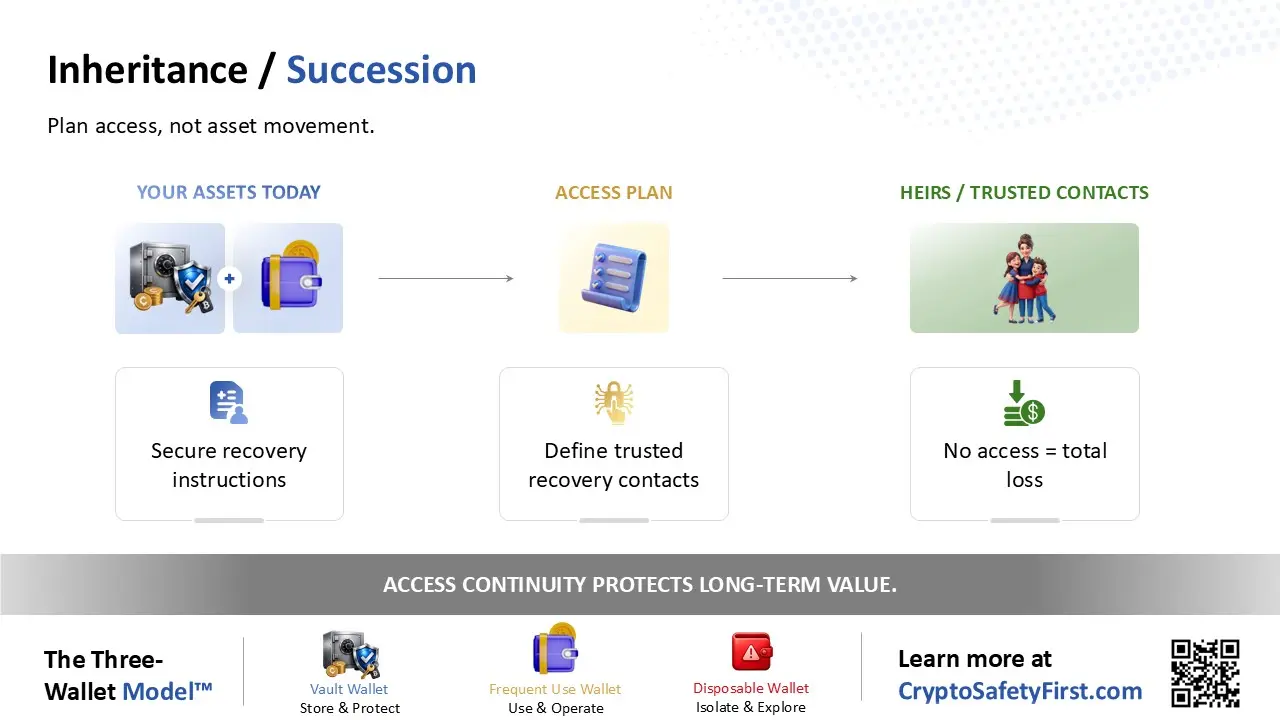
- Emergency and inheritance planning
If you answered "no" to several of these, now is a good time to strengthen your recovery plan—before an emergency forces you to rely on it.
The goal is not simply to survive today's risks.
It's to survive the risks you cannot predict years from now.
The Bigger Lesson
Most crypto users worry about hackers.
Many should worry more about backup failure.
Hackers are visible threats.
Backup failures are silent threats.
They can remain hidden for years.
And when they finally appear, there is often no second chance.
The safest crypto users don't just create backups.
They create recovery systems that can survive accidents, disasters, hardware failures, and time itself.
Because in crypto, the question isn't whether you have a backup.
The question is whether that backup will still work when you need it most.
The Bigger Picture
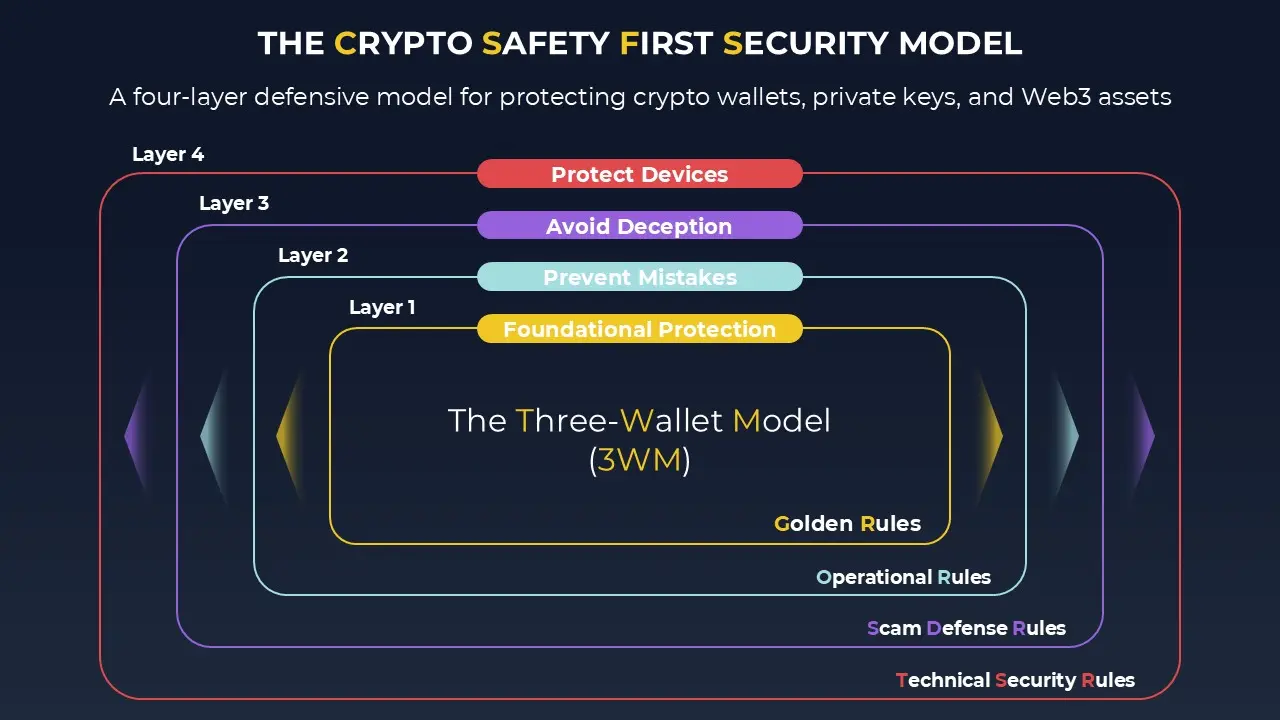
Backup resilience is only one part of crypto security.
Protecting digital assets also requires:
- secure wallet architecture
- account security
- device security
- scam awareness
- operational discipline
These layers work together to reduce the risk of preventable crypto loss.
For more practical crypto security guides and real-world Web3 security insights, visit CryptoSafetyFirst.com.