We've been talking a lot about macro-sentiment recently, and it's very clear that the game at hand is about the Fed's disagreement over a rate hike in September, and there's no word yet on whether it's 75 basis points or 50 basis points. Even every day is a day of volatility, and yesterday began to predict whether Powell's speech at the annual Jackson Hole Global Central Bank Conference would be dovish or hawkish, with almost all commentators believing it to be so. But, in fact, after much competition, a new hype has set in motion that is no longer looking at the September move alone, because a 75 or 50 basis point increase in either direction signals the end of the Fed's upward spike, and even the more extreme view that the Fed is raising the federal funds rate to 4% by the end of 2022 implies 150 basis points in the last three cycles. Even a 75 basis point hike in September (if you choose the 4% increase to the Fed funds rate, a 75 basis point hike in September is a certainty), the remaining two months are at most a mix of 50 and 25 basis points, so the increases in November and December are inherently regressive regardless of how much they actually increase in September (there was no hike in October), so it is quite possible that the actual outcome in September would be the same as in July. July was the highest US inflation figure in nearly 40 years. But rather than falling, risk markets started rising in anticipation of a peak in inflation, which in turn will result in the completion of most of the Fed's rate hikes. In particular, the risk markets, facing the current impasse, are raising calls for a delay in raising interest rates.
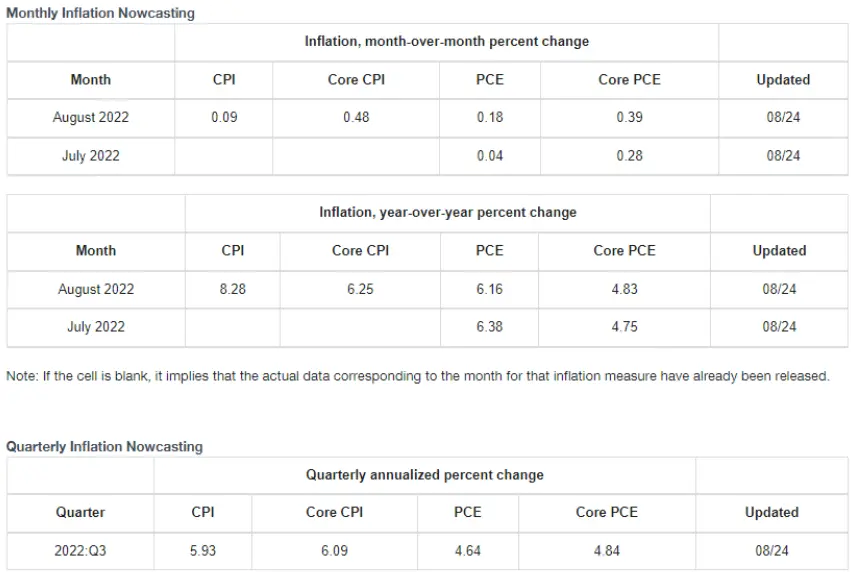
Of course, current expectations are wishful thinking. After all, the Fed's goal of maintaining a neutral interest rate is to keep inflation below 4% by 2022, so far in August inflation, while all expected to fall, is not falling by as much as might have been expected. It is unlikely that it will even fall below 8%. Never mind whether inflation has peaked, which the Fed does not dare to acknowledge.
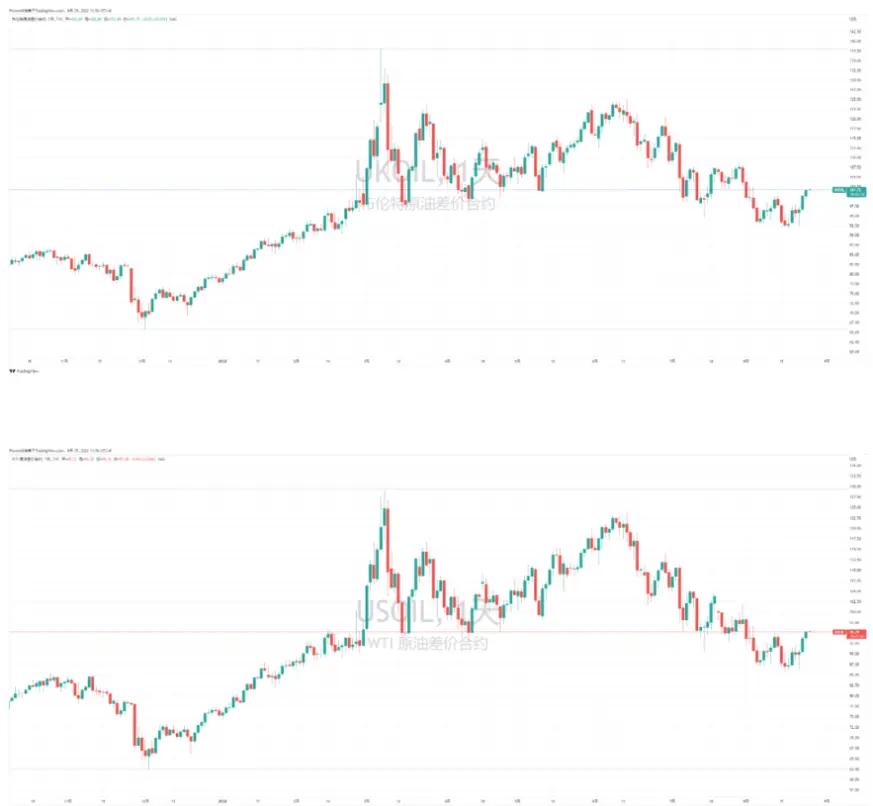
In particular, the current price of the two oil reserves has now returned to its July level. It is well known that both the decrease in the CPI in July and the expected decrease in the CPI in August are mainly due to the decrease in oil prices. However, oil prices have now shifted from an expected economic downturn to an increase in OPEC production. Since the previous strong non-farm data in July was interpreted by the Federal Reserve and the White House as indicating that the US economy will not fall into recession.
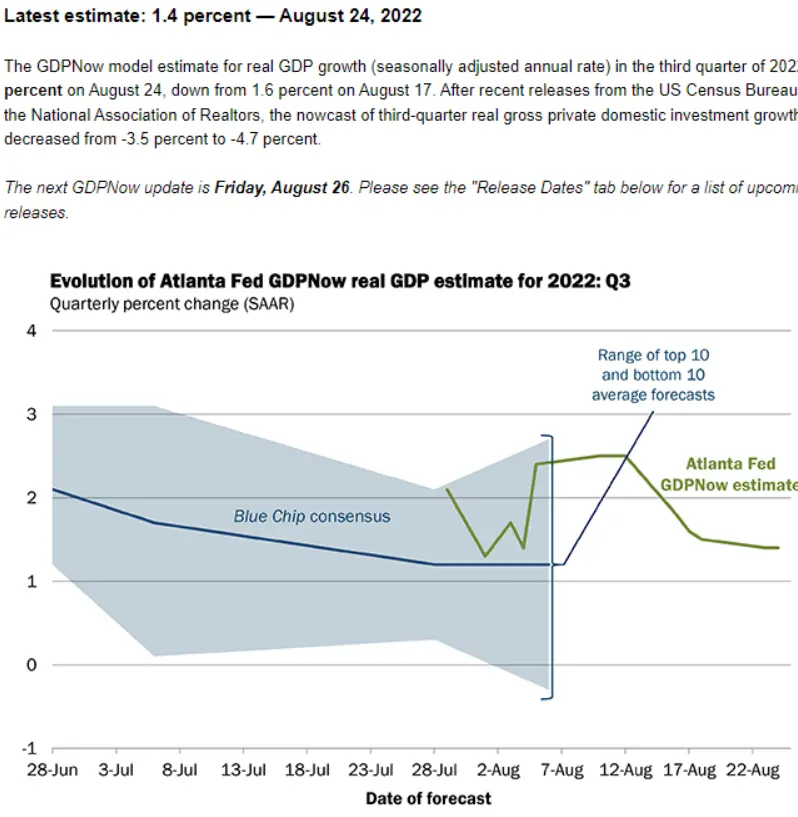
Even now, the GDP forecast for the United States has been raised from negative to positive 1.4% in the third quarter, so there are various signs that oil prices no longer need to lower oil prices in anticipation of the decline in purchasing power caused by the recession. On the supply side, the United States intended to ease oil prices by increasing production through OPEC. The same goal was also set in the negotiations with Iran. But instead, it is possible that the increase in Iranian production will lower OPEC's output. This is also why oil prices have been rising in the last two days, and it has to be said that the US government has been somewhat deficient in its ability to maintain the balance. Although the market isn't getting much feedback on oil prices, it's always clear that after all, a falling market is not good for all investors, and even the US government wants to be able to maintain a positive market, so from a risk market perspective, the rules of the game are changing. Expect a lower bound on the Fed's long-term market benefit and a higher upper bound on the immediate future than a lower bound. As things stand, the current economic camp is no longer willing to speculate on anything too far away. After all, the economic camp actually used money to flood the market from its June trough. As previously expected, sentiment soured once the Fed chose to raise interest rates by 75 basis points.
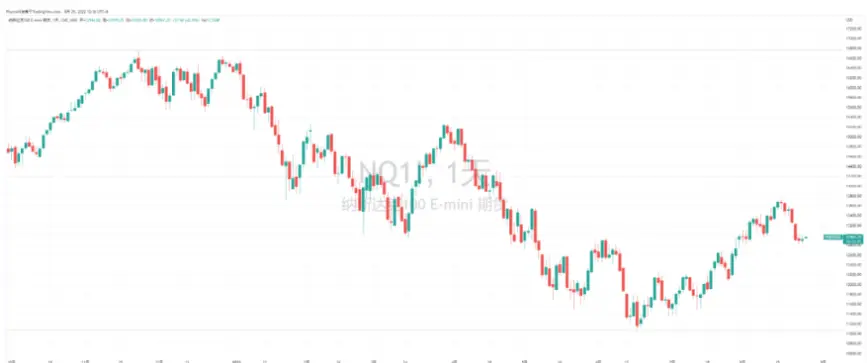
That's why the market has been quiet for so long. Therefore, we can see that when the market has already started to go down significantly, Na Index futures actually rose for two days in a row, even though the dollar index remained at a high of 108, and rising Na Index futures mean that Na Index futures can at least maintain a high opening when the market opens. The current currency market is still highly interactive with the Nasdaq. As long as the Nasdaq goes up, the price of the currency will go up. Even today, some commentators speculate that the bottom of the U.S. stock market has appeared by anticipating the ten-year U.S. Treasury bonds and the peak oil price. And the rise of the dollar index is due more to the decline of the euro exchange rate caused by the economy of the Euro zone. And there is now a 50 basis-point interest-rate hike in the eurozone. That's why the market has been quiet for so long. Therefore, we can see that when the market has already started to go down significantly, Na Index futures actually rose for two days in a row, even though the dollar index remained at a high of 108, and rising Na Index futures mean that Na Index futures can at least maintain a high opening when the market opens. The current currency market is still highly interactive with the Nasdaq. As long as the Nasdaq goes up, the price of the currency will go up. Even today, some commentators speculate that the bottom of the U.S. stock market has appeared by anticipating the ten-year U.S. Treasury bonds and the peak oil price. And the rise of the dollar index is due more to the decline of the euro exchange rate caused by the economy of the Euro zone. And there is now a 50 basis-point interest-rate hike in the eurozone.
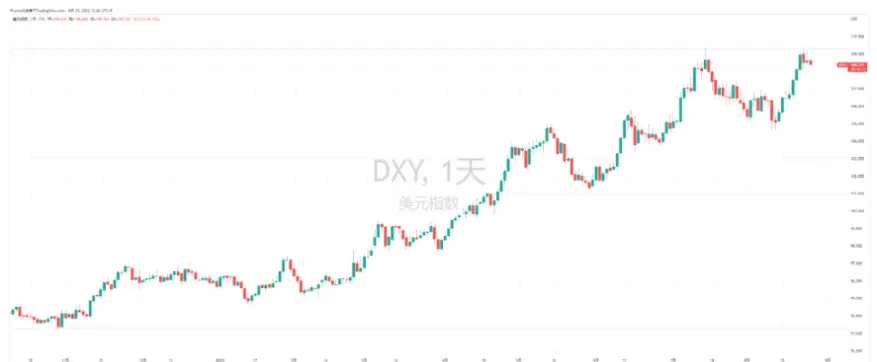
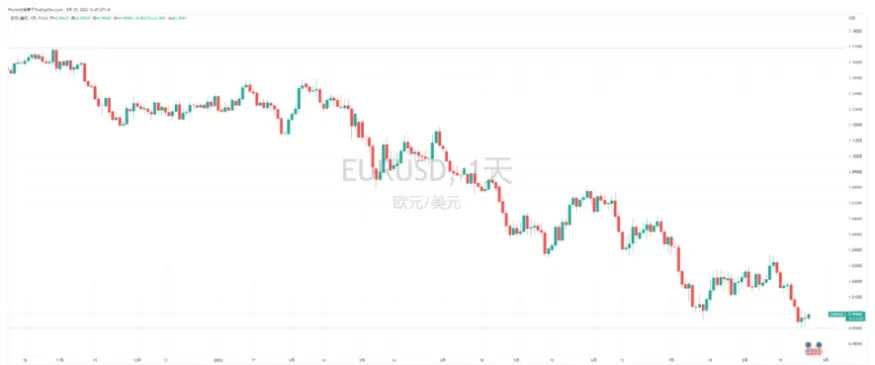
That's why the euro is expected to rebound, so the dollar index, which fluctuates around a high of 108, may find it hard to pick up in the short term as European interest rates are expected to rise, and the DXY's fall is a relief for risk markets, and even for the U.S. bond market.
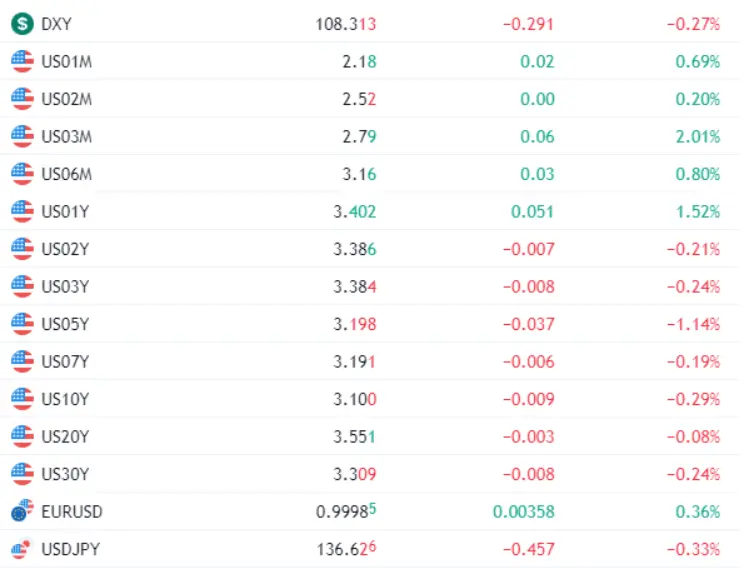
From the perspective of U.S. debt, although more funds are still concentrated in the ultra-short term, there is a gradual situation of capital overflow. There is a beginning of capital to move towards the medium and long-term U.S. debt. I have also said before that the sustained increase in the colonial interest rates of medium and long-term U.S. debt is not a time bomb for risk markets, and high yields will not necessarily absorb upward funds from the market. Therefore, only when the colonial interest rates of U.S. debt remain low will it be safe for risk markets.
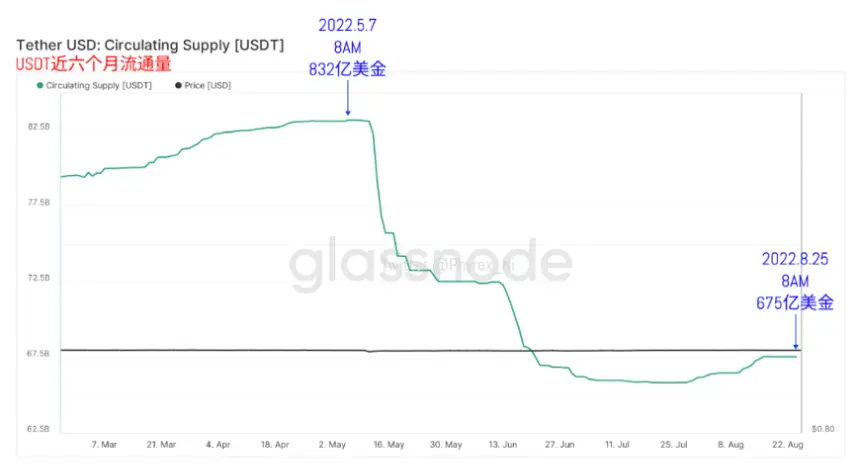
Although the content above is all about the analysis of macro-sentiment, and the influence of macro-sentiment is more on US stocks at present, in addition to the support of the NASDAQ, the attitude of over-the-counter funds is the risk indicator that determines the short-term and medium-term trend of the currency market. Judging from USDT's current market value, the last week has been flat, with neither increase nor decrease, indicating that off-market users in two large European and Asian states are waiting, mainly until September, when interest rates will rise.
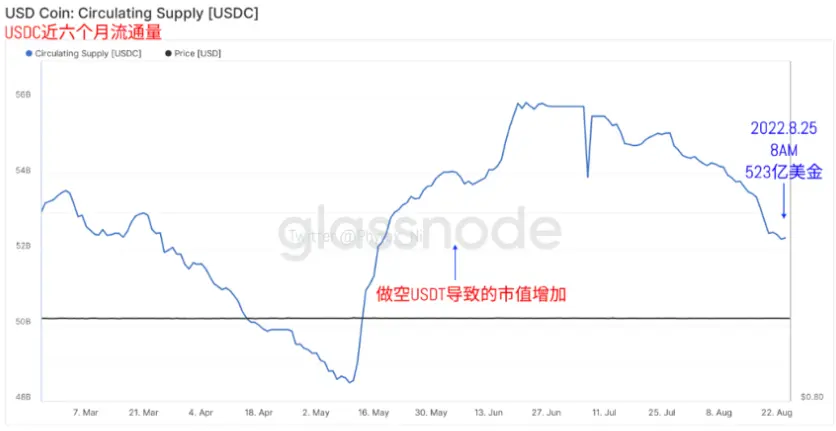
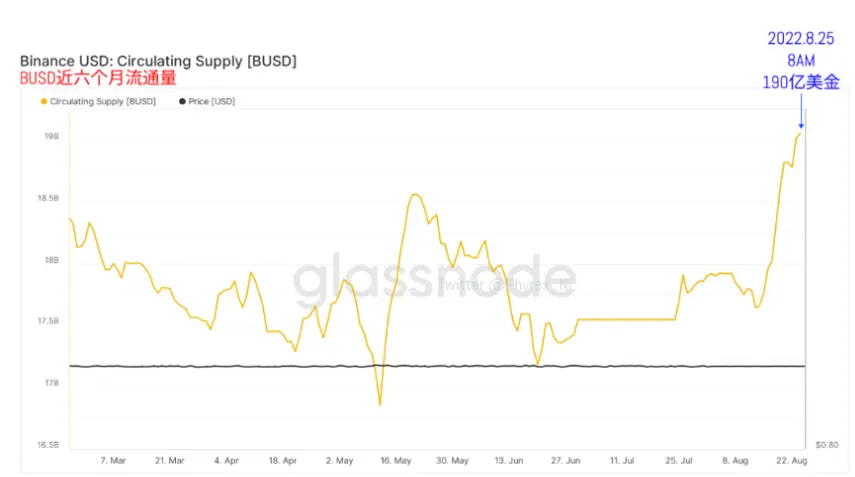
And USDC, whose market value was greatly reduced by the Tornado incident, although the market value has rebounded by about 20 million US dollars as of 8:00 this morning, it is still relatively insignificant. And on BUSD, despite the recent talk of Binance blocking accounts, it is impossible to stop the fact that BUSD's market value is still rising, after all, the fact that it is only natural for the global field to cooperate with the regulation is quite normal.
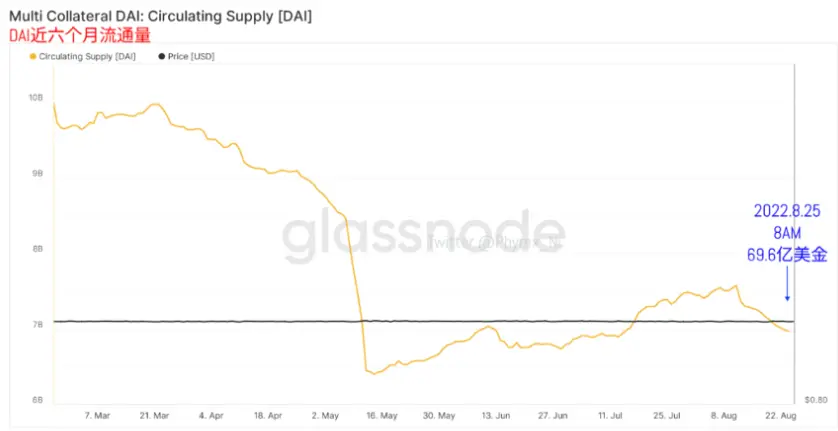
In the case of DAI, we do not expect the contribution of DAI to the turnover, but confirm the current ETH situation through the market value of DAI. Although we can see the ETH price rising trend from these two days, the chips in the pledge are continuing to reduce their holding, resulting in the market value of DAI continues to decline. More ETH are unwilling to increase positions through the way of spot leverage. Therefore, from the perspective of the current market value of the stable currency, in recent times, although a large number of USDC reductions and regulatory embrace made more "decentralized" users feel uneasy, in fact most of the USDC funds become the market value of BUSD, the overall market value of the stable currency market instead of falling, rising, although the increase rate is low, but it is indeed the case that external funds are constantly entering the currency market, especially through BUSD.
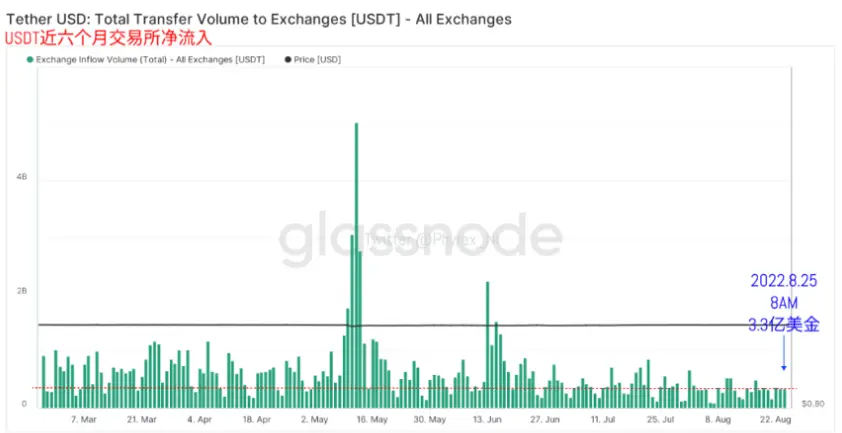
While over-the-counter capital can be seen to be maintaining a positive interest in the currency market, but the conversion of over-the-counter capital into purchasing power has been in a continuous decline. As can be seen from the data of USDT and USDC as of 8 am this morning, USDT is almost unchanged from yesterday, still showing a lower purchasing power, while USDC is more bare-knuckled, directly refreshing the minimum amount of working-day capital for nearly six months, so the overall purchasing power is still not optimistic. From the purchasing power data can also be extrapolated, whether it is BTC or ETH is bound to remain in the overall flow of low situation, from the BTC and ETH to the exchange of selling pressure as of 8:00 this morning can be seen, both are at the trough of selling pressure, this week's data has been extremely similar to the first half of the year, which indicates that the seller has lost interest in the current price. Either a large-scale change in prices or a major shift in macro sentiment could lead to a gradual tightening of current liquidity, and investors are already forcing a correction, although there are no clear data for equity markets, and the likelihood is that the same will be true for sentiment. And from the BTC and ETH exchange withdrawal data can also be seen, although the overall purchasing power is in decline, but investors through the bottom of the U.S. stock market has been at the bottom of the expectations of the currency market, so buying sentiment continues to rise, resulting in a limited amount of funds skewed to the BTC and ETH, especially the merger of ETH, although continued to be consumed, but with the new merger date announced, the short-term effect is again pulled up. Therefore, from the data point of view, the funds level is more inclined to judge the bottom of the BTC and ETH, so when the price falls there will be a lot of buying sentiment, especially as the ETH merger is approaching, this sentiment will be higher fermentation, interested partners can see more about the English-language Twitter merger forecast, help to judge the price trend. The BTC, by contrast, is now indisputably heavily bought. Looking at the competition between BTC and ETH emotionally, the conclusion is the same as what people have seen. Even though prices have shown an upward trend, more investors still think that the current upward trend is short-lived. In particular, reverse shorting under upward prices is more in line with volatile movements. However, it should be more closely combined with the current trend of nanoindex futures. After all, the trend of risk markets is consistent when the flow of liquid and capital is decreasing.





