Yesterday's tweet emphasized that non-farm data will be the upper limit for rate hikes in September, while the White House's statement indicated that the new non-farm data to be released on Friday is not only highly random, but also an issue that the US Federal Reserve and White House ostensibly link directly to the US economy. Thus, lower non-farm data certainly indicates that the US economy is headed for a recession, which is why the Fed should be cautious in raising interest rates. The number of ADP payrolls released last night, commonly known as "small non-farm payrolls," has already shown a change in payrolls excluding agriculture and government officials. Based on the final data, it was not only lower than expected, but also significantly lower than expected. This augurs well for the non-farm data to be released on Friday, so it is widely believed in the market that Friday's non-farm data will probably be significantly lower than expected. And that is no bad thing for risk markets. So we could see that after yesterday's small non-farm data, Mr. Meester, a member of the Fed's FOMC committee, went so far as to say that the Fed must cut inflation even if it tips the economy into recession, and he repeated the Fed's goal of cutting inflation to 2%. Even the Fed has no resolve to manage inflation without affecting the economy. For inflation, however, as the last day of August ends, data are being compiled for the whole of August, and for now, it is the oil price that is most volatile. The second half of August was basically a roller coaster, and if oil prices had not been falling consistently in the first half of August, according to the trends in the second half, it is possible that the August CPI might have been higher at the end of the month as Iranian oil entered Europe, lowering oil prices.
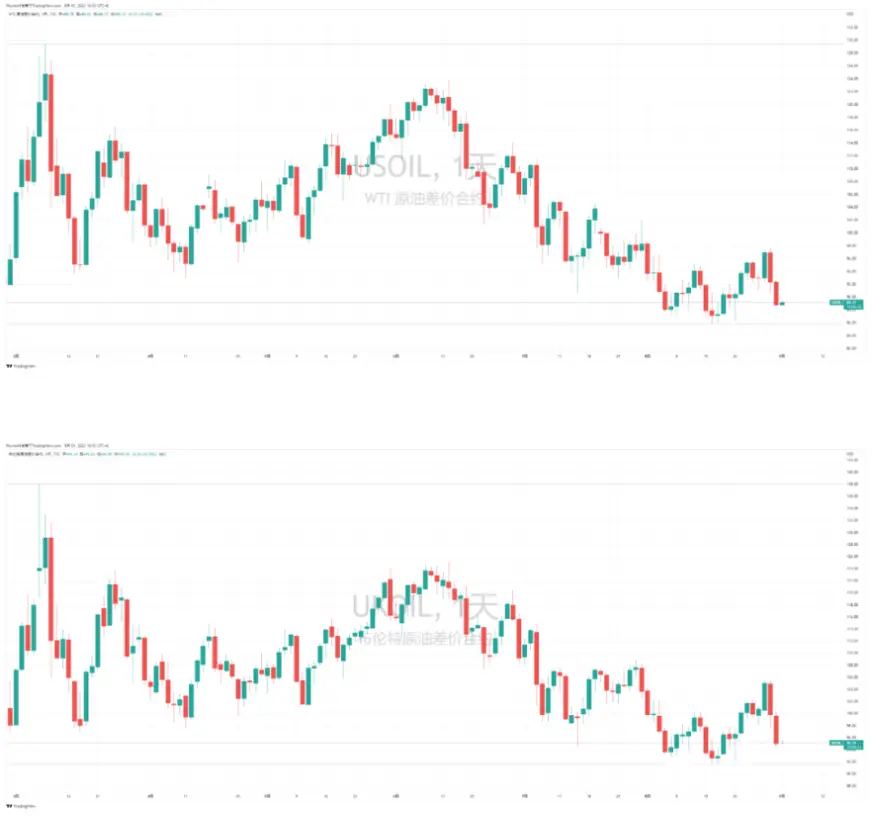
So for the whole of August, the average price of Brent oil is about $95, while WTI oil is about $90, roughly the same decrease as last month, and the projected reduction in consumer price inflation is around 0.4%. If used-car prices are taken into account, the problem of August's CPI reduction is not serious, but how much reduction is more important. After all, real estate prices are rising, not falling. Another is the news that OPEC+ cut its 2022 oil supply surplus forecast by half, which was released at 1 a.m. today, mainly because OPEC is less optimistic about the global oil supply outlook for this year and next than it was before. Although oil prices did not rise immediately after the news, it is hard to predict whether the oil price will provide a 0.4% reduction per month in the after-market CPI. At present, it is only one step at a time, and it will not be easy to eliminate inflation in the United States.
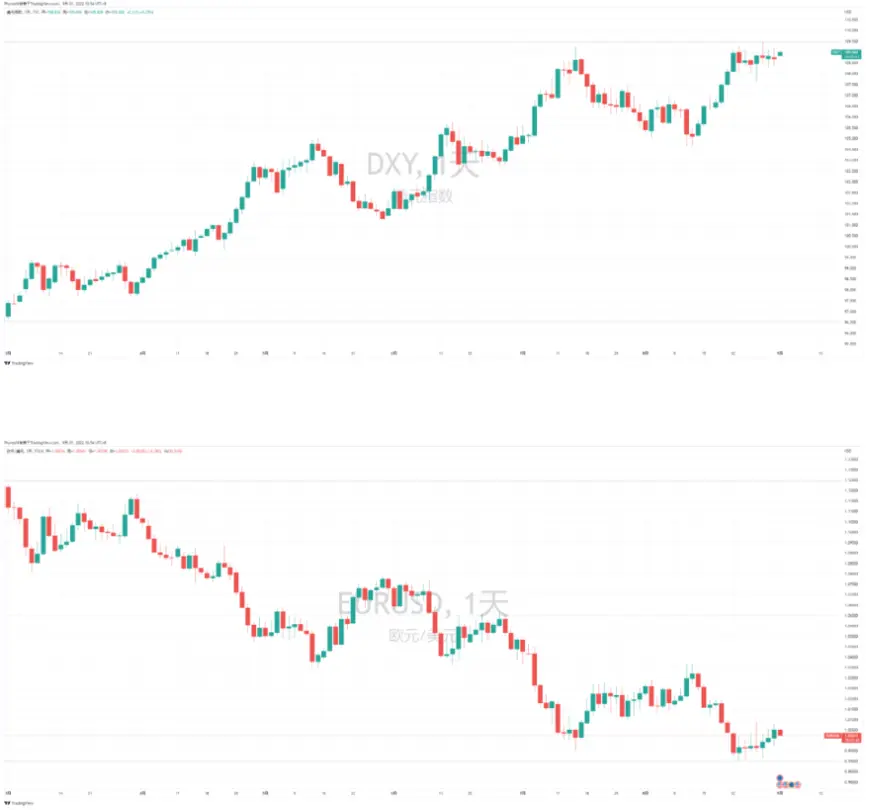
On the other hand, last night's rate hike in the eurozone was expected to be around 75 basis points, which will further aggravate the situation in Europe's less active risk markets. However, the expectation of a large rate hike has made the euro exchange rate against the dollar to begin to rise, which also led to a sharp drop in the dollar index. After all, the US rate hike is already at the latter part of the year, and the rate hike in Europe has just started, which shows that there should be an opportunity for the DXY to peak in the next two months.
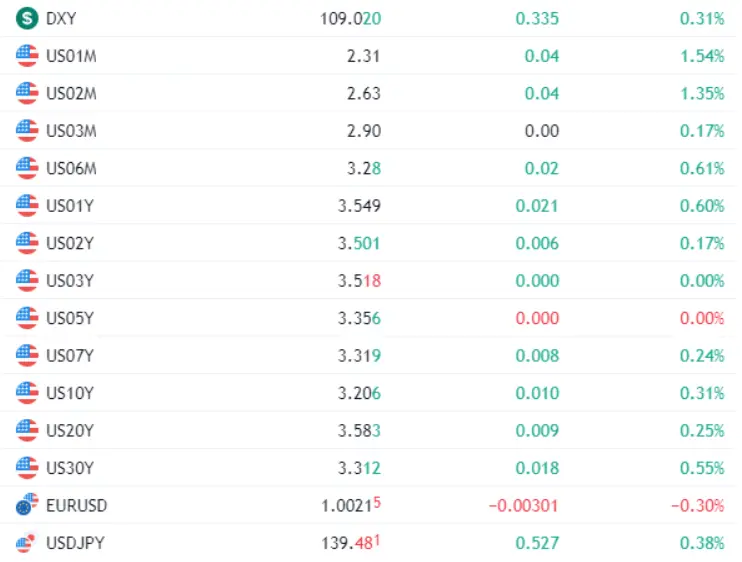
What's left is U.S. Treasury bonds. In anticipation of the economic downturn that small farmers reacted to yesterday's opening of U.S. stocks, instead of U.S. Treasury bonds in the short and medium terms, they welcomed a batch of capital purchases. Especially short-term U.S. Treasury bonds with maturities of one or two months were more popular. However, by early morning, more capital left the U.S. Treasury market. By this morning, not only has it erased yesterday's colonial interest rates, but the yield is still rising. It also shows that even investors in US Treasuries are focused on the aftermath of the US midterm elections, when money was in general sitting on the sidelines.
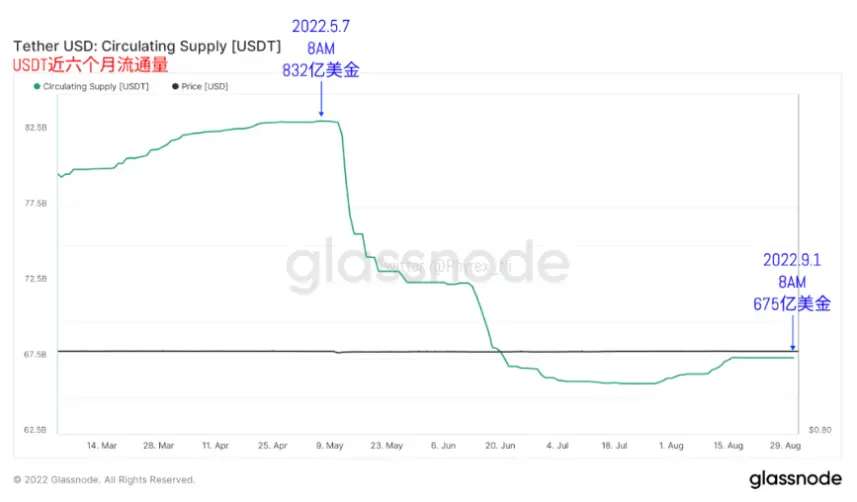
In terms of the market value of stablecoins, although the recent price trend is in a downward and volatile manner, the overall market value of the stablecoins shows no sign of fleeing in the same way as U.S. bonds, which also shows that the overall market value of the stablecoins is now in a relatively stable state, that is to say, it is quite possible that the current investor fund has been a relative bottom. Judging by USDT's market capitalization, even after an even bigger PR crisis, the decline in market capitalization has begun to stabilize. And USDC, which also had the PR crisis, reached a stage of reverse after a period of decline in its market value. Instead of showing signs of further decline, it began to increase. By 8:00 this morning, its market value had risen by more than $100 million. Even BUSD, which grew in value because of negative USDC sentiment, showed no sign of falling after USDC began to grow, adding more than $20 million.
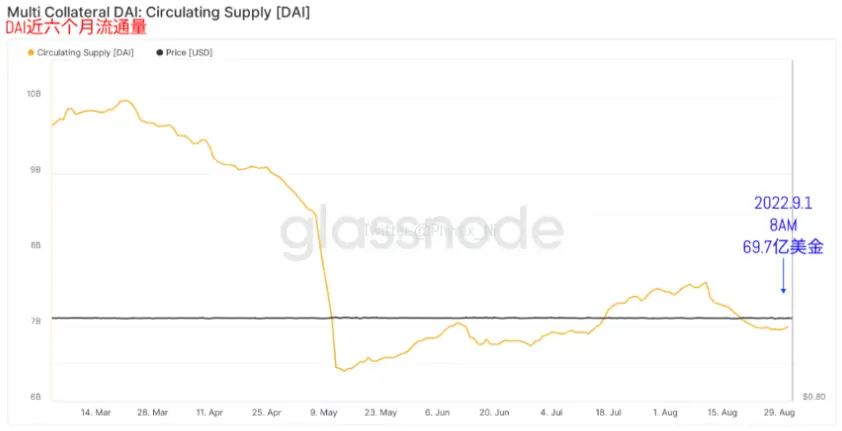
Even as a measure of ETH's stability, DAI's overall market value has increased, which means more ETH holders are turning on cash leverage, using circular arbitrage to see if there is a profit opportunity. By 8 a.m. this morning, DAI's market value had risen by nearly $30 million. So, for the time being, in terms of the overall stablecoin market value, money is still growing in an orderly fashion. Although the market can't be seen as improving, it can be expected that there are still external funds that think there may be opportunities in the risk market in the next period of time, and although this opportunity may allow funds to enter through the stable currency channel, there is not enough evidence that these funds have been converted into chips, so there is still a lot of uncertainty. It is safer to wait and see with money. Because in terms of current purchasing power, the gap is really quite large. Up to 8:00 this morning, the USDT to the Exchange refreshed nearly half the lowest weekday cash flow, and the day's purchasing power was not even as high as it was on some weekends in the second half of the year, so a purchasing power disadvantage can be seen. Even from the stock of money on exchanges, it can be seen that even if the fall in stock translates into purchasing power, it is a big gap. And from the current USDC situation, although it seems that the amount of money transferred to the exchange is improved, but from the exchange of USDC pairs and the volume of USDC and USDT transactions, it does not fully reflect the purchasing power of USDC, and purely from the stock exchange, more funds stay in the exchange, and did not turn into signs of purchasing power. So for now, the overall purchasing power of the currency market is showing a downward trend. From the BTC's exchange selling pressure and the data of withdrawal from the exchange, we can see that even the BTC situation is not very good at present. Every day in the recent week, large-scale selling has occurred. Although it is more due to the current dispute price after analysis, excessive selling pressure in the face of the relatively small amount of capital may be unable to withstand the pressure. The data of withdrawal in the last two days have already shown that. The amount of capital is not enough to cover the overall selling pressure, so it can be seen that the amount of selling is lower than selling pressure, more chips or stranded on the exchange actively or passively, and the lowest BTC stock in nearly four years, which was refreshed on Monday, started to accumulate again in the past two days. The accumulation of stock is certainly not for the exchange's 0.5% APY, so it is extra careful as it stands. Not only BTC but also ETH have encountered the same problems. In the last two days, there has been a big selling pressure. More chips have been transferred to the exchange, but their purchasing power has not kept up at all. This is because ETH has a favorable combination, and more chips have been bought. But it is more obvious that the ETH is still not trading independently, just a bit harder, and that the overall trend is following the Nasdaq. We can also see from the stock exchange data that the accumulation of ETH is also showing an upward trend. This will depend on the interpretation after Friday's non-farm data, and on the other hand, on the effect of the ETH merger. However, judging from the current situation, the merger of ETH should be after the CPI report in August. If the CPI data is good, it will be a shot in the arm for the entire risk market. The mood of the moment is that the BTC and ETH are in two completely different states, but we also know that the BTC and ETH price swings are almost identical. BTC has ended its long bearish run and is now bullish instead. After all, BTC prices of around $19,000 are relatively low for many investors, and with expectations of non-farm and CPI data, there is no such thing as a missed opportunity. ETH, on the other hand, is completely the opposite. More investors are still holding on to the short position, so the ETH still looks like a large area of bearish sentiment. This is probably related to the BTC exchange rate being at the high point, so it's not impossible to understand the short position. But again, whether BTC or ETH, as long as there is no independent favorable information, it will follow the Finger more. After the market you have to look at the futures. BTC and ETH are not without their share of problems and US stocks seem to be unable to hold their fire at the moment, so although it will be difficult to expect a large-scale decline before Friday's non-farm data come out, be careful not to expect a broad-based correction. Particularly for BTC, it is important to be aware that the recent sharp sell-off may mean that some investors have run out of patience, given that the price has been fluctuating for far too long.





