The price distribution of BTC positions as of 10am this morning has changed from 22pm yesterday to exactly 12 hours now. In a very intuitive way you can see that the last 12 hours of BTC volatility is already very low, which means that although the current price is in a narrow downward trend of volatility, but the real chips that have changed hands are getting less and less involved, even in the dispute price. At both extreme prices, less than 640 BTC's are underweight by taking profits for more than half a year and overweight BTC's are underweight, while overall loss-making chips over $25,000 a month are underweight 1,400, or even less than 118 BTC's an hour. While this is the weekend's data, it still shows the neglect of earlier holdings in current prices. After all, around $20,000 has been around for a long time, and the price of that exit has been drifting up and down, with the majority of deals coming from chips that were dug in after Powell spoke on Friday, with the rest almost always intended to be held for a long time. So the current situation is difficult to avoid. Barring another sharp fall in May and June, it will be hard to get the $20,000-odd pile of chips to fall. Especially now, the price range will soon be back to 2m BTCs. The process by which these chips are sold shows that they are hard to come by, and that they are accumulating at a time when the market is trending at a staggering $20,000 a month. Only after the upward trend does the range show signs of petering out, so unless there is a big drop and a big panic, the BTC's liquidity will remain relatively low, leaving more chips unwilling to trade. We have said too much, let alone the big cycle of 2024, and it will not be long before the CPI data comes out in September. Although the risk markets were in a downward position since Powell's speech last Friday, this is all in anticipation of a continued strong interest-rate hike by the Fed. The 75 basis-point hike expected in September, which is now 72.5% according to the current data, is expected to last for two consecutive months since there is no rate hike scheduled for October.
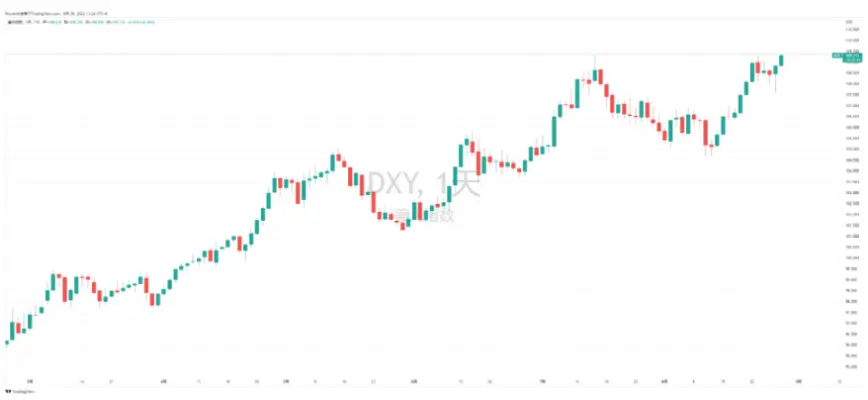
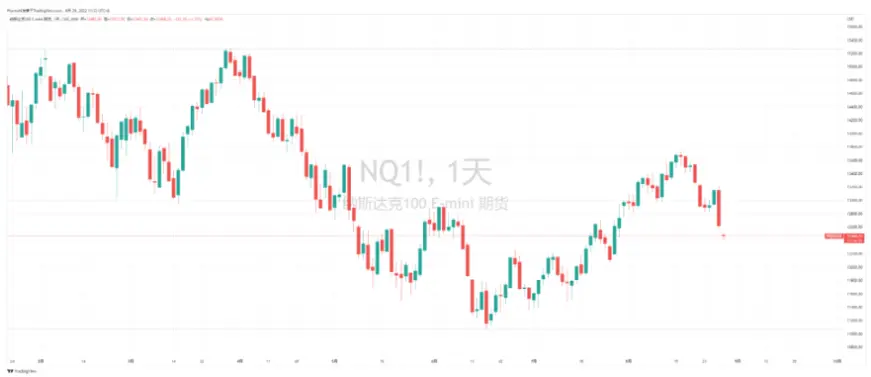
The dollar index has been rising since the early hours of Monday morning and has now hit its highest level in nearly two decades. This was the DXY's reaction in anticipation of the Fed rate hike, and the new high in the value of the US dollar will naturally bring considerable pressure to risk markets. So, starting from the same early morning trading, Nasdaq futures were also in a downward position. Moreover, they also stayed low and jumped. They had also talked about the relationship between Nasdaq futures and Nasdaq futures if they continued to decline. After the opening of US stocks this evening, the low opening trend of the Nasdaq stock index is also extremely likely. However, the prices of BTC and ETH which are affected by the Nasdaq stock index will naturally not remain indifferent. Even if the circulation volume drops further, the price fluctuation will be hard to prevent. Unless more aggressive European buying starts this afternoon, the overall trend must be less optimistic, and that is what the Fed wants to see. And that will remain at least until 20:30 p.m. on Sept. 13.
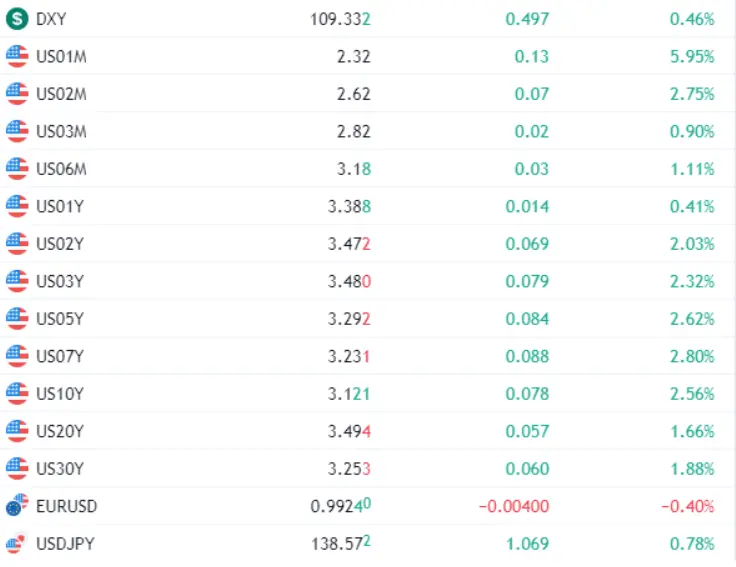
The rise in the dollar index, the fall in risk markets and the continued downward trend in even gold should have been the best time for Treasury bonds to raise money in the market, but the opposite has happened. On the contrary, a large amount of money has flowed out of the U.S. debt, especially in the short and medium term. As the yield rate rises in a straight line, a large amount of money has left the bond market. This completely shows that investors are not optimistic about the U.S. economy and believe that holding cash is the safest way.
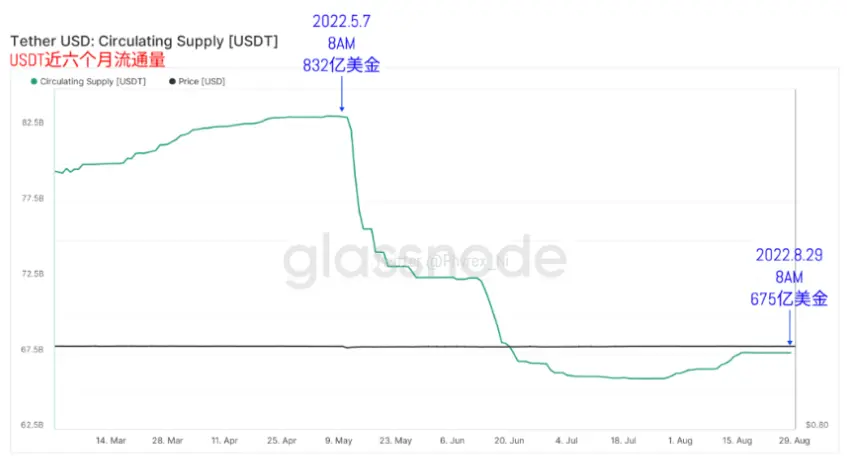
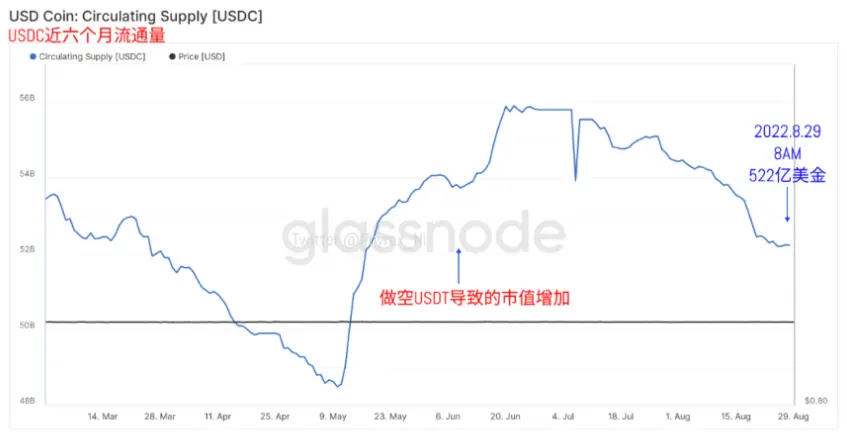
That sentiment is likely to spread from bond markets to risk markets, where waiting until there is more clear positive information is probably the best option. From the current market value of USDT, continue to remain unchanged, or even the previous period because of the TornDao problem USDC has not been a significant reduction in the stock of recent signs, began to maintain a horizontal shift, so that Europe and the United States and other major trading regions are maintaining to wait and see.
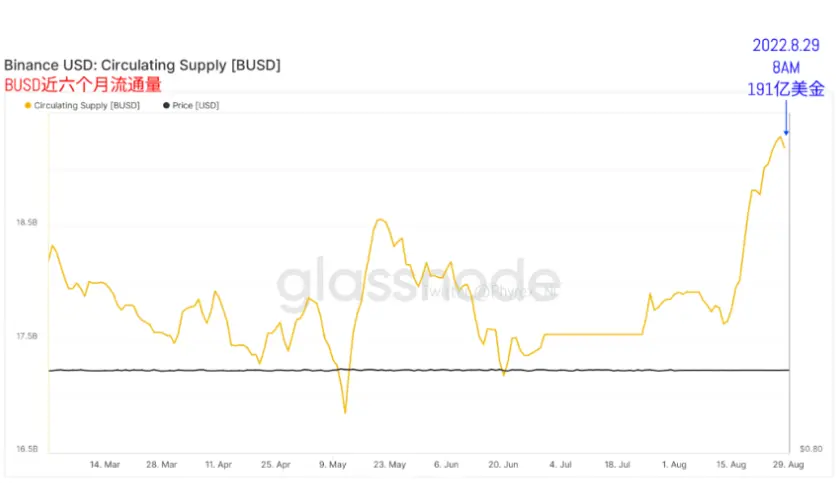
While BUSD has been in the high state of the market value is a rare phenomenon of decline, especially in the USDT and USDC did not change significantly, and we know that many of the BUSD market value increase is due to the contribution of previous USDC holders, so BUSD's reduction can even be seen as a U.S. investor short of the currency market, and it was directly down nearly $100 million.
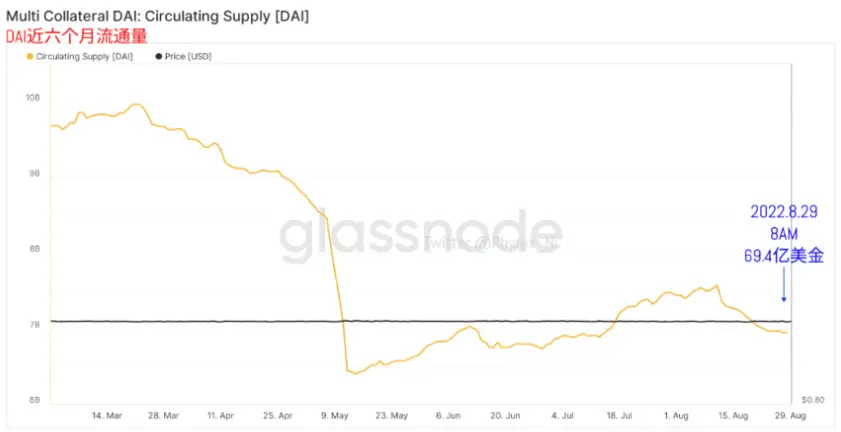
Finally, switching to DAI's data, DAI's performance is more a reflection of the ETH's spot leverage. As the ETH's price has fallen, there are indeed fears, mainly because it is not just the price that has fallen, but the exchange rate with the BTC has fallen 10% from its high level. But DAI's performance so far shows that the ETH's spot leverage has remained stable, rather than declining. This means that many investors now believe that ETH prices are now at the bottom of the relative range, so they are not too worried about exploding circular arbitrage, especially as a merger looms, and there must be a lot of chips to get out of the contracts and into more short positions online. So it's also recommended that your partner who's going to take a short position withdraw your ETH into the chain as soon as possible, because it's going to be slower as the merger approaches.
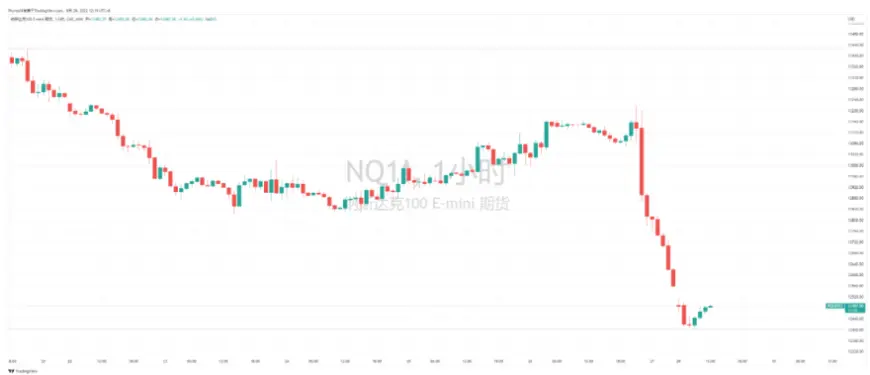
So looking at the overall trend of stable currencies, as of 8:00 this morning, instead of showing no sign of external funds entering, funds in the market have also decreased. Let's wait and see more. The overall mood is not good, and it is important to look at the Europeans and the movements of NASDAQ futures every afternoon. In particular, the Nasdaq futures showed an upward trend after 9 a.m., and it was not known whether they could turn higher. If Nasdaq futures turn higher, the Nasdaq will have a chance to rise when US stocks open at night, bringing BTC and ETH gains. After all, ETH's benefits have not been exhausted by fundamentals.
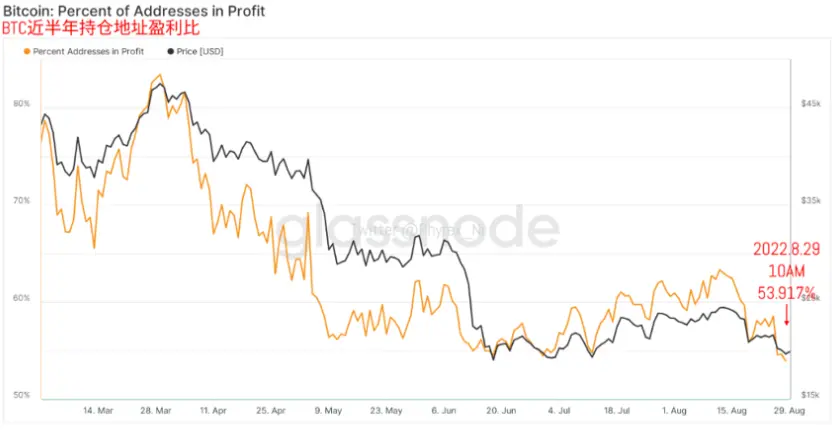
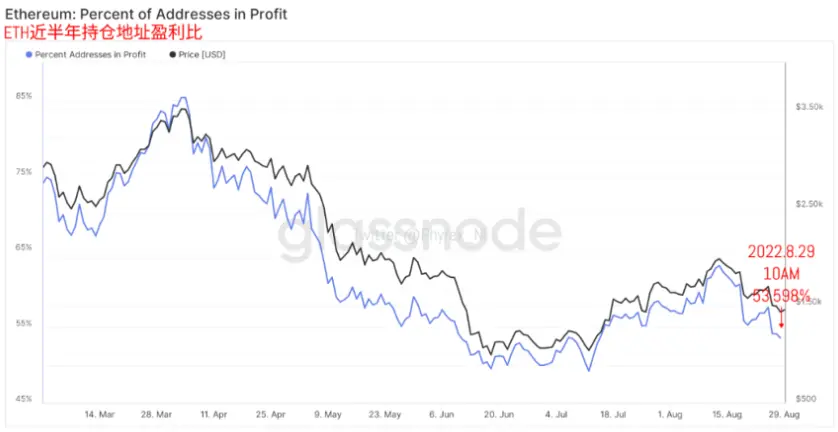
And looking at overall position address profitability, as prices have fallen, BTC, which had previously been the top earner, is now closing the gap with ETH, from a relative high. Both BTC and ETH saw a 10% decline in profitable addresses. BTC, in particular, has achieved its lowest percentage of profitable addresses in almost two years. So it is possible to judge that the scope for a sharp short-term decline in BTC prices is not high. On the emotional side, both BTC and ETH have maintained a trend of significantly bearish prices, which is not much to explain. Since Powell's speech, let alone the currency market, the trend of US stocks has also been bearish. However, it should be noted that although the current macro sentiment is indeed unfavorable to price increases, on the basis of all data, the short-term trend is most likely to remain somewhat volatile





