
Discover today the key differences in Latin American markets and why many crypto startups fail there. Learn practical, trustworthy marketing strategies, including how to educate your audience without sounding like a hype or scam.
Alright, let’s talk seriously. You’ve been trying to make moves in Latin America, maybe even feeling good about the numbers. But deep down, something’s not clicking. The growth is way slower than expected. Adoption isn’t scaling like it should and you have spent a damn fortune on Ads.
You’re starting to ask yourself: Holy Sh*t, what’s missing?!!
Here’s the thing. LATAM is full of potential. It’s also full of complexity: financial distrust, cultural nuances, and real barriers that most crypto teams don’t fully understand until they’ve hit the wall.
After one month of deep research, I bring you the most valuable and updated insights.
Let’s break this down like two friends over coffee.
What People in LATAM Are Really Saying About Crypto
This isn’t theory. These are real voices:
“Latinos believe crypto is a safe alternative to save and invest. About 50% see it as a way to increase income and 30% value it as a path to access money even without a bank account.” — Infobae
“I love my crypto wallet. You can get several cards at a good price, it's easy to use and there are no restrictions on crypto assets. I use it with my children to teach them about crypto.”
“I will not replace TANGEM for anything. It is the safest, fastest and easiest hardware wallet. I love it!”
But it’s not all love:
“I like crypto, but it feels sooooo shady. I don’t know who to trust. My friends recommend me a wallet but Youtube comments show that it is a bad idea... At the end of the day I didn´t know what the hell to do, ... One mistake and your money’s gone.” — Actual user comment.
People want in, but they’re cautious. And that’s totally fair.
What Makes LATAM a Unique Beast
First things first. Latin America is not one big, uniform market. You already know that, but what you may not realize is just how different the mindset is compared to the North American or European user base. I will walk you through the 5 key points you must be aware of before jumping into LATAM.
1. Economic Instability Is the Daily Reality
This isn’t just something people read in the news. It’s what they live every day with inflation going up and going down... Currencies like the Argentine peso or the Venezuelan bolívar lose value so quickly that saving in fiat becomes totally absurd. That’s why stablecoins aren’t speculative tools here; they’re financial survival tools.
A user in Colombia isn’t thinking, “Should I invest in ETH for long-term gains?” They’re asking, “How do I keep my paycheck from losing 20% of its value by next month?”
If your messaging focuses on “portfolio diversification” or “DeFi yield opportunities”, you’re missing the point. You need to frame your product as a stable, reliable tool to protect value and transact in day-to-day life.
And yes, that means thinking through how your app works on slow phones, under patchy Wi-Fi, and in pesos or reales, not just USD.
2. Trust Is Everything, And btw... It’s Fragile
Thousands of people have been scammed, and news reports about scams were everywhere. Not once, not twice, but over and over again. People crying on TV in desperation, demanding help, saying they invested their life savings in the hope of high returns, and suddenly, the apps disappear.
So if you show up with big promises and shiny branding, you might as well raise a red flag. Flashiness looks fake, because people don’t want to be impressed; they just want to stay safe.
From fake airdrops to inheritance messages with millions in USDT, scammers never rest. Even Cristiano Ronaldo gets dragged into crypto scams. Funny? A little. Dangerous? Absolutely. The only defense is education. Learn the red flags now, so you don’t become the next screenshot:
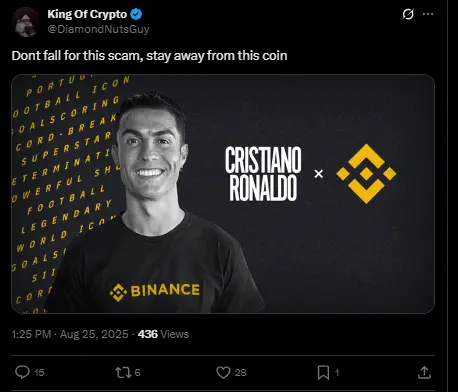
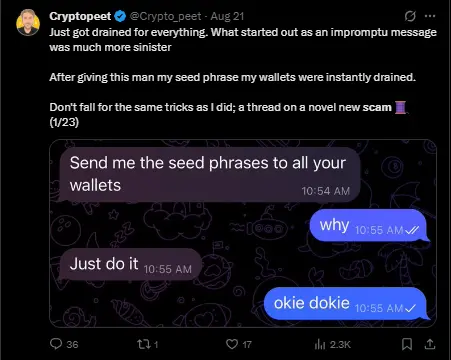
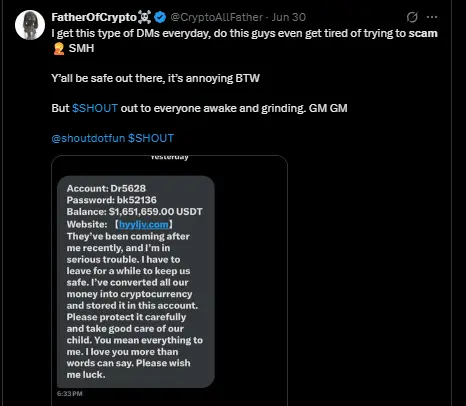
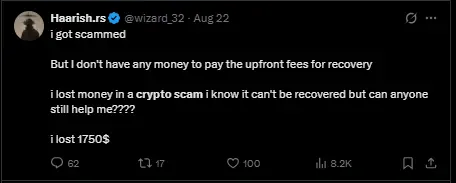
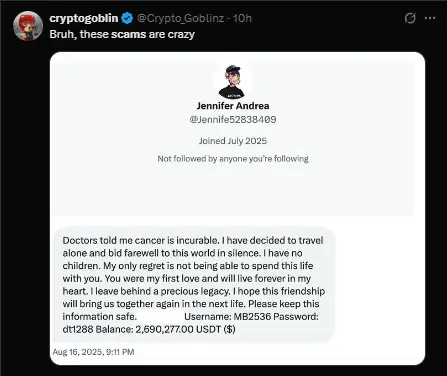
Trust here is built in layers. First, people need to see that your company exists. Then that you speak their language. Then that you’ve partnered with someone they’ve heard of. Then, and only then, will they consider trying your product.
But that’s not all. In this region, word of mouth travels faster than your marketing budget ever will. If someone’s cousin, co-worker, or favorite YouTuber has used your app and says it's legit, that endorsement goes further than any polished video or press release. Amazing, right?
The same goes for app store reviews, Reddit threads, and Telegram groups. People screenshot those comments and forward them to friends. Trust is social here, and it’s earned in public.
You need real people saying real things. Incentivize feedback, sure, but don't fake it. Users know when testimonials sound like copywriting. They trust the messy, imperfect reviews that come from other humans who tried the product and shared their experience.
And when someone runs into a problem — which they will — support has to be there. Not three days later. Not through a bot that loops. They want to talk to a real person, preferably in their language, who actually understands what’s going on.
This takes time. It takes showing up in the local conversation. It takes support that answers within minutes, not days. And most of all, it takes consistent, honest communication.
3. Each Country Is a Different Puzzle
What works in Brazil won’t work in Mexico. Don’t be fooled. Regulations in Argentina don’t reflect what’s happening in Colombia. Payment methods, tax rules, the legal status of crypto, user behavior, and even the slang they use, because everything changes from one country to the next.
You can’t copy and paste your strategy and expect it to work. Each market needs its own onboarding journey, local partnerships, and compliance experts who understand the territory. And most importantly, you need to speak their language in a way that feels natural.
If your product sounds like it was built somewhere else and dropped into their world, people will feel it. But if it feels like something created by someone who lives the same reality, you’ll earn their attention.
Your legal page shouldn’t be a one-size-fits-all doc translated with Google. Whenever possible, include local examples that make things easier to understand. Be precise. Be relevant.
Users always know when something was made with them in mind. And they can spot when it wasn’t. Respect that. The extra effort is always worth it.
4. Tech Literacy Isn’t Uniform
It is not a matter of intelligence. In fact, many Latin Americans have earned silver medals in international academic competitions. The real challenge lies in access and exposure. Some users are highly skilled with mobile technology, yet if you ask them what a seed phrase is, they will freeze. Not because they are uninformed, but because nobody has taken the time to explain it in plain words.
Cryptocurrencies come with their own complex language: gas fees, bridges, wrapped tokens. For someone who only wants to send money to their cousin in Peru, none of this makes sense.
Your responsibility as a brand is to simplify without confusing. Use visual guides. Demonstrate instead of just describing. Create spaces where asking questions feels natural and safe. The more human your educational content is, the more interest and trust you will inspire.
Have you heard of the Eureka Effect? When your audience suddenly understands how USDT staking works and realizes they can earn from it, they feel smart and empowered. At that exact moment of clarity, when they decide to invest or buy a wallet, the brand they will trust is yours.
5. Infrastructure Gaps Are Real
Let’s be practical. In some areas, 4G is a luxury. Wi-Fi drops constantly, or electricity is available for only a few hours a day. Payment processors are unreliable, and government restrictions can appear overnight. You need a resilient strategy that assumes setbacks will happen and prepares to respond the moment they do.
Offline modes matter just as much as lightweight apps that do not drain the battery. Integration with alternative networks like Telegram or even USSD can make a huge difference. The less friction you leave in the process, the more likely it is that someone completes a transaction.
We must also remember that many people do not even have bank accounts. In some countries, access to banking is very limited, and savings accounts are rare. For these people, cryptocurrencies are not an option, they are the option.
If your onboarding flow requires a credit card or identity documents that most users cannot provide, you are excluding them before the journey even begins.
This is only the starting point. The real question is whether you are ready to show up with the humility and effort that this region truly deserves.
If the answer is yes, the opportunity is enormous. But you will have to earn it.
Now, let’s move into the strategy that actually works in this environment.
So What Actually Works? Here’s the Shortlist if you really want to grow in LATAM.
Ok, let me lay it out straight. This isn’t guesswork. This is what consistently works: on the ground, with real people, in real markets.
1. Be Real, Be Clear, Be Local
Do NOT sound like a whitepaper. Don’t copy what works in the US or Europe and hope it lands because people in LATAM don’t want abstract concepts; they just want clarity. If your product is a wallet, explain what it does in terms they use every day. Avoid complex financial/crypto jargon as much as you can.
For example, instead of saying “multi-chain support,” say “you can send money to your friend even if their app uses another network.” Instead of “non-custodial asset management,” say “only you control your money, that way no bank or company can freeze it.”
Analogies help. Say it's like having a digital backpack in your phone, where your cash, ID, and keys live. If it feels real, it becomes useful.
And please, please! localize more than the language. Adjust visuals, currencies, and examples. If you're showing an onboarding screen with dollars, you’re missing the mark. Use pesos, reales, bolívares, soles, etc.
In other words, make people feel like this was built for them.
2. Use Testimonials That Sound Like Real People
If your testimonial sounds like it's written by ChatGPT or a marketing intern, no one will believe it. What works are sincere and human stories.
“I use this wallet to pay for my Spotify, Netflix, and send money to my aunt in Venezuela. Whether it's $20 or $100, it arrives instantly, with no fees, and it's a huge help for buying basic groceries for the house.”
“I was scared of cryptocurrencies; so many friends were scammed... how horrible! But this app allowed me to try it with just $20, and now I get paid faster than with Western Union. It's wonderful!”
“My mom uses it and barely knows how to use Facebook; she also taught my aunt how to use it.”
That's what builds trust.
Ask users for voice notes and screenshots of their real comments. Turn them into valuable content for the curious and doubtful...
3. Find the Right Messengers
Forget about famous influencers promoting 10 coins a week. People don't trust hype. They trust the YouTuber who's been making tutorials for three years, the Telegram admin who answers all their questions at 1 a.m., the local fintech guy who helped them recover funds once.
These aren't influencers; they're something much more valuable: they're guides, they're trust incarnate.
They're the voices that encourage people to click "install."
Collaborate with them. Introduce them, and if possible, co-create with them.
You can't just "buy" credibility. You have to borrow it from those who've already earned it.
4. Build Onboarding That Feels Like Progress, Not Pressure
Most crypto apps feel like a test, and it´s quite disgusting...
New users are coming in with little or no background. Your UX shouldn’t feel like cutting the red wire on a bomb.
Make it feel simple, even fun. Break things down into small, meaningful wins.
- Step one: download the app.
- Step two: claim $1 in USDT
- Step three: send it to a friend.
- Step four: back up your wallet.
Each step builds confidence. Each win reduces fear.
Especially for users who are handling crypto for the very first time.
Another such great idea is to celebrate every move forward.
Micro-rewards, encouraging tips, badges, and even emojis can make a huge difference. People should feel like they’re learning, not messing up. If you do this right, they’ll remember how your product made them feel. And they’ll come back.
Now ask yourself this: would someone need to Google half your interface to use it?
If the answer is yes, you’re already losing them.
Avoid complicated terms. If you have to use them, explain what they mean before the user ever taps a button. A small pop-up, a quick visual guide, anything that helps them feel ready. Prepare them before they even start.
That’s how you guide someone, not confuse them.
5. Speak Their Language (Not Just Translate It)
Yes, Spanish and Portuguese are a must for the LATAM market. But it goes way beyond that. You’ve got to sound like someone from the neighborhood, not a suit in a boardroom. That means informal tone, regional slang where it fits, and above all, empathy.
If your help center reads like it was written by a lawyer or translated by Google, people will bounce. Rewrite it. Make it sound like an actual human is talking to another human.
And when users need help, they want it now — from someone real.
Support should happen on the same platforms they use every day: WhatsApp, Telegram, Instagram DMs if needed. Bonus points for sending a voice note with instructions instead of copy-pasting some FAQ link.
The second someone feels stuck and ignored, that’s it. You lost them.
Not because they didn’t like your product, but because no one showed up when it mattered.
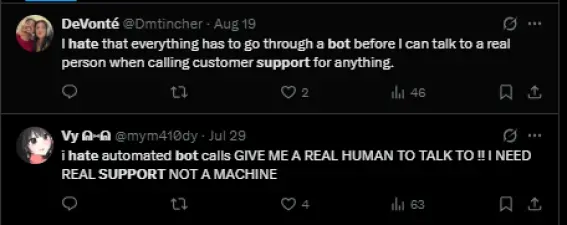
Just look at how people are begging online for real support.
This is not a minor feature. It’s a dealbreaker.
6. Partner Smart and Local
Let’s be real for a second: you don’t need to start from zero.
LATAM already has platforms that people know, use, and trust. If you show up next to those names, the game changes.
Think about it this way: if someone already uses El Dorado in Colombia, Yape in Peru, or Mercado Pago in Brazil and Argentina, you don’t need to convince them that your tech is safe. That credibility is already baked in. Your job is to plug into it.
Start with collaboration, not competition.
Co-create a guide. Sponsor a tutorial. Host a Twitter Space together. Drop your logo on an event they’re running. That’s how you get introduced to the market, not as a stranger, but as someone who’s already inside the room.
Let’s look at a few smart examples:
✅ El Dorado
A stablecoin-powered superapp people already trust for fast, low-cost, cross-border payments. It’s live in Argentina, Peru, Colombia, Brazil, Bolivia, and Venezuela. It even does gasless transactions and stablecoin swaps.
Recommended partner move: Integrate your USDT Staking Protocol. Run co-branded tutorials. Use their credibility to build instant confidence.
✅ Mercado Pago
This is the fintech arm of Mercado Libre, and it’s huge in Brazil. Their dollar-pegged stablecoin Meli Dólar is already in millions of pockets, with no fees.
Recommended partner move: Ride their wave. Co-market something with them, or even build features that connect your product to their ecosystem. The brand equity is massive.
✅ Yape
This is Peru’s leading mobile wallet with over 17 million users. It’s expanding like wildfire across Bolivia, too. No bank account needed, it works just with a phone. They don´t use any stablecoin; Peruvians use soles, which is the national currency.
Recommended partner move: Your product lets users convert soles into USDT instantly. Instead of convincing each user one by one, you approach Yape and set up a co-branded educational campaign.
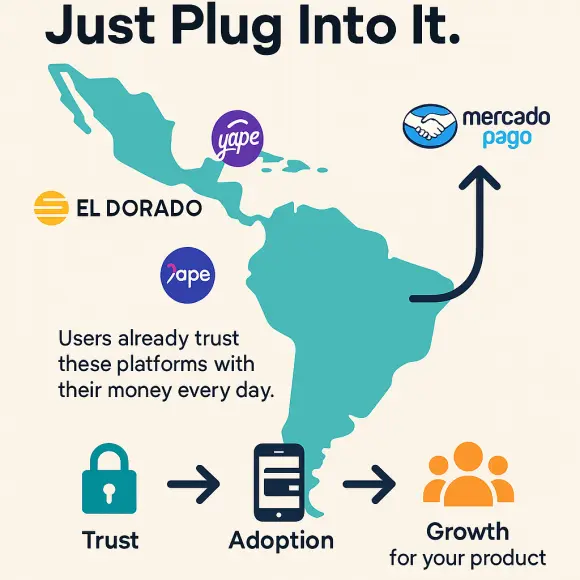
The benefit:
Why does this work so well?
-
Trust rubs off. People trust what they already use. If you’re next to it, they trust you faster.
-
You learn fast. These partners already know what users like and what makes them rage-quit.
-
You grow smarter. Less friction means faster adoption — and fewer expensive mistakes.
So ask yourself: who’s already talking to your audience? Start there. Build something together. And earn trust the right way — by showing up with the people they already believe in.
Don’t Just Market. Teach
Latin Americans are still afraid of falling for a scam. And that worry is justified due to new phishing schemes, fake wallets and rug pulls are emerging all the time in Latin America. The last one was in Argentina, where President Milei himself is involved...a real nightmare.
Instead of avoiding that fear, confront it head-on.
Create content that says: “Here is how to spot a fake airdrop,” or “If someone promises guaranteed returns, you should run.” Use your content to educate first. Show users what a scam looks like, share real examples of social engineering, and explain the red flags.
Why this works:
In Latin America, fraud and A2A scams are rising, and payment fraud levels are far above global averages. For instance, digital payment fraud is a major pain point and continues to escalate even as alternative payment methods grow quickly in the region.
Cybersecurity experts confirm that scammers increasingly target humans, not systems, using emotional manipulation and local personal data (like CPF in Brazil or RUT in Chile), making scams alarmingly realistic.
By teaching users how to stay safe, you're delivering actual value. Then, once trust is established, show how your product aligns with that safety—calls-to-action no longer feel pushy.
Your onboarding becomes a natural next step, not a sales pitch.
This approach builds deeper roots than a flashy conversion ad ever could. In LATAM, trust endures longer than clicks and conversions.
Education Isn’t a Side Strategy - It Is the Strategy
If you’re serious about winning in Latin America, forget the fvking hype. Forget performance marketing dashboards for a second. Growth here starts with something deeper: trust.
And the fastest path to trust is education. Real, clear, no-BS education.
Explain how your product works without overpromising. Answer questions before they even ask. Talk to users in their language, not just with translations, but with empathy and real-world context. Make it feel like you actually understand their life — not just their transaction history.
This region is full of smart, curious people who’ve seen it all: inflation, scams, broken systems. They don’t want another pitch. They want someone to guide them through something new, without making them feel dumb or left behind.
That’s how you connect. That’s how you build loyalty. That’s how your startup becomes something more than just another name in the app store. Education isn’t fluff. It’s the difference between growth and irrelevance.
Now ask yourself: are you ready to teach, listen, and lead — or just launch and hope for the best?
✍️ Written by El Salvador CopyBiker — Crypto Content Specialist.
Helping your audience actually understand your Web3 product (no PhD required).





