
China escalates trade tensions with the US with restrictions on maritime transport.
China escalated trade tensions with the United States by imposing sanctions on five US subsidiaries of South Korean company Hanwha Ocean Co. and warning that it could implement new measures against the maritime sector.
The decision extends the cycle of retaliation between Beijing and Washington, while both governments maintain that trade negotiations remain open.
The announcement triggered an immediate decline in some markets. Hanwha Ocean shares, for example, fell 6.2%, and major stock indices registered declines.
The price of Bitcoin, meanwhile, reacted downward: it was trading at 110,000 at press time, erasing the partial recovery that had followed the sharp drop on October 10.
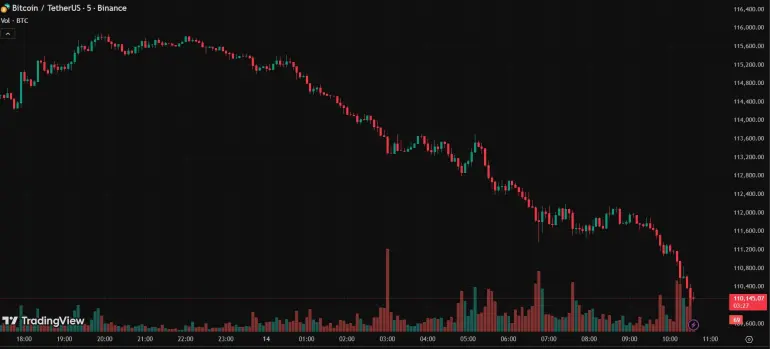
The decline in the digital currency's price is a response to rising fear among investors. Although Bitcoin is often compared to gold as a store of value, its behavior in uncertain situations remains distinct.
In times of stress, traders tend to reduce exposure to riskier assets, and Bitcoin, despite its growing institutionalization, is not yet perceived as a safe haven, as CriptoNoticias explained.
The "digital gold" narrative is still under development. The entry of exchange-traded funds and large institutions has driven adoption, but the digital asset's history is short compared to that of the precious metal. Volatility, coupled with the market's incipient maturity, explains why its price still moves in sync with the general sentiment of the financial markets.






