
Argentina, one of the fastest growing cryptocurrency markets, has overtaken Brazil as the top Latin American country in terms of estimated cryptocurrency revenue.
Activity in the stablecoin market
The Argentine stablecoin market is one of the largest in the world, with 17% more stablecoin transactions compared to the global average. Argentine users, between July 2023 and June 2024, deposited approximately $91 billion in cryptocurrencies, slightly above Brazil's $90 billion in the same period, as reported by Chainalysis on October 9.
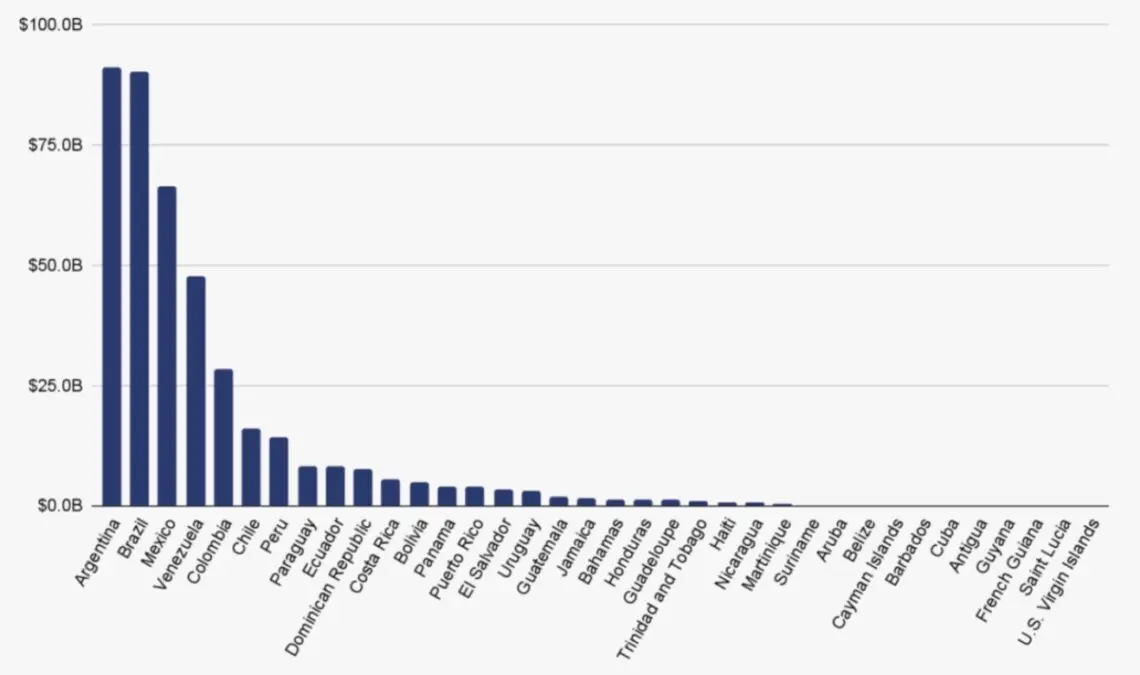
The rapid growth in cryptocurrency adoption in Argentina comes amid a decades-long fight against inflation and the devaluation of the local currency, which has led Argentines to seek savings alternatives, such as the US dollar or linked stablecoins. to the dollar. According to Chainalysis, the stablecoin market in Argentina is one of the largest in the world in terms of transactions. It is also among the leaders in the Latin American region.
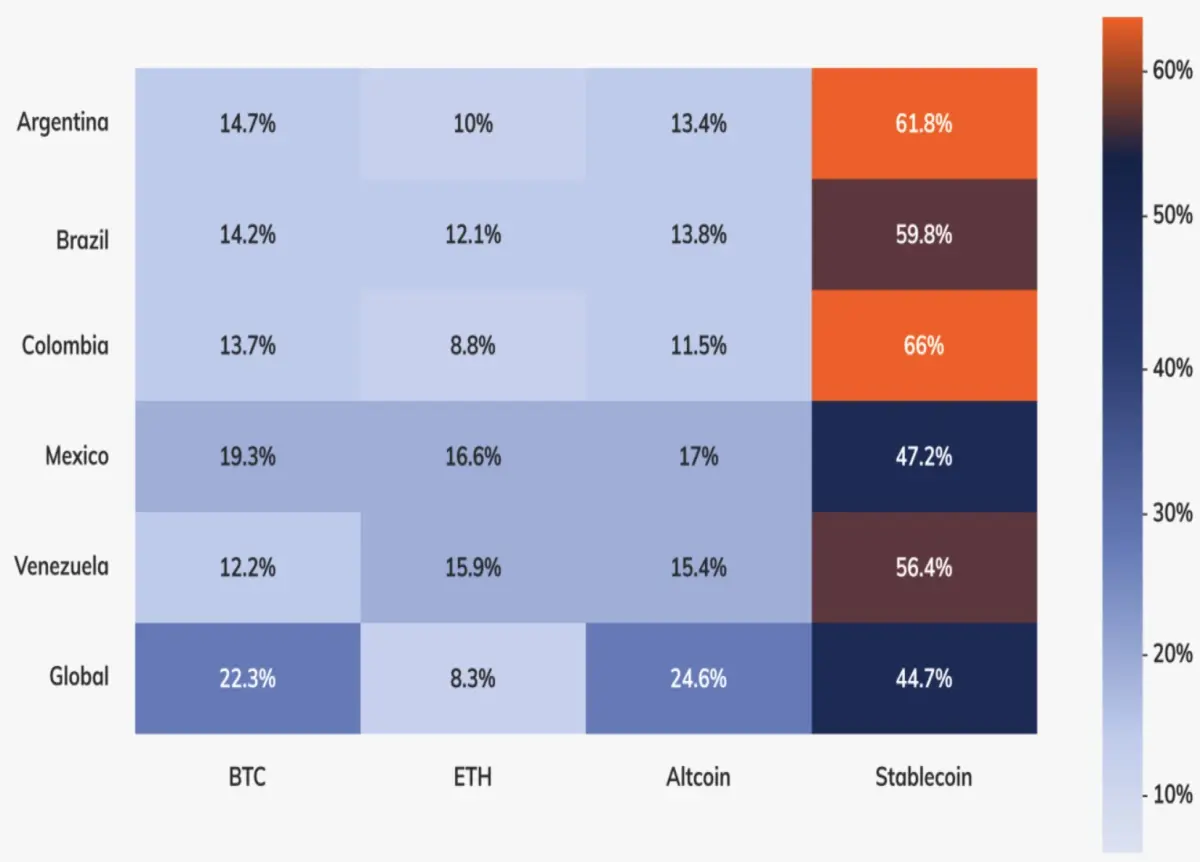
Argentina's share of stablecoin transaction volume reached 61.8% between July 2023 and June 2024, slightly above Brazil's 59.8%. Stablecoin activity in Argentina exceeds the global average of 44.7%, although it is lower than Colombia's 66%.
Tether and stablecoin adoption
The report highlighted that the percentage of retail transactions in stablecoins — those under $10,000 — is growing faster than any other asset type. This trend suggests that Argentines trust stablecoins to protect their finances against inflation and monetary instability. The report stated:
“Their interest in stablecoins highlights the role of cryptocurrencies in unstable markets and how citizens can take better control of their financial future by using cryptocurrencies, regardless of official monetary policy.”
Tether prioritizes markets like Argentina over developed economies
The growth of stablecoin activity in Argentina comes as stablecoin issuer Tether focuses more on emerging markets like Argentina rather than developed economies like the United States.
“People want to keep that dollar, not in cash, but in a digital form because it's much more convenient.”
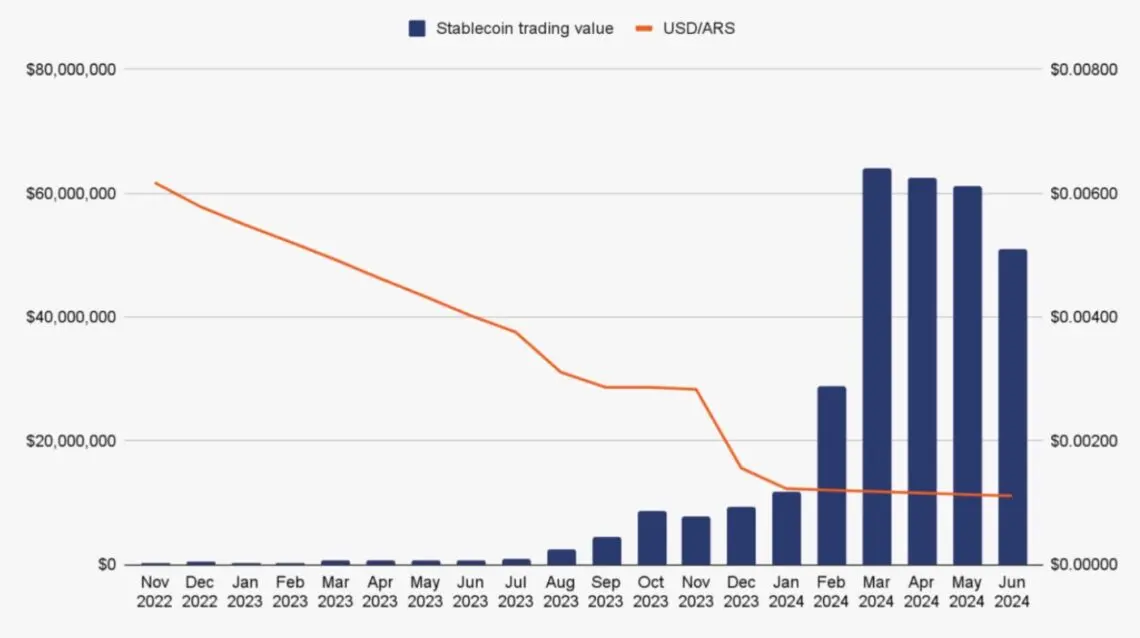
According to Forbes, Argentina has struggled to provide regulated cryptocurrency services to its population until July, despite the government making multiple efforts to introduce regulations. While developed economies, such as those in Europe, have been pushing for stablecoin regulations in recent years, Argentina has yet to introduce a framework for stablecoins.





