
Today we are going to define the stock-to-flow model and apply it to the crypto context, in particular on Bitcoin.
The stock-to-flow model (SF or S2F) is a simple way to quantify the abundance of a resource. In particular, the stock-to-flow ratio is defined as the amount of a resource held in reserves divided by the quantity produced annually.
This model is often applied to natural resources such as gold (i.e. those resources present in nature in a limited way).
This ratio essentially tells us how much supply of a particular asset enters the market annually compared with the total quantity of the asset already present in the market. A particular resource with a high stock-to-flow ratio should maintain its value in the long term (think of gold, which has the largest stock-to-flow of all precious metals, about 59, which is to say it would take about 59 years to produce the supply circulating at today's rate).
Unlike gold, consumer goods, for example, have a low stock-to-flow because their value comes mainly from their consumption and distribution, and stocks are present only to cover demand.
Stock-to-flow and Bitcoin
The stock-to-flow model treats bitcoins as a scarce raw material, comparable to gold and silver.
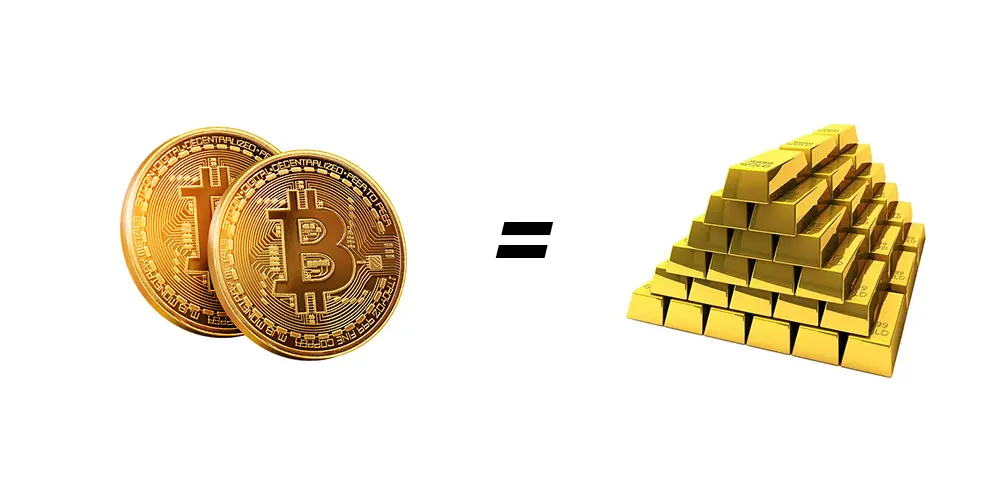
As we know, gold and silver are often identified as valuable resources, which should retain their value in the long term because of their scarcity and low flow. According to the stock-to-flow approach, Bitcoin is a similar resource, for the following reasons:
- it is scarce;
- it is expensive to produce;
- its maximum offer is limited to 21 million XBT.
Moreover, for BTC the flow, i.e. the new emissions, is completely predictable being defined at protocol level. As we well know, moreover, every four years or so the halving of BTC takes place, that is the halving of the annual emission, and therefore of the flow, with a consequent increase of the stock-to-flow ratio.
Therefore, the combination of all these factors, according to the model, creates a scarce digital resource, with numerous characteristics that would make possible a maintenance of the value in the long term.
And what does it tell us about the price ?
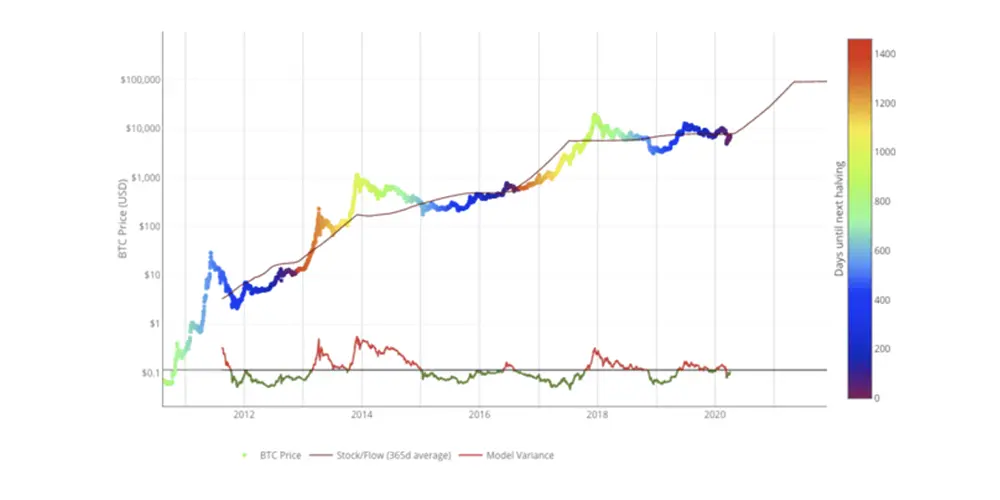
The supporters of the model say that there is a statistically significant relationship between the S2F ratio and the price of the single XBT. Indeed, the predictions derived from the model have been sufficiently close to the reality that we have observed. According to the projections of the model, moreover, the price of Bitcoin is going to experience a significant bullrun, coming at exorbitant prices in the next five years. In figure below we can observe the trend of BTC price in these years compared with the 365 days moving average of the stock-to-flow ratio; as we can observe, the model predicts a BTC price of $100,000 by 2023.
What do you think? Is this a prelude to a new bullrun?
Let me know what you think in the comments!
If you appreciate my material, leave a thumbs up ;)





