
When ideologies collide, they create chaos! And this time it's the Bitcoin ecosystem which is under a lot of chaos. Some are even calling it's the biggest governance fight since the 2017 block size wars. If you enjoy such fights or can relate checkout Bitcoin Twitter, it's the only thing that's been discussed, the quantum threat to Bitcoin has been completely rejected as it seems.
Let me show you what this war is about? So, at the center of the debate are two key issues: a controversial proposal called BIP-110 and the rising popularity of an alternative Bitcoin node implementation known as Bitcoin Knots. Together, they are raising an uncomfortable (sorry: unacceptable) question for the Bitcoin community:
Could Bitcoin be heading toward another fork?
It's gone so wild that traders entered the drama and are now tracking these war in real time through a new prediction market called PREDYX which itself is a Bitcoin powered prediction market.
The Question about BIP110:
There are many markets on PREDYX which are related to the debate. But the most closely watched questions revolves around BIP-110 — a proposal designed to limit the amount of arbitrary data stored in Bitcoin transactions.
PREDYX asks a burning question about the implementation of BIP110: Will BIP110 activate and be consensus enforced on Bitcoin by September 1, 2026?
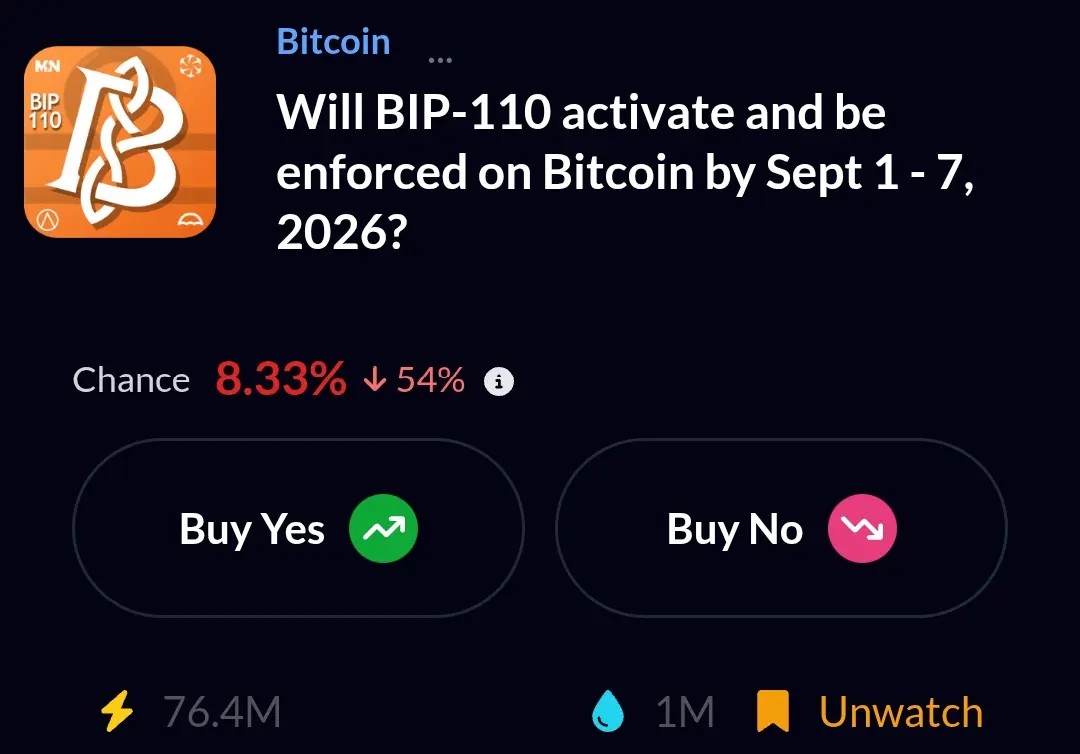
Until now the 'NO' side (The Core Team) seems to be winning as the odds of BIP110 implementation are struggling to jump higher than single digits.
The NO takers criticised BIP110 would introduce stricter limits on transaction output data which are meaningless because:
- Restricting transaction data could limit experimentation and innovation on the network.
However the supporters argue the change would:
-
Reduce blockchain bloat
-
Protect decentralization by keeping node costs low.
The disagreement has reignited a long-running philosophical divide within Bitcoin community: Should Bitcoin prioritize strict monetary use cases, or remain a neutral subject where users decide how block space is used?
The Rise of Bitcoin Knotsism:
While BIP110 remains highly dubious, a potential power shift among Bitcoin node software is rapidly brewing up. It's been debated for almost a year now without conclusion. Why? Let's understand.
Most Bitcoin nodes today run Bitcoin Core which is the reference implementation used by developers and miners to validate transactions and enforce consensus rules.
But an alternative implementation —Bitcoin Knots — led by Luke Dashjr has been creating noise for a power shift and want to change the consensus rules for doing so. What it means that it creates a tug of war situation between the Core vs the Knots. Whoever has 51% support will rule the other, meaning the main Bitcoin chain will be the chain that has more support from nodes and miners.
So, what about the smaller chain? Will it surrender? What happened in the block size wars that Bitcoin Cash was born out off it. And make no mistake we can potentially see another coin called Bitcoin Knots!
PREDYX as a prediction market caught this tussle early and asked traders about a the probable flip of Bitcoin consensus: will Bitcoin knots flip Bitcoin Core by the end of 2026?
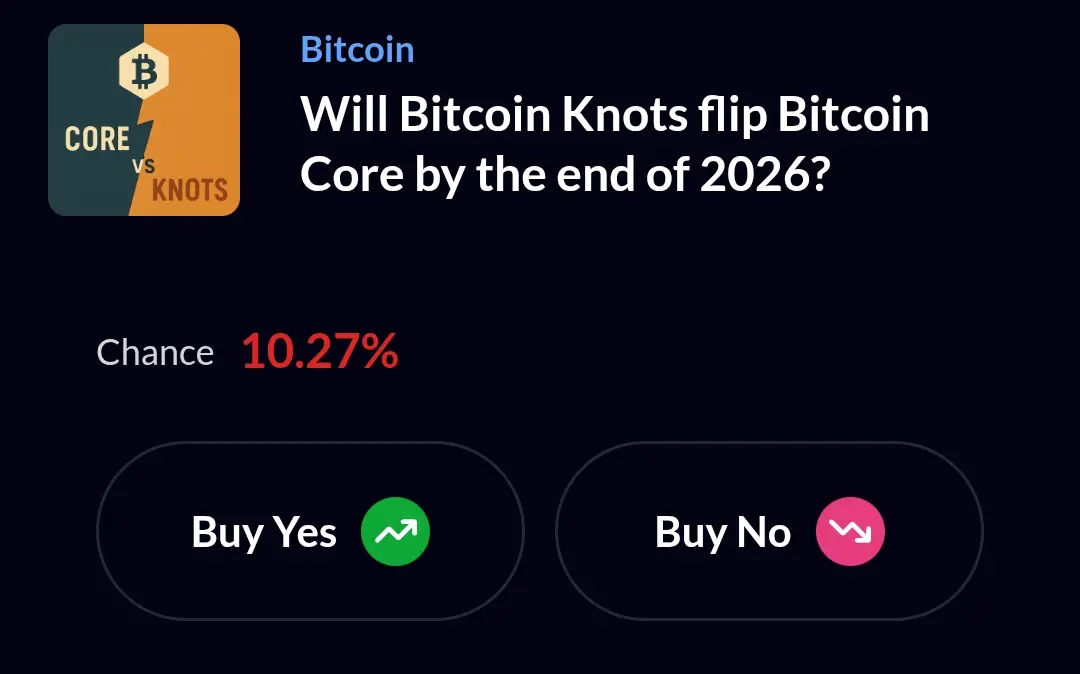
So, as you can see the chance of a power shift in Bitcoin is drastically low. However if that happens, it would represent one of the most significant shifts in Bitcoin’s governance structure since the network’s early years.
Knots includes stricter policies (whish is Knotscisim) for relaying certain types of transactions, particularly those containing large amounts of arbitrary data. They say these policies protect Bitcoin from spam and maintain long-term scalability.
The Core side argue (actually laughs at) such restrictions risk introducing subjective rules into a system designed to remain neutral.
Do These Debates Matter?
Indeed they do. However often times on Bitcoin Twitter they are ridiculous.
The discussions around BIP-110 and Core vs Knots are deeply connected. Both revolve around the same fundamental questions:
What should Bitcoin be used for?
Is Bitcoin primarily a censorship-resistant payments network?
Or should it remain flexible enough to support new experiments, applications, and protocols?
All the debate is based on these questions and how the community answers will possibly shape the future of the Bitcoin network.
Last but not least: Could This Lead to Another Bitcoin Fork?
Yes, indeed again! Bitcoin has faced similar divisions before. In 2017, disagreements over block size and scaling resulted in the creation of Bitcoin Cash.
However curent debates are currently focused more on node policies and relay rules rather than consensus rules, the deep ideological disagreement has only been growing and growing among Bitcoin devs.
But nevermind several outcomes are possible:
- The community finds agreement and upgrades are adopted smoothly.
- Bitcoin Knots gains enough adoption to surpass Bitcoin Core among nodes.
- If things go out of hand, the disagreements grow large enough, a fork is possible.
And again PREDYX has turned this speculative possibility of a Bitcoin fork and asks a direct question: WILL BITCOIN HARD FORK IN 2026?
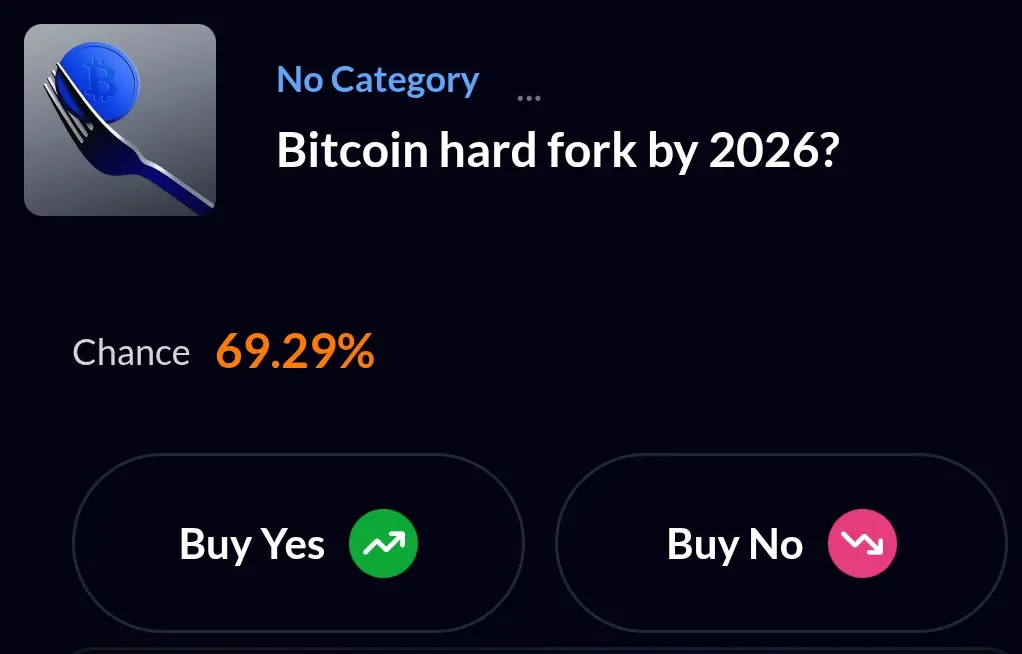
Rather than relying solely on speculation, Predyx prediction market is really turning these into hot topics. Supporters and critics both can put the money where their mouth is! These markets are a live sentiment index for the future of Bitcoin.
Tell me in the comments what do you see happening for Bitcoin in 2026? Will there be another hard fork? Will knots flip core? Or, will BIP110 activate on Bitcoin?






