
Crypto is still wildly unregulated, so most platforms have no obligation to follow FDIC reporting regulations or securities investor protection procedures.

To put it in a few words, you can absolutely trust some cryptocurrency exchange services. However, you can not trust just any old crypto exchange you run into.
There are some rules of thumb you should follow when signing up to or using a crypto exchange. We will go into the things you should look for in an exchange below. But first, let's clarify why you can trust some cryptocurrency exchange services.
Why Can I Trust a Cryptocurrency Exchange Service?
Crypto exchanges are not that novel anymore. Trading platforms like Binance, CoinBase, Kraken, and Gemini, etc., have been around for a while. They drive trillions of dollars worth of transactions every day. If any major platform like these steps out of line, everyone would know about it. The authorities would have a field day with them, considering how worried they already are about crypto.
So at this point, you can generally trust any major cryptocurrency exchange simply based on a good track record. With the rise of DEXs or Decentralized Crypto Exchanges, the safety of online transactions has gotten even better.
Don't get us wrong. There are still plenty of scammers out there waiting for you to slip up. But as long as you stay vigilant and do not do anything too risky, you should be on the safe side.
However, in case you are ever in doubt, you can check out an exchange on CoinRanking. We would recommend choosing an exchange with the 'Recommended' check.
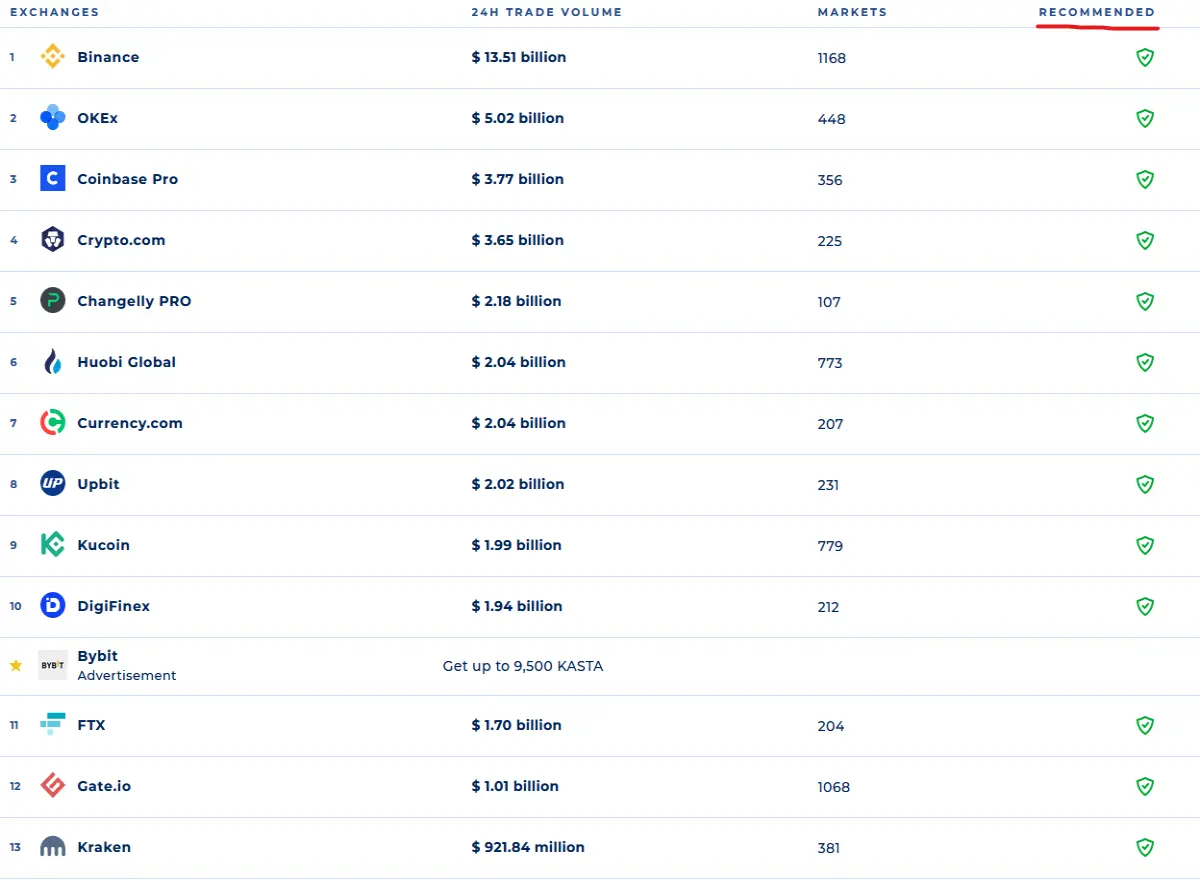
Besides lists like these, you will personally get familiar with the big names in the market with time. For the average Joe, these exchanges offer more than enough with a squeaky clean history when it comes to asset security.
What Is a Cryptocurrency Exchange?
The last couple of years have brought a lot of new terms and concepts for us to wrap our heads around. So bear with us because we're about to talk about one more.
Cryptocurrency exchanges are like the stock market but for cryptocurrencies. There are two main types of exchanges based on the governance model they follow:
- Centralized Exchanges
These exchanges are closest to the traditional model of trading stock options. They act as the third party for you when you buy or sell cryptocurrencies. That is why some of them are also called custodial 'custodial' exchanges, something we will talk about in a bit.
You can try tons of popular centralized exchanges like Binance, Coinbase, Kraken, Gemini, CEX.io, etc.
These exchanges currently occupy the top spots in the industry. This may be because of their enhanced convenience and customer support compared to DEXs.
- DEX or Decentralized exchanges
In contrast to centralized exchanges, decentralized exchanges do not act as the 'middle-man' in your exchange. In fact, there is no man or institution behind these exchanges at all. They run on smart contracts and liquidity protocols.
Some of the most popular examples of DEXs include PancakeSwap, UniSwap, and SushiSwap.
Since these exchanges are not institutionalized, they can sometimes slip between the cracks of regulations. They also take out the counterparty risk you experience with centralized exchanges. However, they can be hard to navigate and may not be as beginner-friendly as CEXs.
Things to Look for in A Crypto Exchange
Cryptocurrencies are not as well regulated as the traditional financial system. The framework of existing laws just may not apply to these novel assets. So until the system somehow makes itself as stable and as well-regulated as the traditional world of finance, you should tread lightly.
Finding the right exchange involves considering a bunch of things. We are going to look into the key ones here.
1. History and Reputation
Staying secure on the internet is paramount. With cryptocurrency, the danger and the potential risk are on a whole another level. So when choosing a crypto exchange, make sure they do not have a history of security breaches.
Most of the popular cryptocurrency exchanges have a clean enough record for you to trade without any concern.
Generally speaking, DEXs are more secure than CEXs. This is because there is no central entity hackers can manipulate or exploit. But still, there have been some cases of even DEXs being compromised. We recommend always using a well-established exchange to stay on the safe side.
If you are using a relatively new exchange, make sure they are legit. You should not interact with any exchange that does not have a secured connection. A padlock or 'secure' in the address bar shows your connection is encrypted, and no third party can swoop up your confidential information.
2. Counterparty Risk
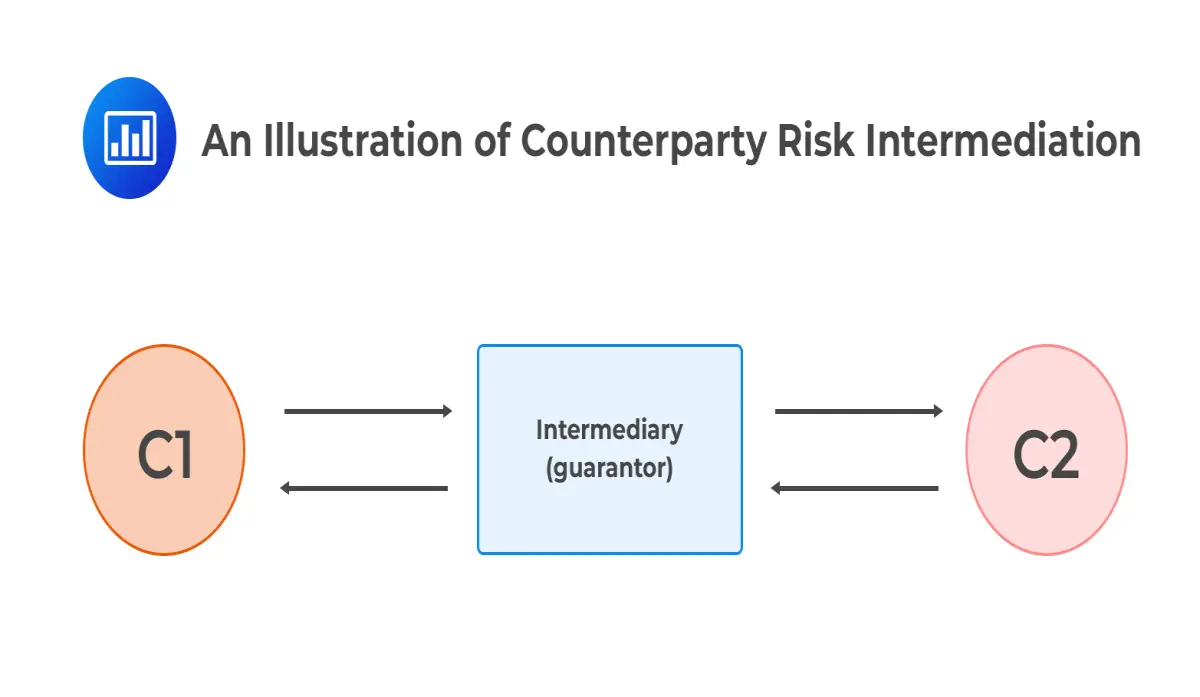
Another aspect of an exchange's security is whether or not it is custodial. This relates to the counterparty risk in a crypto transaction, i.e., the risk that the exchange will not fulfill its part of the transaction.
A custodial exchange takes your coins via an on-blockchain transaction. This transaction is registered and secure.
After it receives the coins, the exchange performs transactions and records them in its database (not the blockchain). So when you transfer your funds to them, they have your coins in their 'custody,’ thus the name 'custodial' exchanges.' Again, some of the biggest exchanges around are custodial, for example, Binance.
The general assumption is that custodial exchanges are less safe. But, this can be an over-simplification. Although these exchanges indeed introduce some risk, it is also true that they would not have as big as they have if they were not secure.
So if you are looking for the most secure crypto exchanges, do not rule out custodial exchanges. But if you want to be sure and do choose to go with a non-custodial DEX, Shapeshift, 1inch, PancakeSwap and UniSwap are some of your best choices.
On the same note, some exchanges only offer users custodial wallets. This means the user does not have access to their funds' private keys. We would generally advise you to stay away from these exchanges. Go with exchanges that let you withdraw your funds anywhere anytime.
3. List of Services

Other exchanges can also offer additional services such as:
1. Staking
Staking allows users to deposit their crypto holdings for a certain period of time in order to obtain profits or earn interest. Platforms that offer this service include Kraken, Gemini, Crypto.com, and BlockFi.
2. Derivatives/Futures Trading
Crypto derivatives are based on a smart contract in which two parties speculate on the price of a certain token on a future date. This is initiated by agreeing to a selling/buying price on a specific day regardless of the market price.
3. Swapping
Like trading, swapping involves exchanging a cryptocurrency for cash or another token. However, the difference lies in the fact that users will be swapping out their tokens against an existing liquidity pool rather than through a typical exchange order book. Fees for these types of transactions are typically more expensive as they use up gas and can fluctuate quite frequently.
4. Storage
Secure and trusted exchanges act as intermediaries for transactions, but can also serve as custodians to keep your holdings safe, assuming you are not ready to withdraw your available funds yet.
5. Loans
Under the DeFi sector, some exchanges offer crypto-backed loans that are almost instantly approved with much more competitive rates and higher LTV than what traditional banks offer, making this feature a superb functionality that users can avail of.
Besides transactions, you should also judge exchanges on the basis of the other services they offer. For example, some exchanges allow you to stake your assets while others do not. Similarly, some exchanges are beginner-friendly and do not throw graphs at you, while others do.
Services like these are not always necessary, but the more flexibility you have with your exchange, the better.
There are so many verified and established exchanges around these days that security is no longer a concern for knowledgeable customers anymore. Instead, you may be better off choosing one on the basis of the additional services an exchange offers.
When you are looking for an exchange, jot down the particular list of services you require. This could be trading specific coins, staking, etc. Once you have those down, take a look at the full list of services every potential exchange offers. Similarly, take a look at their competitors, so you know who offers you the best deal for the same service.
4. Fees
You can also compare exchanges on the basis of the fees they charge. The fee structure can vary quite a lot depending on things like whether you use a credit card or a debit card. Just so you know, credit cards are generally more expensive to use on exchange platforms.
You want to go with the platform that offers you the most competitive fees. Binance, for example, has relatively low fees and has a high trading volume.
By the way, if you are new to crypto exchanges, the general fees you see for exchanges are not the whole of the transaction fee. Each blockchain has its own transaction fee you pay every time you run a transaction on it. So the actual transaction fee would include both the exchange's fee and the blockchain's own fee.
5. Accessibility

An easy and understandable UI can make a ton of difference for beginners. The more convenient it is to use, the more encouraging it is for you. So if you are not familiar with crypto trading, we would recommend going with a relatively simple exchange. Generally speaking, broker platforms like CoinMama are the best places to get started.
But as you learn and move towards being an intermediate crypto trader, you might want to choose an exchange with more functionality. You would want those candlestick graphs and limit or stop orders at this stage.
Platforms like Coinbase and Kraken offer you services for both levels of detail. Where beginners would go with the standard Coinbase and Kraken platforms, they can progress to Coinbase Pro and Kraken Pro once they are ready to move on.
We would recommend going with an exchange that matches your level of experience in the crypto sphere. If you are looking for day-trading, you would also want an exchange that has a mobile app—for example, Robinhood, Kraken, and KuCoin.
6. KYC Policies

Another aspect of accessibility is KYC policies. Some exchanges can be strict about who they let on to their platform? Although this is prudent and probably a good move on the exchange’s part, it can also be annoying for you.
So if you are not comfortable with spending some time sending your private information to an exchange, you can opt for exchanges with less stringent policies. For example, KuCoin has convenient policies when it comes to user information for its lowest level KYC verification. However, the level of details you have to share goes up if you want additional features and lesser limits on withdrawals. The same goes for other centralized exchanges like Kraken.
However, DEXs like Shapeshift can offer completely KYC-free services. This is because these platforms do not come under the KYC regulations a traditional CEX may be subject to. So if you want complete exemption from giving up your details, a DEX is the way to go. Note that this might not be as easy to navigate and use, though.
What About CoinChanger?
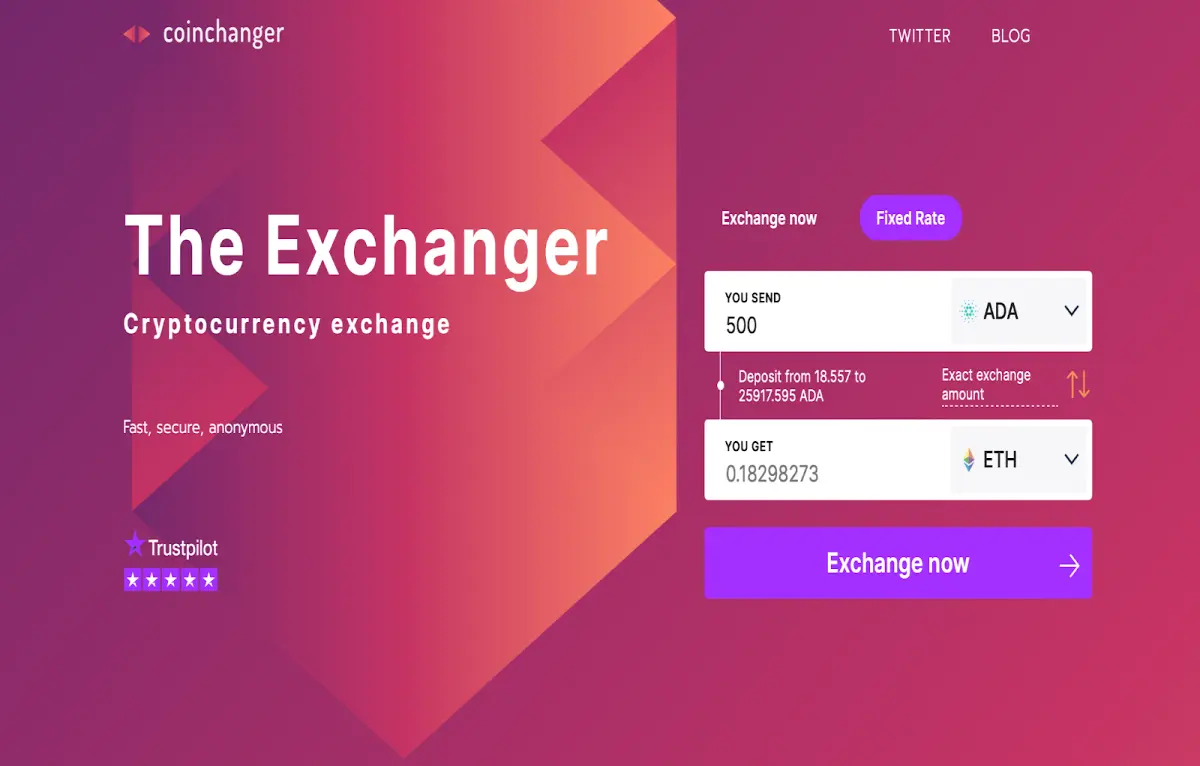
CoinChanger is a new cryptocurrency exchange platform. Although it is a young exchange, it can gradually become an established one.
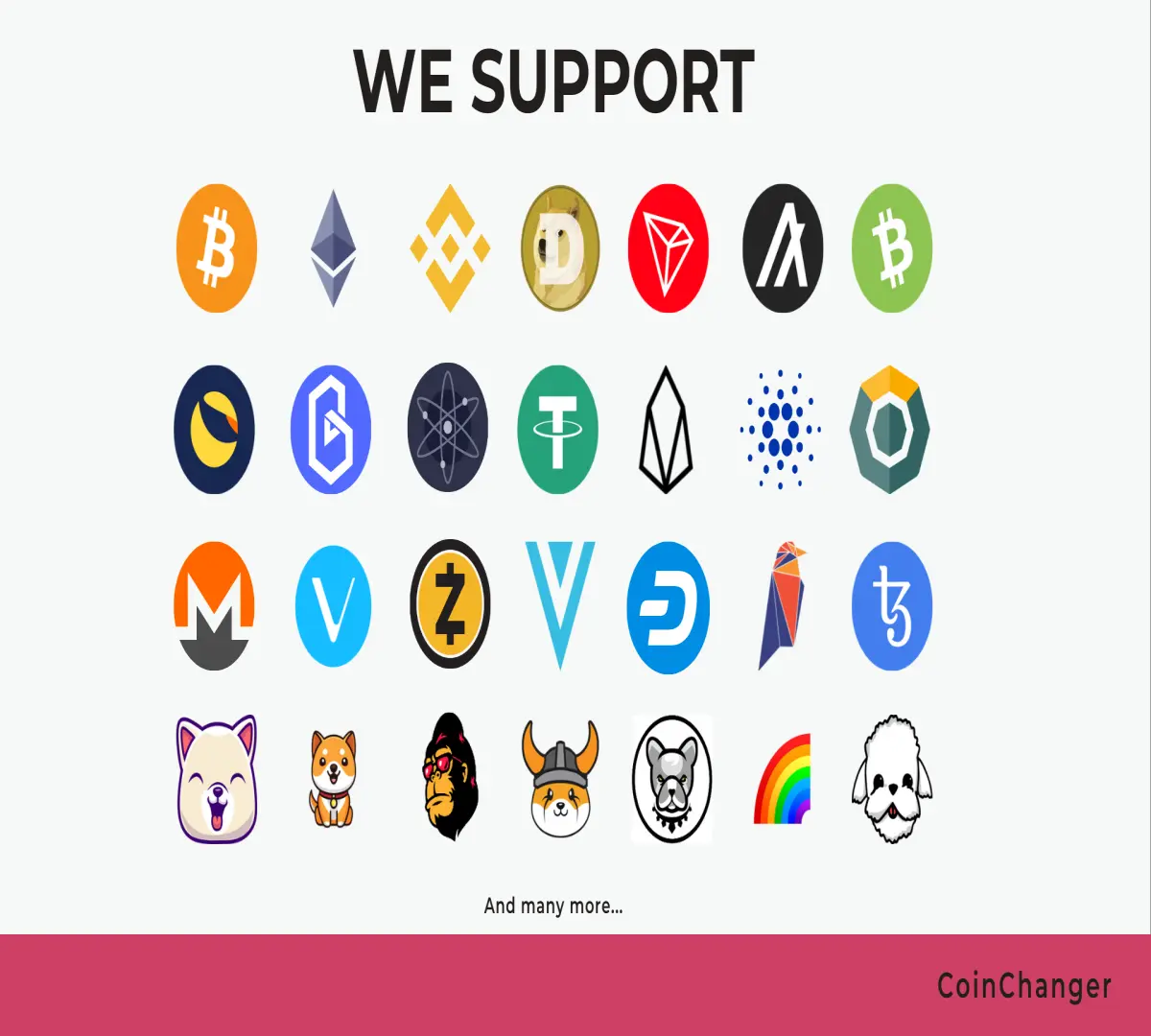
It currently offers exchange services for some rare coins like FLOKI, KISHU, and BabyDoge, etc. If you are interested in any of these up-and-coming coins, you should get yourself familiar with the exchange.
In Summary
Cryptocurrency exchanges are not always bullet-proof, and there are a ton of scammers out there. You need to protect yourself against any bad actors and choose the best exchange. We would advise sticking to the big names in the industry. Be wary of anything that sounds too good to be true.
There are always some up-and-coming projects in the crypto world. One of these is CoinChanger, a relatively new crypto exchange. You can trade some unique coins here, so if you are into that, keep an eye on them.
We also hope the things we listed here help you make the right choice. Good luck on your crypto journey.






