
Introduction
Exchange-Traded Funds (ETFs) have revolutionized the investment landscape, providing an easy and cost-effective way for investors to access a wide range of assets. With their flexibility and diversification benefits, ETFs have become a cornerstone of many investment portfolios. In this comprehensive guide, we will delve into the various types of ETFs, their characteristics.
-
Understanding ETFs: A Primer
Exchange-Traded Funds (ETFs) are investment funds that are traded on stock exchanges, much like individual stocks. They offer a basket of assets, which can include stocks, bonds, commodities, and more. The key features that set ETFs apart are their intraday tradability and generally low expense ratios.
-
Broad Market ETFs
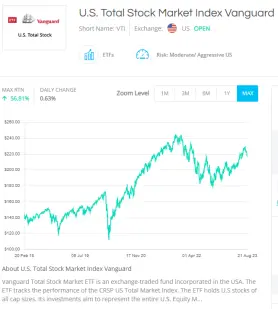
These ETFs track a broad market index, such as the S&P 500 or the FTSE 100. They provide exposure to a wide range of companies within a particular market or sector. Examples include the SPDR S&P 500 ETF (SPY) and the Vanguard Total Stock Market ETF (VTI).
-
Sector ETFs
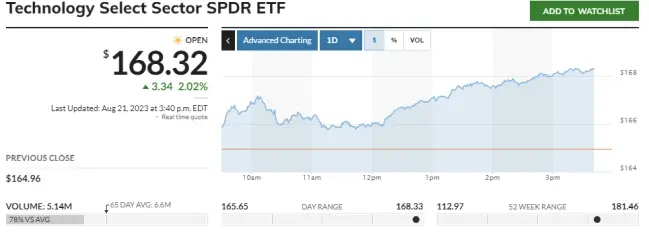
Sector ETFs focus on specific industries or sectors, allowing investors to target areas of the market that align with their views or forecasts. For instance, the Technology Select Sector SPDR Fund (XLK) offers exposure to technology companies.
-
Bond ETFs
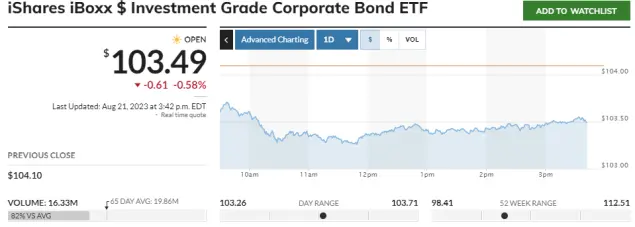
Bond ETFs provide exposure to fixed-income securities like government or corporate bonds. The iShares iBoxx $ Investment Grade Corporate Bond ETF (LQD) is an example of a bond ETF that offers a diversified portfolio of investment-grade corporate bonds.
-
Commodity ETFs
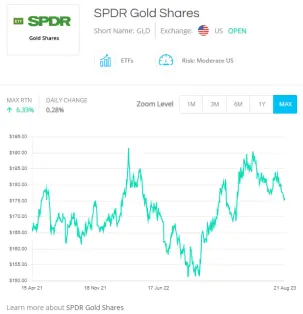
Commodity ETFs track the performance of commodities like gold, oil, or agricultural products. The SPDR Gold Trust (GLD) is a popular example, offering exposure to the price movements of gold.
-
Inverse ETFs
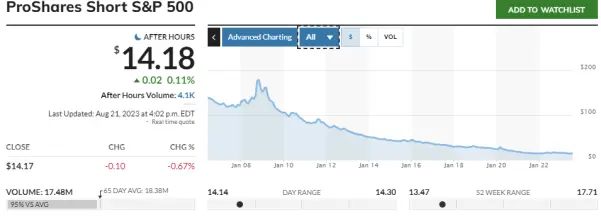
Inverse ETFs aim to profit from declining markets. They use derivatives and short-selling strategies to achieve returns that are opposite to a particular index. The ProShares Short S&P 500 ETF (SH) is an example of an inverse ETF.
-
Leveraged ETFs
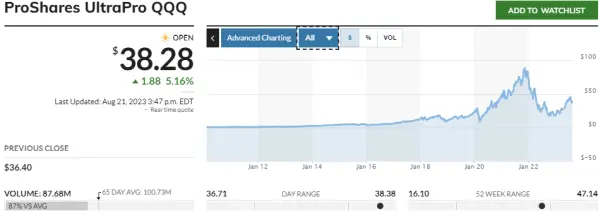
Leveraged ETFs use financial derivatives and debt to amplify the returns of an underlying index. These are designed for short-term trading and are not suitable for long-term investments. An example is the ProShares UltraPro QQQ (TQQQ), which aims to provide triple the daily returns of the Nasdaq-100 Index.
-
International ETFs
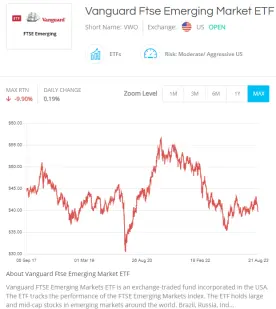
These ETFs offer exposure to international markets, allowing investors to diversify their portfolios globally. The Vanguard FTSE Emerging Markets ETF (VWO) provides exposure to emerging market economies.
-
Dividend ETFs
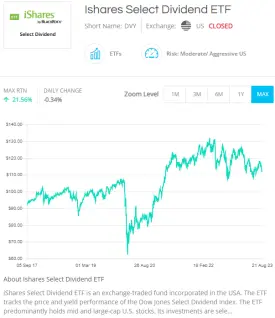
Dividend ETFs focus on companies that pay dividends. The iShares Select Dividend ETF (DVY) is an example of an ETF that offers exposure to high-dividend-yield stocks.
-
Socially Responsible ETFs (ESG ETFs)
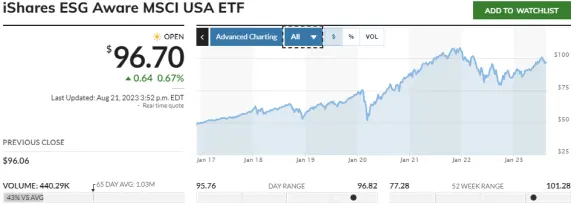
ESG ETFs invest in companies that prioritize environmental, social, and governance factors. The iShares ESG MSCI USA ETF (ESGU) exemplifies this category.
-
Actively Managed ETFs
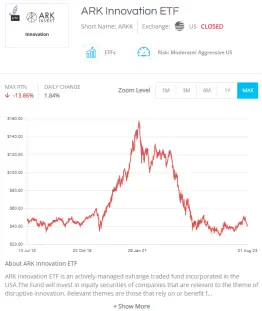
Unlike most ETFs, which passively track an index, actively managed ETFs are managed by portfolio managers who aim to outperform the market. The ARK Innovation ETF (ARKK) is an example of an actively managed ETF focused on innovative companies.
Conclusion
Exchange-Traded Funds have transformed the investment landscape, providing investors with an array of options to diversify their portfolios across various asset classes and sectors. Whether you're looking for broad market exposure, specific sectors, or even strategies to profit from market declines, ETFs offer a versatile toolkit. As with any investment, thorough research and understanding are key. Always consider your investment goals, risk tolerance, and time horizon before diving into the world of ETFs.
"Most investors, both institutional and individual, will find that the best way to own common stocks is through an index fund that charges minimal fees. Those following this path are sure to beat the net results (after fees and expenses) delivered by the great majority of investment professionals." - Warren Buffett
Disclaimer: This article is for informational purposes only and should not be construed as financial advice. Always consult with a qualified financial professional before making investment decisions.
Sources:





