
Chainlink's VRF, Ether Cards, and the Emerging Dynamic NFT Market
Written By: Isaiah Payton April 11th 2021
What bubble? Chainlink and its VRF function are adding another dynamic (no pun intended) to the emerging NFT market and are ushering in a new era of digital collectibles and art. Recently last month on March 18th, Ether Cards announced that Chainlink will be integrated along with its Verifiable Randomness Function which "is a random number generator (RNG) solution built specifically for smart contracts, providing users with a tamperproof and provably fair source of randomness backed by an on-chain cryptographic proof that verifies the integrity of the process." The official announcement can be found here where you can read why and how Chainlink will be used in the emerging NFT marketplace. Chainlink has already been associated with Dynamic NFTs which continue to only solidify the digital art pieces in the exponentially growing space in the crypto ecosystem. The magnitude of this development can already be felt, Coindesk stated that the "Crypto start up Ether Cards sold $3.7 million worth of souped-up non-fungible tokens (NFTs) in a pre-sale that closed" in early March. These early figures are a testament to why Chainlink's VRF function will be a crucial part into creating an integral NFT marketplace that is fair for not only the artists creating these digital assets but as well as the consumers collecting them.
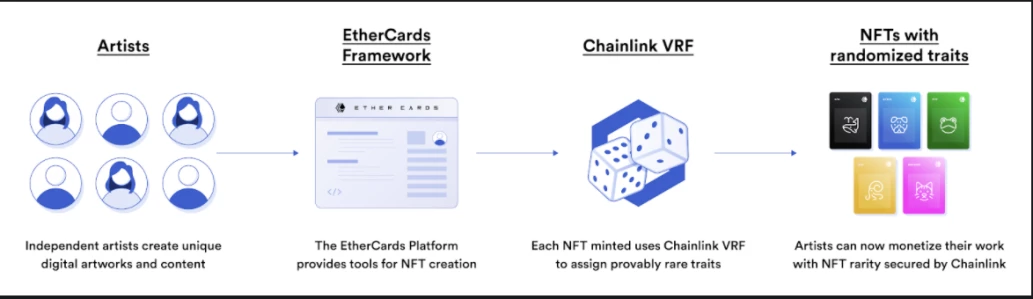
When a space in the market is as new as the one NFTs reside in, there are inevitably going to be parties which will try to take advantage of those that are just getting their feet wet. In this space, if the NFT's dynamic traits are randomly generated "on-chain" they are more vulnerable to attacks, putting creators and consumers alike in a position to be taken advantage of. Chainlink's VRF function will eliminate this risk by being able to randomly generate dynamic traits "off-chain", while also adding features that will incentivize creator and consumer engagement that will keep the marketplace fresh. The integration into the Ether Card framework will not only be limited to gaming, but will also allow creators and consumers to turn NFT cards into cards that admit access to certain games and programs, cards that verify membership, and even discounts for certain projects. This will in turn will further maximize their value. We have to look at this in a broader view than what we currently view as the digital consumables we are used to today. For instance, when NFTs are made into event tickets, the dynamic ability will not only make them personally valuable and rare collectibles like a concert ticket for your favorite music artist or even an exclusive membership within a fanbase. What this will allow is moving past mediocracy of a one-time use item and will allow numerous marketplace space for the redistribution of what we the people find valuable. Those one-time use tickets we used to save as pieces of paper that fade away will turn into an opportunity for creators and consumers alike to stay engaged with the culture behind an event, a lifestyle, and their consumables. The concert ticket that you went to a year ago could turn into a discount for an artist's new album, new tour, and merchandise after the original time stamp. This will allow hardcore fans to not only have a piece of nostalgia but to be appreciated by still being a fan through the years with special membership access. Marketing is evolving so why not the items we market?





