
Chainlink, EEA, and The New Standards of Global Business Operations
Written By: Isaiah Payton April 8, 2021
Ethereum and Chainlink are leading the way to global institutional adoption via the Ethereum Enterprise Alliance and its growing list of partners/contributors. Now more than ever, businesses around the world are looking to incorporate Ethereum's public blockchain and their current technical needs for various enterprises. The blockchain's use can be found across numerous industries including technology, banking, pharmaceuticals, energy, and much more. With the public blockchain becoming an industry standard among enterprise giants such as Google, Oracle, Microsoft, J.P. Morgan Chase Bank etc., the need of a new standard of technical operations is following the mass adoption across the globe. The Ethereum Enterprise Alliance looks to set these standards by understanding the various enterprise requirements, building standard specifications that address these requirements, evolving alongside and including the public Ethereum blockchain, and achieving global interoperability through emerging certification programs. This may seem like a lot of technical jargon, but it actually reflects the direction business models are headed, which is to reflect a more transparent system that incentivizes trustworthy and honest business activity on all levels. What does this have to do with Chainlink? From inventory and supply chain management to Customer Relationship Management (CRM), Chainlink has been tapped to help solve various problems that trickle down to the everyday consumer or business owner on a day to day basis by becoming a part of the EMINENT Task Force alongside Baseline Protocol initiative. To save space, I recommend reading the articles linked in this post to understand the goal of each entity.
An example of a use case for blockchain in the customer service industry can be found in this article. Telus International describes a situation with an airline passenger trying to make a change to their itinerary and having to make a secondary change due to an error with the initial request. In this example, fees can be applied to these itinerary changes and "Knowing who was responsible for the error will impact the fees associated with a second change, making a record of the initial interaction critical in order to avoid a potential ‘he said, she said’ scenario". Chainlink will allow communication through various data points in order to sync the necessary information to confirm the airline passenger won't overpay fees for an error in their itinerary, but also can protect the airline from being the victim of fraudulent activity from a dishonest party. As you can see in the diagram below, the decentralized oracle network model can add more layers of protection to various parties to ensure that the most credible and honest data will be used to settle transactions and disputes.
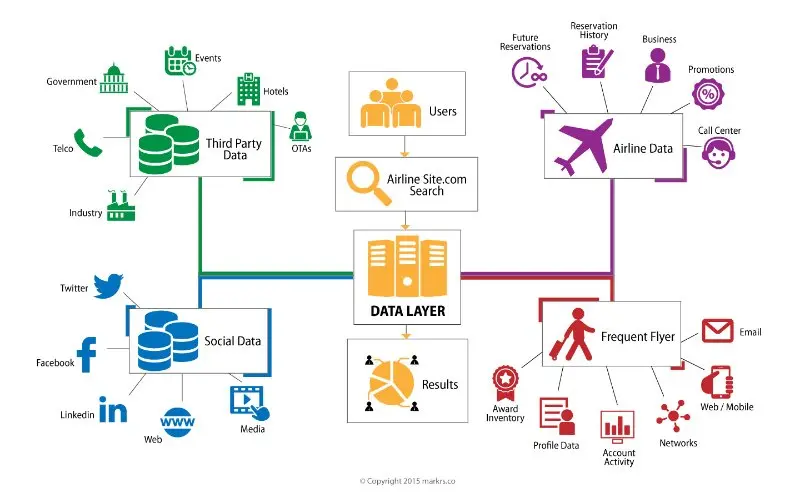
(Chainlink in this example would be the intermediary between various data points including the "Airline Data" and the "Frequent Flyer Data". In the example above Chainlink's Oracle network can help solve transactions and disputes between data points such as Future Reservations, Reservation History, Promotions and Call Centers on the Airlines behalf while also making sure Profile Data, Account Activity and even Award Inventory are kept accurate and assigned to the correct individual.)
Another example is one that I personally relate to being in the transportation industry. Dealing with freight shipments and carrier (trucking) companies while coordinating pickups and deliveries with major and minor distributors. Blockchain technology along with smart contracts can help mitigate communication gaps by allowing truth and transparency where us humans cannot deliver because the "transactions" are automated. In an article by Supply Chain Brain, they noted that "Instead of calling a distributor to see whether a shipment is on its way, the ledger provides dynamic access to that information. Moreover, blockchain adds the vital factor of reliability to the equation. They record any and all changes made, and require consensus among the network to make them, so even if an item is deleted, there will be a record of when it happened and who removed it". Chainlink will provide the solution that allows two vital technologies, EDIs (on-chain) and ELDs (off-chain), to communicate with each other. This will usher in a new era of transportation and distribution in the logistics industry that can have the best interest off all parties in mind and will expose those who try to cheat the system to the public. Whether its a driver that is late to pickup/delivery or its a consigner that inaccurately logs a driver's detention time while sitting on site, the information will be public and no one will be able to hide the truth of these transactions.
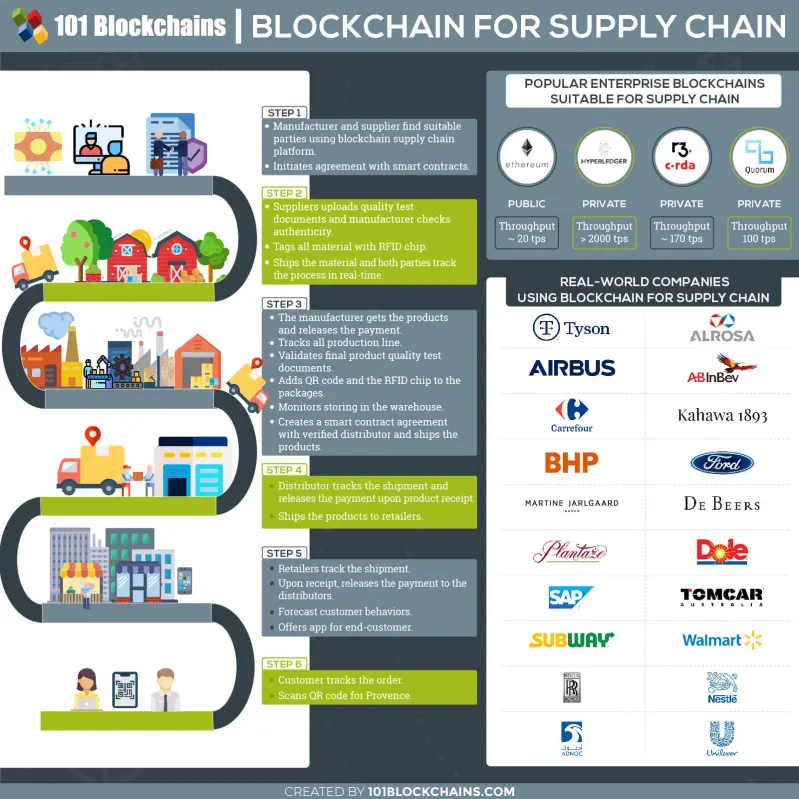
(Chainlink in this example would be able to communicate orders requested and filled through EDIs along with tracking information from a carrier's ELD to not only track the status of a shipment but will also accurately tell all parties involved what has happened with the product. An issue this can tackle is the accuracy of recording detention. It will also help with the tracking of a driver or product and will help the customer tell whether or not a 3PL or carrier needs to be penalized by a late arrival to pickup/delivery because of human error or instances such as accidents or vehicle/product damage.)
The issue of getting off-chain data on-chain has plagued businesses and everyday consumers for years. Chainlink looks to eradicate this issue by developing Decentralized Oracle Networks of nodes that can transmit off-chain data on-chain or vice versa with transparency via smart contracts on the public Ethereum blockchain. In a nutshell, Chainlink is helping set a standard by combining the advantages of public blockchains and incorporating current systems of record and key data sources with its numerous decentralized oracle networks.





