
Understanding cryptocurrency mining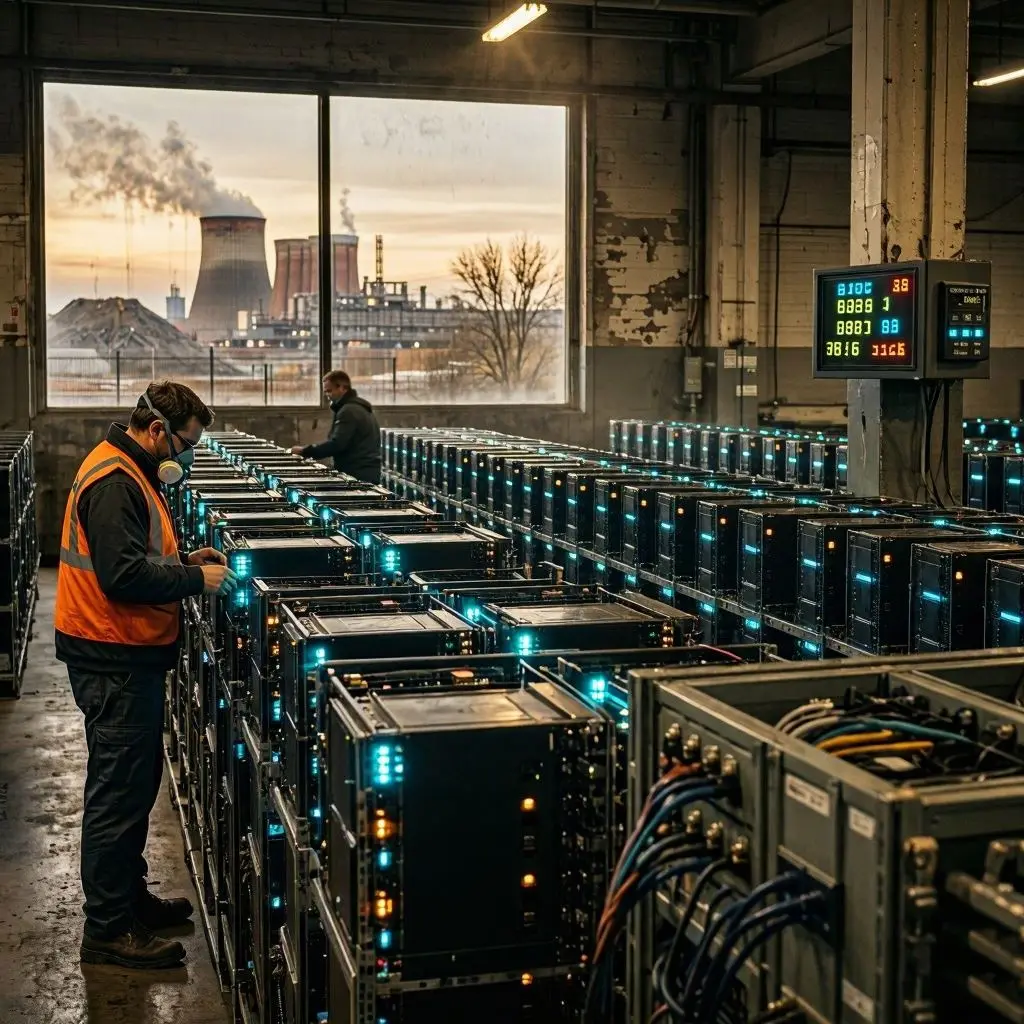
Cryptocurrency mining verifies transactions and adds them to the blockchain ledger. It takes a lot of computing power and energy, mostly because of how the underlying technology works.
Miners use dedicated hardware, often called mining rigs, to solve complex math problems as part of the Proof-of-Work (PoW) consensus algorithm. Solving one of these problems creates a new block, and the miner is rewarded with cryptocurrency. PoW is what keeps Bitcoin and similar networks secure and decentralized, but it depends on heavy computation from GPUs and ASICs, which makes it energy-hungry.
This process, called hashing, is mostly trial and error, and miners are competing against each other to solve the problem first. That competition means constant, large-scale electricity use, sometimes on the scale of a small country. Much of that electricity still comes from fossil fuels, which is why mining draws so much scrutiny over its environmental footprint.
The hardware itself adds to the problem. Rigs typically run at full capacity, which means high power draw, a lot of waste heat, and hardware that wears out and needs replacing. Between the energy use and the electronic waste, mining sits at the center of debates about how to secure a blockchain without the ecological cost.
The environmental footprint of cryptocurrency mining
As Bitcoin, Ethereum, and other cryptocurrencies have grown, so has scrutiny of the energy their mining consumes. PoW requires solving math problems to validate transactions, and that takes real computing power, which means real electricity and real emissions.
The numbers make the scale clear: Bitcoin mining uses about 121.36 terawatt-hours of electricity a year, more than several countries consume in total. Ethereum uses around 44.49 TWh a year. That energy use translates directly into carbon emissions, and Bitcoin's network alone is estimated to produce roughly 37 megatons of CO2 annually, comparable to a small country's output.
Much of that power comes from coal and natural gas, especially in mining hubs like China, Kazakhstan, and Russia, which speeds up fossil fuel depletion and adds to global emissions.
Miners tend to cluster where electricity is cheap and regulation is light. That clustering brings local costs too: more air pollution, more water used for cooling, and power grids strained enough to risk shortages for the surrounding community.
High energy use and dependence on fossil fuels remain the core problem, one that affects both local environments and the larger effort to slow climate change.
Case studies: real-world environmental impact
Two cases show what happens when mining scales up in a specific place: Inner Mongolia, China, and Massena, New York.
Inner Mongolia became a mining hub partly because it had cheap, abundant fossil fuel power. Its coal plants drove up carbon emissions enough that the local government cracked down on mining, which cut the region's energy load and environmental impact significantly.
In Massena, New York, mining operators brought dormant coal plants back online to power their operations. Residents and environmental groups pushed back over rising pollution and water quality concerns, and the state responded with stricter rules on mining's environmental impact.
Beyond emissions, nearby communities have dealt with noise and changes to the local landscape from mining infrastructure. Environmental groups have also pointed to disrupted habitats and effects on local biodiversity.
Mining companies counter that their operations create jobs and bring infrastructure investment. Whether that trade-off is worth it is still contested.
Both cases point to the same tension: mining brings real economic benefits, but without better practices, the environmental cost can be steep.
Innovative solutions to reduce the carbon footprint
A few approaches are gaining traction to cut mining's carbon footprint. The most direct is moving operations toward renewable energy, solar and wind in particular, by building mining facilities in regions where that power is abundant. That cuts fossil fuel reliance directly.
Hardware efficiency helps too. ASICs are built specifically for mining and use far less energy than general-purpose hardware doing the same job.
The bigger shift is in the consensus mechanism itself. Proof of Stake (PoS) validates transactions based on how many coins a validator holds, rather than through computationally expensive mining. That change cuts the energy cost of running the blockchain by a wide margin.
Governments and industry groups are also pushing regulatory frameworks: incentives for renewable-powered mining, penalties for excess emissions, and efficiency requirements. Some of these efforts involve public-private collaboration to bring these standards into practice.





