
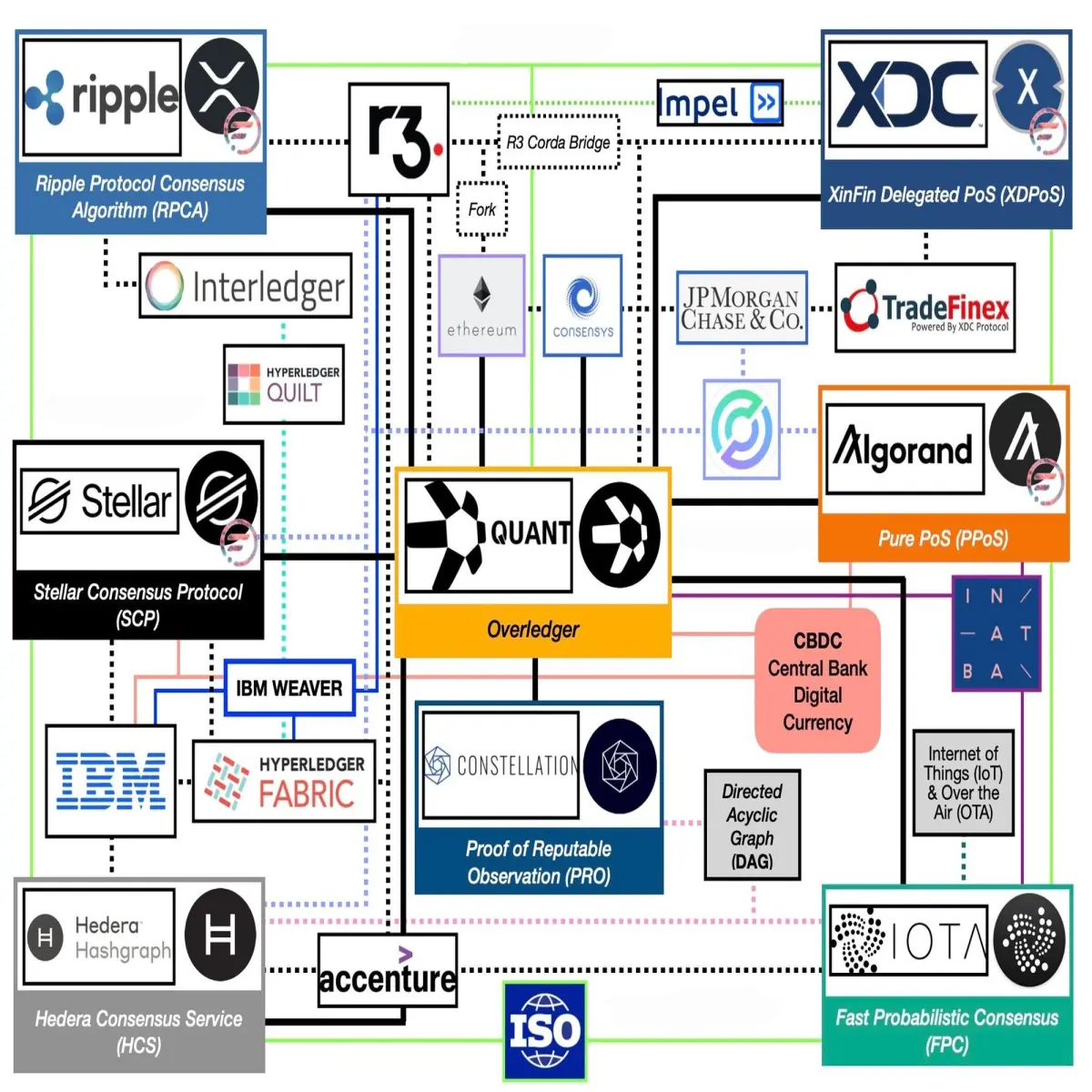
In the ever-evolving landscape of financial technology, the implementation of ISO 20022 stands as a pivotal milestone that promises to reshape the way financial institutions communicate and conduct transactions. As we approach the upcoming period, the adoption of ISO 20022 is gaining momentum, bringing with it a host of benefits and paving the way for the integration of Central Bank Digital Currencies (CBDCs) into the global financial system.
ISO 20022 Implementation:
ISO 20022 is an international standard for the exchange of financial information between businesses and financial institutions. It provides a standardized messaging format, offering a common language for the transmission of financial data across different systems, networks, and countries. This standardization not only enhances efficiency but also reduces errors, improves interoperability, and supports the development of innovative financial services.
Financial institutions worldwide are recognizing the need to migrate from existing standards, such as ISO 15022 and ISO 8583, to ISO 20022. The migration process involves adapting internal systems, upgrading messaging infrastructure, and ensuring compatibility with the new standard. While the transition may pose some challenges, the long-term benefits are expected to outweigh the initial hurdles, fostering a more streamlined and globally interconnected financial ecosystem.
System Dynamics Behind ISO 20022:
ISO 20022 operates on a rich data model, allowing for the inclusion of additional information beyond simple transaction details. This flexibility enables a more comprehensive representation of financial messages, accommodating a wide range of data elements and business processes. The use of Extensible Markup Language (XML) and a robust data dictionary further enhances the standard's adaptability to various financial instruments and evolving business requirements.
The adoption of ISO 20022 facilitates end-to-end straight-through processing, reducing manual interventions, minimizing errors, and accelerating settlement times. The enhanced data richness also supports advanced analytics, enabling financial institutions to derive valuable insights and improve risk management strategies.
Central Bank Digital Currencies (CBDCs):
Concurrently, the financial industry is witnessing a paradigm shift with the emergence of Central Bank Digital Currencies (CBDCs). CBDCs are digital forms of a country's national currency, issued and regulated by the central bank. Unlike cryptocurrencies such as Bitcoin, CBDCs are centralized and backed by the full faith and credit of the issuing government.
CBDCs aim to leverage the benefits of digital technology to enhance the efficiency, security, and inclusivity of financial transactions. These digital currencies have the potential to revolutionize the traditional banking system by enabling faster and cheaper cross-border transactions, reducing the reliance on physical cash, and providing financial services to unbanked populations.
Integration of ISO 20022 and CBDCs:
The implementation of ISO 20022 aligns seamlessly with the development and adoption of CBDCs. The standardized messaging format of ISO 20022 can serve as the backbone for the communication and interoperability of CBDCs between central banks, financial institutions, and other participants in the financial ecosystem.
ISO 20022's data richness accommodates the complex requirements of CBDC transactions, ensuring that the digital currency can be transmitted securely and efficiently across different systems. This interoperability is crucial for the successful integration of CBDCs into the global financial landscape, allowing for cross-border transactions and collaboration between central banks.
Conclusion:
As we enter the upcoming period, the implementation of ISO 20022 and the rise of CBDCs are set to reshape the financial industry, fostering greater efficiency, transparency, and innovation. The adoption of ISO 20022 provides a foundation for standardized communication, while CBDCs offer a digital evolution of national currencies. Together, these advancements hold the potential to create a more interconnected and resilient financial ecosystem, benefitting businesses and consumers alike. Financial institutions worldwide must embrace these changes, recognizing the opportunities they bring and ensuring a smooth transition to a more digital and interconnected future.






