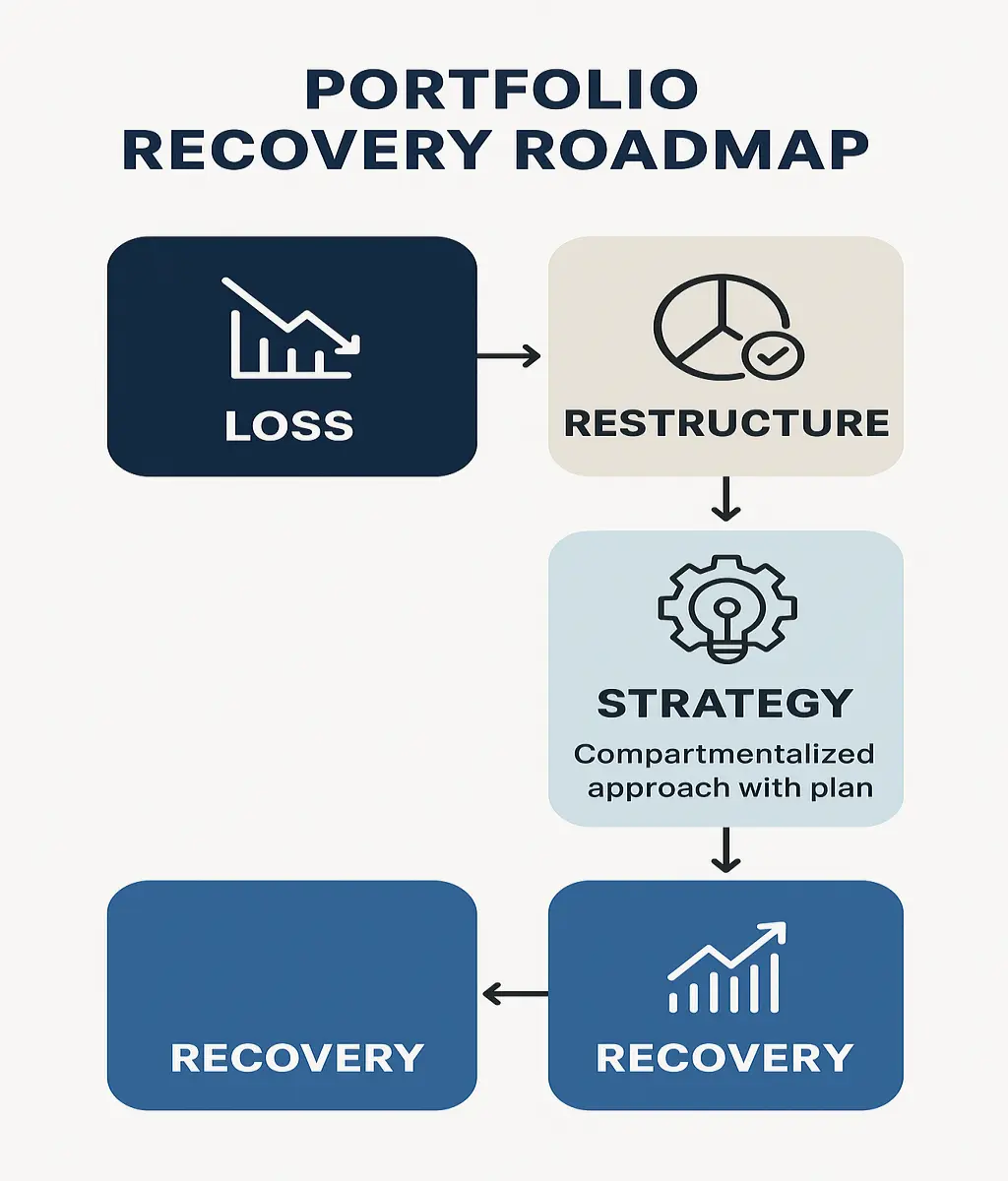
Continuing the series of making money based on crypto based space by making trades, but if you had made trades and still sucked with losses then. i made a strategized way to deal with that issue.
Losses in crypto trading are almost inevitable, especially in such a highly volatile and sentiment-driven market. However, what separates successful traders from those who exit the space prematurely is how they recover from setbacks. Rather than chasing losses impulsively, recovery requires discipline, strategy, and a realistic risk-management plan.
This research-backed article outlines structured methods to recover losses and gradually rebuild portfolios.
1. Mindset Reset: The First Step Toward Recovery
Before discussing strategies, it’s important to reframe your mindset. Studies in behavioral finance highlight the “disposition effect” — the tendency of traders to sell winners too early and hold on to losers too long.
-
Accept sunk costs: Past losses are unrecoverable; only future strategy matters.
-
Avoid revenge trading: Jumping into risky trades to make back losses quickly usually compounds the problem.
-
Set realistic horizons: Recovery may take months, not days.
2. Portfolio Restructuring
If you’ve lost money, chances are your portfolio allocation or entry points were misaligned with market cycles. Rebalancing helps to reduce further risks.
-
Shift to stable foundations: Allocate at least 50–60% into established assets (e.g., Bitcoin, Ethereum).
-
Small allocation to high-risk plays: Keep speculative bets (altcoins, meme tokens) under 10–15%.
-
Stablecoins for flexibility: Keep 10–20% in USDT/USDC for buying dips.
📌 Research note: According to Binance Research (2023), diversified portfolios with higher BTC/ETH weighting outperform meme-coin-heavy portfolios in the long term by over 40% ROI.
3. Dollar-Cost Averaging (DCA) for Sustainable Recovery
One of the most effective recovery strategies is Dollar-Cost Averaging. Instead of trying to time the bottom, you buy small amounts at regular intervals.
-
Example: If you lost $500, split your new $500 investment over 10 weeks → $50 per week into BTC or ETH.
-
This reduces volatility risk and builds a sustainable base for long-term recovery.
4. Leverage Knowledge, Not Leverage Trading
Many losses come from high-leverage futures trading. While leverage promises quick gains, it magnifies risk.
-
Instead of 10x or 20x leverage, focus on spot trading with trend-following indicators (RSI, MACD, EMA).
-
Study on-chain metrics (e.g., wallet inflows/outflows, exchange reserves) before making entries.
-
Research-backed tools: Glassnode, Santiment, Token Terminal provide advanced insights for safer trades.
5. Strategic Recovery Plans
A. Slow Growth Plan (Low Risk)
-
Invest 70% into BTC/ETH with DCA.
-
Hold 20% in stablecoins for dips.
-
Use 10% for Layer-1 projects (e.g., Solana, Avalanche) with long-term growth potential.
📈 Recovery Timeline: 8–12 months.
B. Balanced Recovery Plan (Moderate Risk)
-
50% BTC/ETH (anchor assets).
-
25% altcoins with strong fundamentals (DeFi, AI tokens).
-
15% stablecoins.
-
10% short-term trend plays.
📈 Recovery Timeline: 4–6 months (if executed with discipline).
C. Aggressive Recovery Plan (High Risk)
-
30% BTC/ETH.
-
40% mid-cap altcoins.
-
20% trend-driven meme plays (pump.fun, Solana tokens, etc.) — strictly managed with take-profit orders.
-
10% stablecoins.
📈 Recovery Timeline: 2–4 months (but higher chance of re-loss).
6. Risk Management to Avoid Repeat Losses
Recovery is meaningless if mistakes are repeated. Implement these protective measures:
-
Stop-loss orders: Always cut losses at -10% to -15%.
-
Take-profit strategy: Secure profits at +20% to +30% rather than holding forever.
-
Position sizing: Never risk more than 2–5% of your portfolio per trade.
-
No emotional trading: Build rules and stick to them.
7. Alternative Earning Streams in Crypto
Recovery doesn’t only come from trading. Other blockchain opportunities can help rebuild losses:
-
Staking: Earn passive yields on Ethereum, Solana, Cardano.
-
Liquidity provision: Provide stablecoin liquidity in DeFi protocols.
-
Airdrops & testnets: Participate in early projects to receive free tokens (many traders recovered big losses via airdrops like Uniswap & Arbitrum).
-
Freelancing in Web3: Offer skills (writing, coding, design) for crypto payments on platforms like LaborX or CryptoGrind.
8. The Negative Aspects of Recovery Attempts
Not every recovery strategy works — here’s what to avoid:
-
Overtrading: Leads to more fees and emotional stress.
-
Copying random traders: Influencers often promote risky tokens for personal gain.
-
Ignoring risk-adjusted returns: A 200% gain in a meme coin doesn’t mean success if risk of total wipeout is 90%.
Conclusion: The Path to Recovery
Recovering from crypto trading losses is not about chasing quick gains — it’s about restructuring, disciplined execution, and risk-aware growth. By combining stable assets with calculated risk exposure, using tools like DCA, and diversifying into non-trading opportunities, traders can not only recover losses but also emerge stronger.
The key is patience: crypto is a marathon, not a sprint.