
“The launch of DCEP has made China the world’s first sovereign digital currency.”
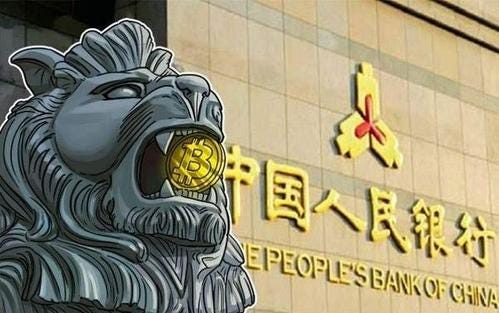
What is DCEP?
The digital currency issued by the People’s Bank of China is called DC/EP (Digital Currency/Electronic Payment).
DC is a digital currency, and EP is an electronic payment. Its functions and attributes are exactly the same as banknotes, except that its form is digital. We can define it as a “digital payment tool with value characteristics.”
What are the characteristics of DCEP?
The digital currency issued by the People’s Bank of China is a legal currency, and the price is not as hyped as cash. This is not the same as other virtual digital currencies [such as Bitcoin, Ethereum, etc.]. The digital currency of the People’s Bank of China has unlimited liability, which means that you cannot refuse to accept DCEP. We see that private payment institutions or platforms will set up various payment barriers. Alipay cannot be used in places where WeChat is used, and WeChat cannot be used in places where Alipay is used. However, for the digital currency of the People’s Bank of China , as long as you can use electronic payment. Place, you must accept the digital currency of the People’s Bank of China.
The functions and attributes are exactly the same as the banknotes, except that its form is digital and requires a mobile phone to download the digital wallet. Simply put, the banknotes and coins that are in circulation on the market are replaced with digital currency and can then be circulated on the market.
Taking “double offline payment” means that both the income and expenditure are offline and can also be paid. In other words, as long as your mobile phone has power, even if there is no network signal, payment and collection can be realized.
How do ordinary people use DCEP?
Generally, the People’s Bank of China first converts DCEP to banks or other financial institutions, and then these institutions convert them to the public. For ordinary people, you may want to register a wallet-like account, and then use your bank card money to convert the actual amount into 1:1 into digital currency and store it in this wallet. When you pay, you don’t need to bind any bank account. Unlike we use WeChat or Alipay, we must bind a bank card, but DCEP does not. To put it simply, it means “the value transfer can be achieved without an account”. You can think about the banknotes to understand it. When you pay with banknotes, you don’t need an account, and so is DCEP.
What is the difference between DCEP and Alipay and WeChat payment?
First of all, from the legal power, the effectiveness and security of DCEP is the best. The banlnotes you use are issued by the People’s Bank of China, and the DCEP is also. But when you use Alipay or WeChat for electronic payment, you use Alipay’s e-wallet and WeChat’s e-wallet. Where do their currencies come from? They are not settled by the currencies of the People’s Bank of China, but by the commercial bank deposit currency. Of course, the situation has changed after the deposits have been centrally deposited.
In other words, WeChat and Alipay did not reach the same level as banknotes in terms of legal status and security.
In theory, commercial banks may go bankrupt, so the People’s Bank of China has established a deposit insurance system in these years; but if WeChat is bankrupt, the money in WeChat’s wallet has no deposit insurance, you can only participate in its bankruptcy liquidation, such as You have 1000 yuan before, and now you can only be paid 1 cent, you can only accept it, it is not protected by the last lender of the People’s Bank of China. Of course, this possibility is small, but you can’t completely rule it out.
Second, DCEP uses dual offline payments and does not require network signals. For example, if you go to the underground supermarket to buy things, there is no cell phone signal, you can’t use WeChat or Alipay. In this scenario, in the past, you could only pay by credit card, and you can use the digital currency of the People’s Bank of China to pay later. Is it a good feeling? This is not possible with digital currencies like Libra.
Of course, some people may ask, does DCEP affect the status of Alipay and WeChat? Our answer is: not. Because Alipay and WeChat are currently paid in RMB, in fact, they are paid in commercial bank deposit currency. After the introduction of the currencies of the People’s Bank of China, it was only replaced by the digital RMB, which is the use of the deposit currency of the People’s Bank of China. Although the payment instrument has changed, the function has also increased, but the channels and scenes have not changed.
Why is the People’s Bank of China issuing such a digital currency today when electronic payment methods are so developed?
First of all, in order to protect our monetary sovereignty and legal currency status, we need to plan ahead.
Secondly, the current cost of printing, returning, and storing all kinds of banknotes and coins is very high. It is also necessary to invest some costs in anti-counterfeiting technology. The circulation system is also hierarchical, and it is inconvenient to carry. No one is willing to bring cash now.
Third, the public has the need for anonymous payment, but today’s payment tools, such as Internet payment and bank card payment, are tightly bound to the traditional bank account system. It can’t satisfy the need for anonymity, and it can’t completely replace the payment of banknotes.
Therefore, the digital currency of the People’s Bank of China can solve these problems. It can maintain the properties and main value characteristics of cash and meet the requirements of portability and anonymity.
In the case of anonymous payments, how does DCEP anti-money laundering?
With the implementation of DCEP, we will also face the problem of anti-money laundering. Money laundering is used for money laundering. Although the degree of anonymity is relatively high, there is still a certain cost. Then, after the launch of DCEP, how do we anti-money laundering?
Our work on anti-money laundering, anti-tax evasion, and anti-terrorist financing can all use the big data mentioned above. That is to say, although ordinary transactions are anonymous, if we use big data to identify some behavioral characteristics, we can still lock the person’s true identity.
For example, many transactions involving money laundering have behavioral characteristics. For example, a large number of gambling behaviors occur after 12 o’clock in the evening, and all gambling transactions are not fractional, which is an integer multiple of ten. Generally speaking, the beginning is to use a small amount, bigger and bigger, suddenly the cliff is gone, that is, there is no transaction, it means that it is lost, which is consistent with the characteristics of general gambling.
The same is true for telecom fraud. If a large amount of scattered money is concentrated in one account, it suddenly and quickly spreads out and disappears into many accounts, which is consistent with the obvious characteristics of scams.
Then we analyze these transaction characteristics, and then use big data and data mining technology to conduct identity comparison, and then we can find the person.
Therefore, due to anti-money laundering considerations, we also have a grading and quota arrangement for digital wallets. For example, if you use a mobile phone number to register a wallet, then you can use this wallet, but the level must be the lowest, only to meet the daily small payment needs; but if you want to upload an ID card, or upload a bank card account, you can get a higher level digital wallet. If you can go to the counter to sign it, there may be no limit.
Facebook plans to launch Libra’s plan, which also reflects that many of the current payment requirements have not been fully met, and are forcing central banks to accelerate digital currency research. In this case, China took the lead in launching DCEP, making China the world’s first sovereign digital currency country. It fully demonstrates the strength of China’s economic development and we are really proud of being a Chinese.






