
With the advent of Bitcoin and, above all, the blockchain with the certifiability of the date and immutability of recorded data, the world is undergoing a (not so) slow and inexorable transformation.
The first impulse of change was given by the blockchain of Ethereum creating the possibility to integrate programs, the so-called Smart-contracts, that allowed the creation of agreements between people transposing any real object into digital.
Obviously, the first rudimentary forms of smart-contract already existed in the early 1980s, when in order to use a paid software you had to pay for a license.
As a function of payment, a code was provided that enabled all of the software's functionality.
As everybody remembers there was a multitude of sites where you could recover unlock serial codes in an illegal way.
Now, if we give a way to activate a license through smart-contract, the possibility of obtaining a code illegally is almost impossible: everything is based on immutable registered data and therefore the control functions would prevent the possibility of using fraudulent codes.
Street, street, always through the smart-contract, have been created particular tokens that are unique and not replaceable: the NTF.
With this type of token, we've had a huge push to represent real assets in digital: works of art, for example.
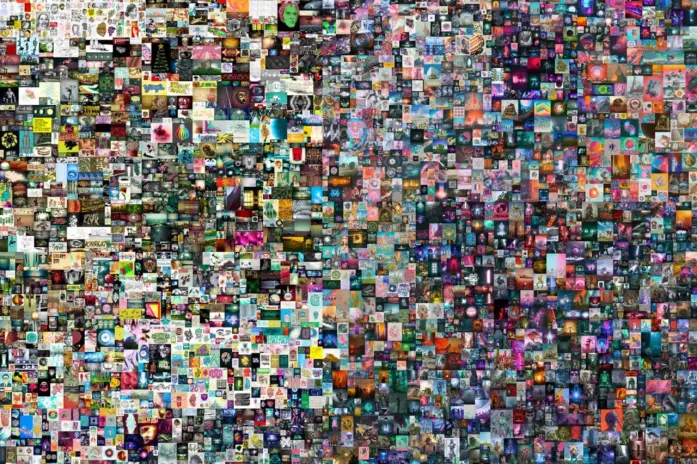
As you know, I have curated a partnership with a contemporary Artist, Rossano Ferrari, who had a certain foresight towards this technology and in parallel to his Art.
I created the NTFs on the Ethereum blockchain, here I refer you to the Rarible platform where you can see his digitized works.
Always NTFs have given a breakthrough to what are the copyrights.
In short, a real revolution, also in terms of institutions: through these tokens, the management of copyright is relegated to a smart-contract and not to what in Italy is the SIAE.
This wind of change has been followed by the decentralized exchanges which then originated the so-called DeFi.
Let's say that the decentralization established by the Nakamoto Team, is shaking the security of all the institutions that the human being has created in this world.
The neo-token NTF is the master.
Its characteristic of uniqueness is not a limit, on the contrary it makes it extremely versatile as it becomes a link with the real world.
With Tokenization, portions or entire assets of the real world are represented through tokens.
Even, you can "represent" buildings!
Last only in chronological order, is, through NTFs, the representation of financial products.
The biggest hurdle to overcome in order to represent a financial product digitally is the underlying.
We all know about crypto lending: we provide a certain amount of liquidity to have the possibility to borrow a percentage of it.
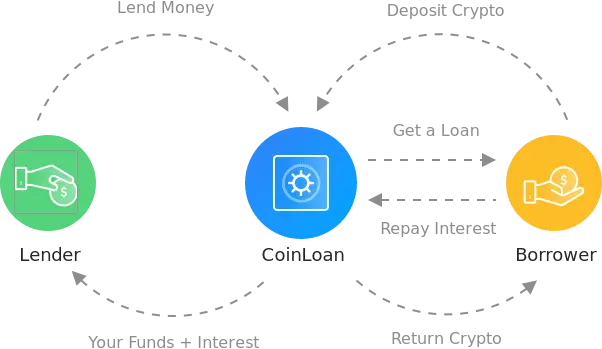
As it is understandable, the underlying of our loan we have just paid; I make an example: I block 1000$ to have the possibility of a loan of 400$.
Obviously, such a procedure is not convenient at all.
Apparently.
I say apparently, because if we dig deep into the principle of crypto lending, we realize that the interest on the borrowed amount is extremely low.
Making a parallel with the fiat world, the cost of money is practically non-existent.
The fact remains, however, that to get $400 of loan I blocked $1000; this is the only system to have the necessary guarantees that the borrower does not violate the balance of the debt.
Obviously these operations have a profitability purpose if you don't take the percentage of $ on loan, but leave it at the disposal of the Pool; by doing so you forfeit the rewards as a lender.
So, as I said before, the problem of being able to represent a financial product with an NTF is almost impossible.
A financial product is already a representation: it is an economic representation of a real asset.
Let me explain better.
A mortgage for the purchase of a house is the economic representation of a property, and the underlying is the property itself.
What is vulgarly called a guarantee.
But...
While surfing the net, I came across a project that, in my opinion, will leave its mark.
Through tokenomics, it creates a pool of tokens that can never be sold.
The internal pool will serve to self-sustain itself by creating income, in fact a portion of the revenue derived from the ICO will be locked within this fund.
The fund that will collect 35% of the total supply, is called Perpetual Coin. In this way through the token itself is created the underlying for the representation of financial products.
The project is very interesting, I think that in the next article I will deepen the theme.
Have you already heard about a similar project?






