
As Promised to Sergei and Teodor, I am here with a philosophical question:
if some hackers steal funds from a centralized wallet (or even a decentralized wallet), where is the boundary that separates Technical Skills from a normal Digital Robbery?
I will start with some thoughts. I think you will understand my point of view only at the end of the article, since I am going to elaborate it right away.
I would like to start from the prehistoric men. They had to survive, exploiting all leverages they could to survive and defend their family. They had just some social laws among companion from the same small village, but if someone else got out from the bush, holding a spear or a bow, do you think that the first approach was the presumption of innocence? If the stranger could escape was lucky. If the stranger could even say some words to the defender of the village, probably, he could have the chance to explain, to negotiate and to get out from the village with his own legs.
When first inventors invented the wheel to carry heavy loads, what could have been the reaction of people still carrying full loads on horses and donkeys?
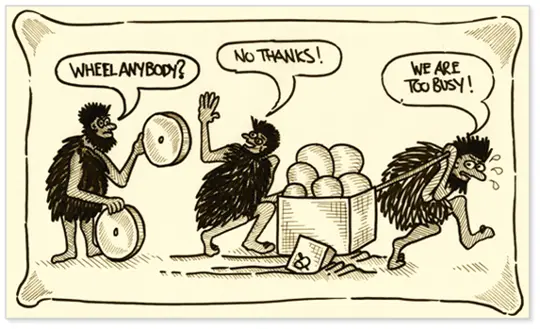
And when the first car arrived into the market, did the horse-riders complained about the innovation?
And when internet came, di sceptical people complained that they were not connected? Well, I can ensure you that the same people that complained about the disconnection of their home or offices from internet were the same that got hacked. They stayed attached to something that was already oldy, they stayed attached to the habit of not being connected, they stayed attached to something comfortable.
Did you know that in the last year a Junior High School in Rhode Island tried to remove the “Honors Night” where deserving students were rewarded with public honors. They tried to remove them because it was a source of discrimination towards other “less deserving students”. Should we create a “mediocrity honors” then, rewarding students with average marks, no sport excellences and no social involvement?
I have been quite familiar with this scenario and I want to share with you something from my personal experience.
This is me, during the sport I play now at an agonistic level on national competitions.

No, I am not handicapped. I am a so-called able-bodied person, that 11 years ago chose to play wheelchair basketball.
Do you think I am mad? Well, you may be probably right. I was initiated by a handicap close friend of mine and I found that in Italy one able-bodied player was allowed to play with other players with an handicap.
So why am I telling you that?
At the beginning, I was the really handicapped person since I was a disaster in managing my wheelchair and my coordination was a shame. Do you think that other handicapped players were merciful with me because I was the newbie? Of course not! I was the able-bodied and they showed me who ruled the field on the wheelchair and this was not me! They literally kicked my as*.
I sincerely believe in the jungle law, but civilization brought some rules and some conventions that helped people in having a peaceful cohabitation through ages. I think that a common way to see it is that my freedom ends when the other’s freedom starts.
Well, almost all right, the jungle law would considers that the strongest would have the best chances to predominate the weaker and the smartest may eventually overcome the strongest.
So, what is strength? Why Hacker from IOTA Trinity Wallet hack should be punished?
I can tell you my thoughts: they were far more skilled (smartest) than their victims and their victims suffered the robbery.
If you believe that the hackers should not be punished, why don’t you drive a panzer on the road, to overcome other weaker machines? Or why don’t you punch people that are ahead yourself in the bank queue?
Well, I think we can all share some common grounds on my previous definition of freedom (in the panzer scenario) and the Risk/Reward in the second scenario would not bring so much results (a more favourable place in queue) if compared to how much you should fight to achieve it.
I can hear you saying: “Mike, you are too extremist with that. You are not yet completed your thought path”. I know I am going towards my conclusion
Let’s take another example: in this case, a company A lend money to another company B. B lends the money to another company C that is owned by people that have their domicile in place that are particularly protective (let’s say like that). Company A asks money back to Company B but where the money has gone in the meanwhile? And if Company B refuses to refund, how much time will take to Company A to get his money back?
Jungle law is sometimes too raw, but even human laws are sometimes a complication.
So, what is my point of view for the IOTA Trinity Wallet Hack?
Hackers has to be punished because it’s a robbery, they gained money in a way that is considered as “subtraction of property”. The user has been really noob, naïve, inexperienced, without precautions. Anyway, “noob crime” does not exists (at the moment) even if some insurances does not pay the reward if you get your car stolen but you had left you keys inside.
I just think that in the IOTA Trinity Wallet Hack we can consider it a robbery, because a fraudulent software was installed on the computer of the robbed people and that non authorized software led to the illicit gain.
Anyway, I want to create a legitimate doubt: how strong was the anti-virus of the hacked computer? How much difficult was the password? Did they save their passwords in the Google auto-fill? How many verification steps did they have?
We do not need the “noob crime”, maybe, because noobs are the ones paying the price of experience and robbing money may be the insurance reward for crimes.
Disclaimer: I am not solicitating hackers to hack and criminals to do criminal activities. I am just sarcastic about people that should pay far more attention to their money and to the safety of their money.
Let me know in the comments what is your opinion on the matter. In the crypto-field this aspects should be everyday life if we talk about decentralization and lower central control!






