
The price of bitcoin (BTC) fell today to $65,000 (USD), exacerbating last week's decline, which shows greater supply. “Who the hell is selling?” questioned renowned analyst Willy Woo in this context.
Investors in bitcoin exchange-traded funds (ETFs) in the United States ended the last week with outflows of USD 580 million. This comes after they recorded four consecutive weeks of capital inflows, as seen below.
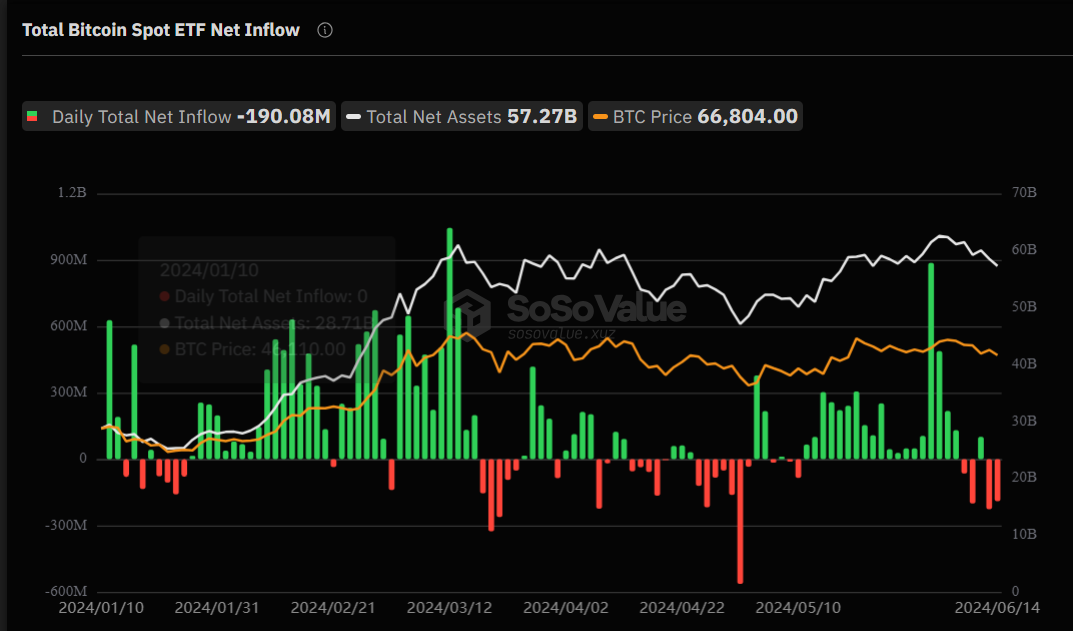 Capital outflows (red) and inflows (green) per day in bitcoin ETFs in the United States since their launch. Source: Sosovalue .
In this way, ETF investors have led to the decline of BTC in the last week. Although it should be noted that, despite this, these instruments have accumulated USD 15,000 million since their launch five months ago. Therefore, beyond their recent selling pressure, they contributed practically the entire year to the rise of the currency.
It should also be taken into account that these investors are not the only ones who impact the price. “2024 brought a lot of commentators analyzing ETF flows, as if that were all that mattered,” said Willy Woo. “What matters is total supply and demand,” he added in this regard.
OGs and bitcoin whales caused the price drop
The analyst emphasizes that those who are selling are the OGs ( original gangsters ), the term used to refer to the first users of bitcoin. He points out that they hold 10 times more bitcoin than ETFs and sell in all bull markets, as the chart below shows.
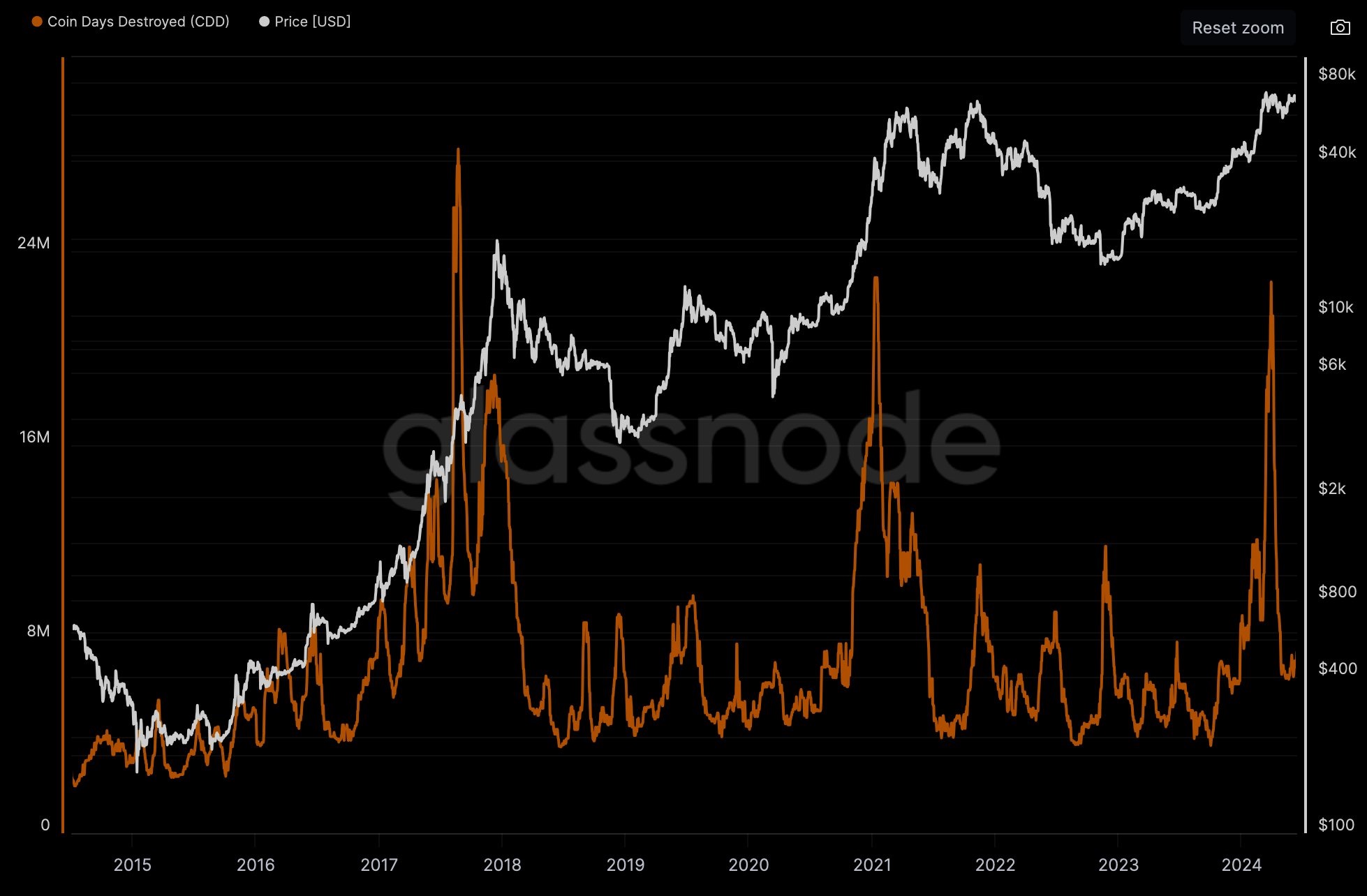 BTC spent by number of days. Source: Willy Woo.
“In the old days, BTC was on an exponential race because the only sellers were a handful of OGs and an even smaller number of miners with their newly mined coins,” explained Willy Woo. Instead, he contrasts that today the market is broader.
Trading is made up of spot bitcoin, which involves holding the currency, and paper, which refers to indirect holding of the currency through derivatives such as futures, options and ETFs.
Woo recalls that the 2022 bear market was dictated by an avalanche of paper BTC when spot holders did not really sell. Instead, in the current bull market, when paper supply on exchanges increased, there were times when the price did not rise. That means, as shown below, that the rise has been primarily influenced by spot trading.
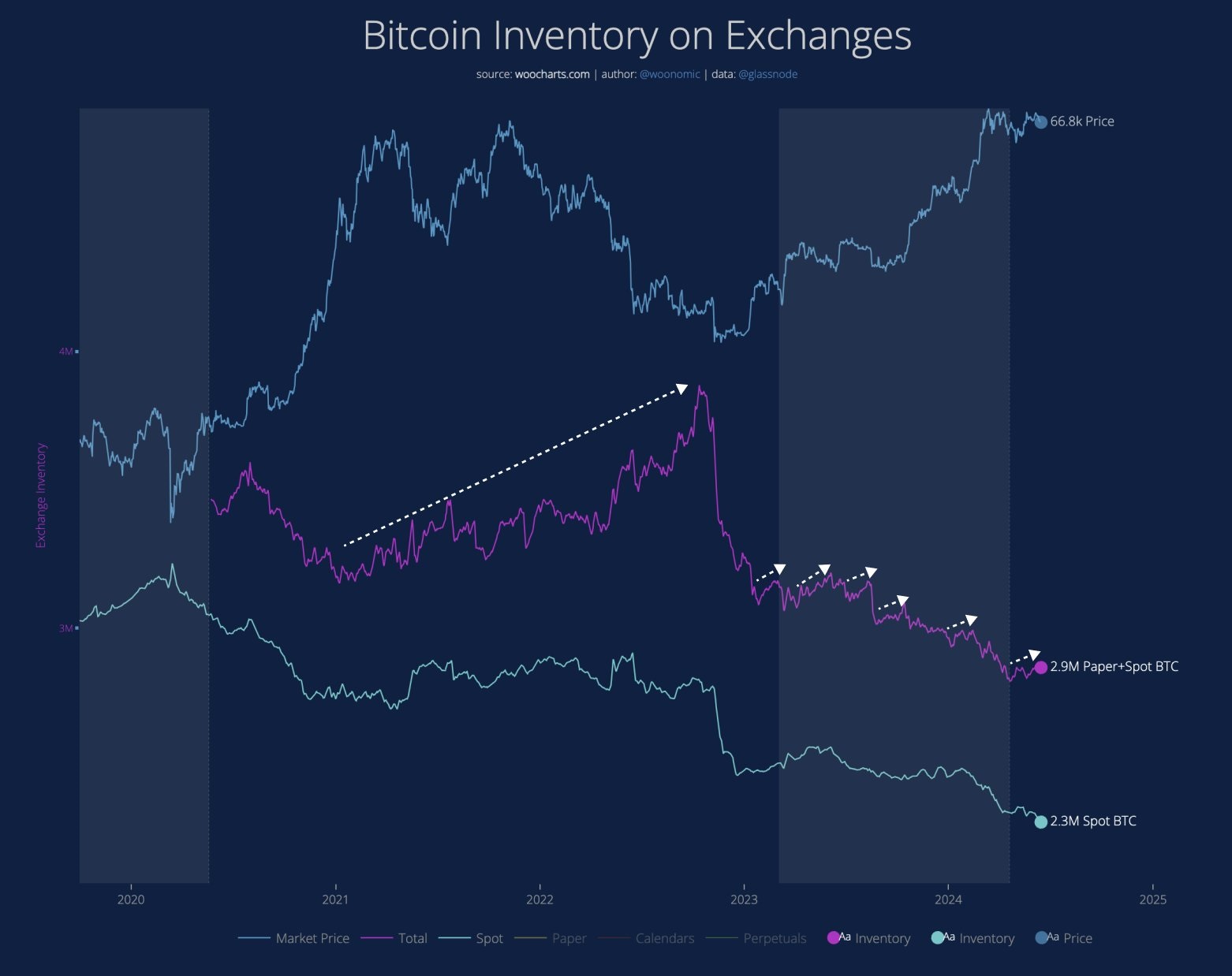 Spot and paper bitcoin inventory on exchanges. Source: Willy Woo.
Given this, the analyst concludes that it is not a good idea to focus solely on the purchase of ETFs. He highlights that on-chain, derivatives and technical price action data contribute to the supply and demand picture.
As CriptoNoticias reported, bitcoin selling pressure in the last two weeks has also been influenced by whales. These investors, so called because they own more than 1,000 BTC, have sold more than 50,000 BTC in that period.
Something that exacerbated this scenario last week was the FOMC, the committee of the United States Federal Reserve (Fed) that defines monetary policy. He anticipated a single interest rate cut for 2024, below the projection of three reductions as he said months before and two as the market expected.






