
The UK government is considering selling more than 61,000 bitcoins (BTC) seized in police operations in a bid to reduce its growing fiscal deficit. Chancellor Rachel Reeves plans to raise at least £5 billion through this operation.
The proposal comes amid increasing pressure to balance public finances, amid a context of costly debt and low economic growth. The bitcoins that would be put up for sale come from various operations against financial crimes over the last decade. The most representative case occurred in 2018, when police seized 61,000 BTC linked to a massive fraud scheme operating out of the United Kingdom but originating in China.
Subsequent seizures have been added to that sum, and according to data from BitcoinTreasuries, the UK currently has 61,245 BTC, as seen below.
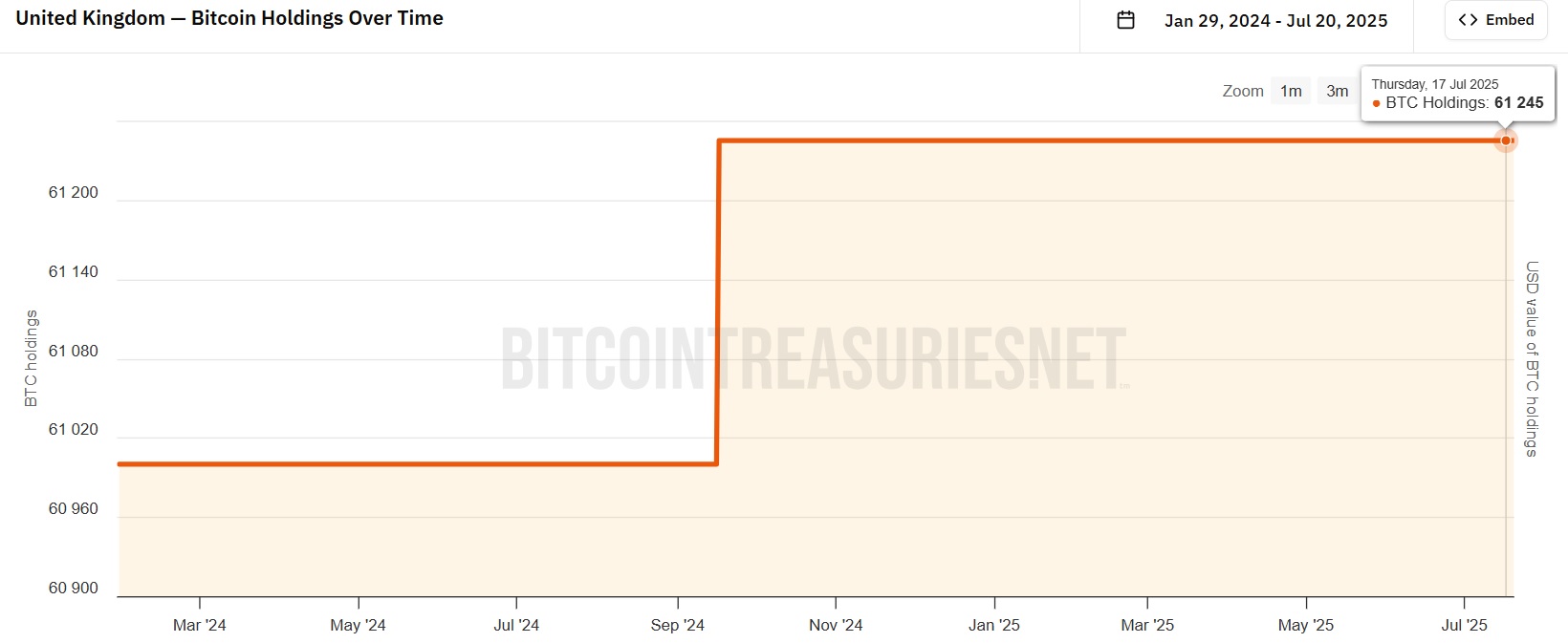 BTC under UK control has been seized. Source: BitcoinTreasuries.
The value of all Bitcoins held in the UK today exceeds $7.27 billion, considering the asset's current price of around $117,000 per unit. The value has doubled in the last year, partly due to favorable regulatory changes in the United States and the massive institutional adoption of the world's most important digital asset.
In this regard, the Home Office has begun designing an official storage and disposal system that allows for the secure management of the custody and eventual liquidation of digital assets, The Telegraph reports. Currently, sales of seized BTC and other digital currencies are managed by police forces under specific operational protocols. However, fiscal pressure has revived the Treasury's interest in institutionalizing this process.
The idea of monetizing these assets seeks to breathe life into public finances. Various economists estimate that Reeves will need to find between 15 and 20 billion pounds by October to address the deficit. High interest rates, driven by persistent inflation, have raised the cost of borrowing. Meanwhile, the option of raising taxes is also on the table.
Germany offers a recent example. Last year, that country sold 50,000 bitcoins when the price was around $57,000. The transaction generated revenue of $2.85 billion. Had it waited for the current price, it would have raised $5.85 billion. The $3 billion difference demonstrates the operational urgency and lack of a long-term strategy.
If the United Kingdom decides to follow this path, it could repeat the German story of selling below the asset's future potential. Despite this, the United Kingdom appears to see selling as a pragmatic solution to budgetary rigidity and the political constraints on widespread tax increases.






