
I am a futurist and I want to share some of my understanding of future with you.

Education becomes more and more important for future generations. Since the digital revolution has begun, learning becomes more and more accessible. There are more people who believe that going to University is a waste of time because there are plenty of online courses which are cheaper and faster than traditional on site courses led by instructors. Online courses provide flexibility to learn with your own time and your own pace. More firms are less value on diplomat than working experience. I think it is time to rethink our education system and what University can provide beyond knowledge that is available online and what unique experiences University can still provide to students. We are heading into a lifelong learning process which requires our knowledge constantly upgrade to be able to catch up ever faster information progress. Therefore, future education is relevant for us to not only think about it but also be able to anticipate earlier without being left behind.
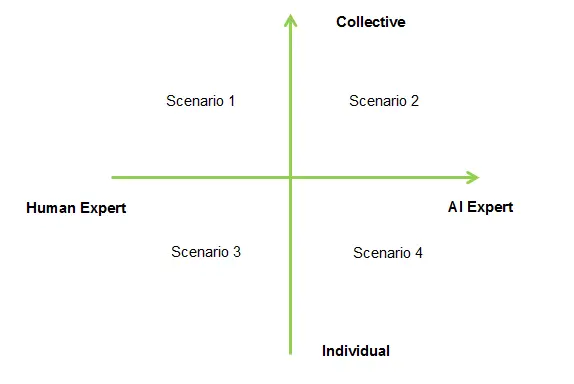
There are many projections on the future of education that utilize pre-recorded lectures and distribute through the internet. Technology has made education more accessible, but how effective students can learn from the new delivery method is still in questions. There are also many ideas on what skills that education should deliver such as corporate knowledge from the current innovative firms. According to the article from “Education in 2050?”, it stated that corporations such as Tesla or Motorola may launch University to recruit their employees straight from high school rather than students who graduated from general University (Borden, 2019). However, there are also people who oppose the technology utopian and argue that traditional teaching can still be effective. According to the article “The future of education: A lesson from COVID-19”, it stated that chartboard-based lecture is still an effective way to deliver education because students can slowly digest learning materials and easily follow the progress of the lecture (Thakar, 2020). Both cases may build their scenario out of projecting existing technology availability, economic background from each country and each country's knowledge advancement. But, there are two factors that drive future education and to build scenarios out of - technology advancement from society and individual/collective learning styles.

By applying the 2x2 double uncertainty method, there are four scenarios of future education. From scenario one which collective students will get education from human experts with advanced technology assistance to deliver courses to scenario two which Artificial Intelligence becomes experts to teach collective students to scenario three which best education may come from human experts to teach individual students to scenario four which the best education may deliver through Artificial Intelligence to individual student.
For scenario one, the future of education still relies on human experts with technology assistance. There are many students who can benefit from education through human experts delivered by pre-recorded lecture. Course contents controlled by human lecturers. Students will learn from lecturers from course materials and practice tests created by humans. The cost of lecture can decrease dramatically due to massive students who share costs and purchasing online learning materials. There is more online interaction through teaching. However, the effectiveness of learning results may vary from different students.
For scenario two, the future of education may rely on advanced technology like Artificial Intelligence to deliver lectures and help students with their questions from lectures. There will be massive students to join individual lectures. The share cost of education also will be reduced per student since the volume of attendance will increase. The lecture will frequently deliver to students and can be on-demand at a speed which students select their own pace to study. The course materials will be composed by Artificial Intelligence which will determine the best way to approach each subject matter. The test will also be created by Artificial Intelligence with robot graders for test results. If each student has questions, they can reach out to AI teachers and ask questions with immediate response. There may be human teaching assistants to help students with questions that AI teachers may not be able to answer within lecture topics. The effectiveness of learning can be driven by how many students asking questions through AI assistants or human assistants.
For scenario three, Artificial Intelligence becomes a niche teaching technology which only serves someone who is able to pay for the highest price tag. Artificial Intelligence teachers can provide the best and newest knowledge in the world to the wealthiest students who can benefit from. The rest of students will receive education from a more traditional way and their learning ability will progress depending on how effective the teaching. In contrast, AI teachers can effectively deliver knowledge to individual students through customized methods that fit individual students. Such technology may only benefit students who can afford but left out massive students who cannot afford. Education may widen the wealth gap and push wealthy families to the top level to gain new knowledge while the rest of students will have to catch up through other means.
For scenario four, schools are still heavily relying on human Intelligence and human lectures deliver niche knowledge to individuals students who can afford ever expensive education. Although Artificial Intelligence can assist teachers, they only provide general lectures materials. Human lectures control contents and test materials. They answer students' questions and human teaching assistance clarify questions students have. The quality of education depends on what method to deliver and the number of students attend.
I will prefer scenario two that Artificial Intelligence lectures compose lectures with frequently updated information to deliver to many students. Education can become more affordable to everyone while we will have to constantly upgrade our knowledge throughout life. I will worry if the future of education becomes more privately served like scenario three or four to only those who can afford it with a higher price tag. Education will become a tool of elit family to gain resources rather than benefit for entire society progress.

Citation:
Borden, J. (2019, February 26). Education in 2050? Retrieved November 15, 2020, from https://www.iceinstitute.org/blog/2019/2/26/education-in-2050
Thakar, O. (2020, May 07). The future of education: A lesson from COVID-19. Retrieved November 15, 2020, from https://www.dailyprincetonian.com/article/2020/05/the-future-of-education-a-lesson-from-covid-19






