
Bitcoin is created through a process called mining. To understand what this process is and how it works, it is important to understand what Bitcoin is and what its goals are.
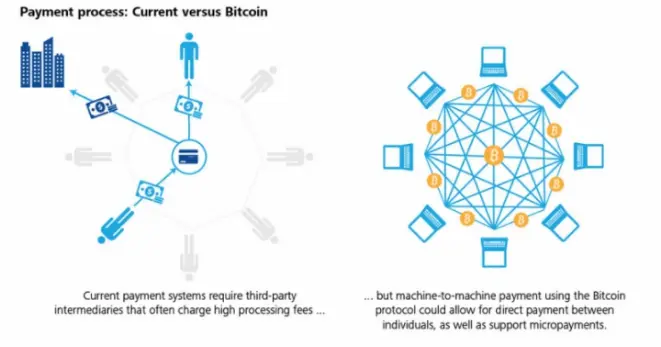
To begin, lets understand the way that Bitcoin stores value. Bitcoin is essentially a large group of computers all maintaining a record of transactions between individuals. This network of computers are all operated by individual owners rather than by a single person meaning that trusting every single computer to do the correct thing is rather difficult. In order to mitigate the issue of some subset of these computers lying about or manipulating the transaction history, we need a system to directly trust the entire system. Blockchain, the technology Bitcoin is built on top of, is a way to do just that.
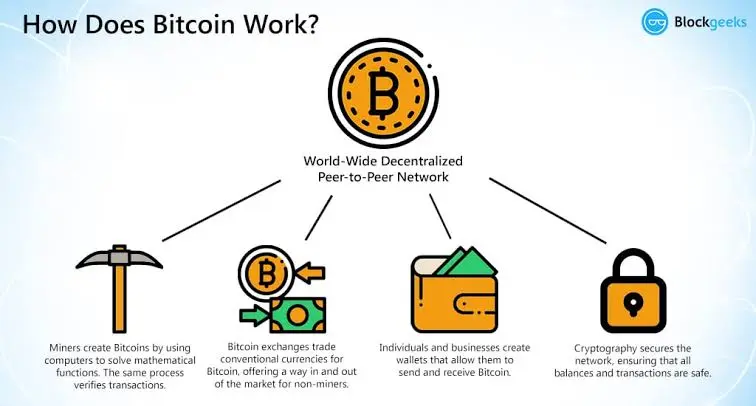
Now the semantics of how this occurs is as follows. Every time a person wants to make a transaction from one person to the other they generate what is called a transaction whereby essentially broadcast to every other computer in the “Bitcoin network” that they are transferring some bitcoin from themselves to another person. This transaction however needs to be verified somehow in order to be accepted and approved. Thus, every computer in the network goes and checks whether or not the transaction is valid(a valid transaction is one that does not spend more bitcoin than you own). After validating your transaction, the computers need to prove that they have spent some resources to actually check and validate your transactions. In order to do this, the computers all race to finish a mathematical task that is very hard. The first computer in the network to solve this task is the one that gets to claim that they actually verified your transaction(as well several others). This entire process of computers racing to solve some mathematical problem to prove your transactions is called Proof of Work, read more about it here.

The last step to the proof of work(called Mining in Bitcoin) is the creation of Bitcoin. The reason that these computers have a desire to spend their resources and time to solve random challenges to prove transaction validity is that once they do all of this, they get a reward. This reward is in the form of Bitcoin. Currently the reward per group of verified transactions is 12.5 Bitcoin. The reward is actually the creation of Bitcoin as the computer that successfully mines that transaction gets to create some amount of Bitcoin and credit itself with that Bitcoin.

Hopefully the above answer gives a clearer picture on how Bitcoin enters the system. Feel free to reach out to me and I will try to link more resources that can help clear up the confusion. Certain aspects of my answer above were also simplifications to reality to eliminate unnecessary complications.






